LANGUAGE
The global grain storage silos market is entering a period of sustained expansion, driven by rising global grain production, increasing post-harvest loss concerns, and accelerating modernization of agricultural storage infrastructure. As food security becomes an increasingly urgent priority for governments worldwide, investment in efficient, durable, and technologically advanced grain storage solutions continues to grow.
This report provides a comprehensive analysis of the global grain storage silos market from 2025 to 2033, covering market size and growth projections, segmentation trends, regional dynamics, key players, technological innovations, and emerging opportunities.
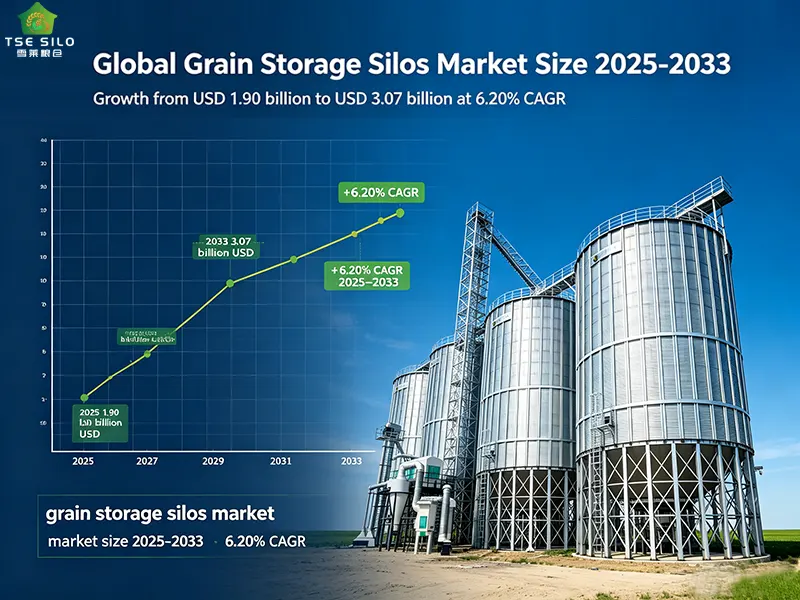
The global grain storage silos market is experiencing steady growth across multiple segments. According to Data Bridge Market Research, the global grain storage and silos (storage systems) market was valued at USD 1.90 billion in 2025 and is expected to reach USD 3.07 billion by 2033, growing at a compound annual growth rate (CAGR) of 6.20% during the forecast period.
Other research reports corroborate this growth trajectory. Grand View Research estimates that the global grain storage silos market was valued at USD 1.83 billion in 2024 and is projected to reach USD 2.72 billion by 2033, at a CAGR of 4.7% from 2025 to 2033. The broader grain storage and silos market, including ancillary equipment such as aeration systems, conveyors, and grain dryers, is valued at approximately USD 5.96 billion in 2024 and is expected to grow to USD 9.2 billion by 2035, at a CAGR of 4.0%.
The steel grain silo segment—the most widely adopted silo type globally—is expanding at an even faster pace. The steel grain silo niche is projected to grow at a CAGR of 8.2% from 2026 to 2033, driven by agricultural modernization in Asia and Africa. The broader steel silo market, encompassing all applications, is projected to reach USD 4.24 billion by 2032, growing at a CAGR of 5.8% from 2025.
Market growth is driven by several key factors:
The grain storage silos market is segmented into several silo types, each serving distinct storage needs:
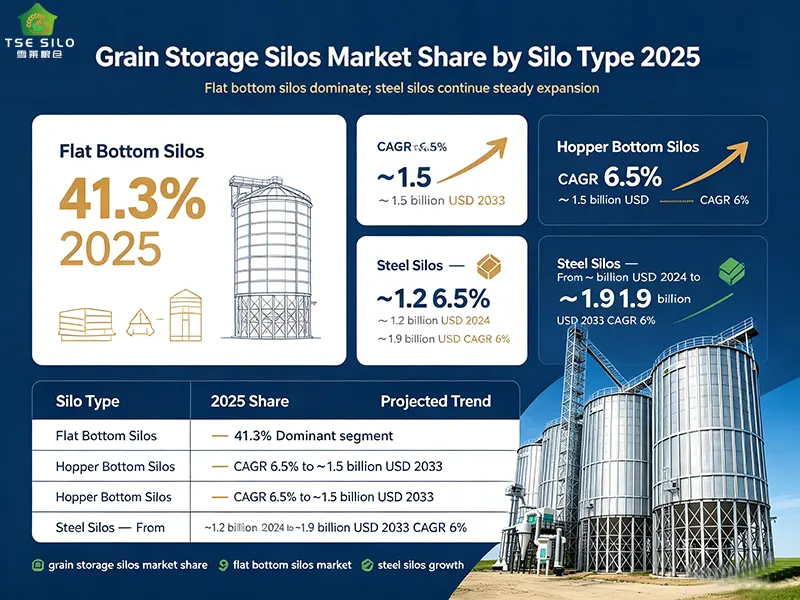
Flat Bottom Silos dominate the market with the largest revenue share. In 2025, flat bottom silos accounted for 41.3% of the global market. This dominance is driven by high adoption across large farms, commercial grain handlers, and export terminals due to their high-volume capacity, cost efficiency, and suitability for long-term storage of cereals, pulses, and oilseeds. The flat bottom grain storage silos market alone was valued at USD 610 million in 2024 and is forecast to reach USD 796 million by 2031, at a CAGR of 3.9%.
Hopper Silos (cone-bottom silos) represent another significant segment, particularly valued for their efficient gravity discharge capabilities. The global cone-bottom silo market is expected to see a growth rate of 6.5% and may reach USD 1.5 billion by 2033.
Grain Bins and other specialized storage systems round out the market segmentation.
The market is segmented by storage capacity into three primary categories:
Steel is the dominant material in the grain storage silos market, offering superior durability, corrosion resistance, and cost-effectiveness compared to alternatives. Other materials include aluminum, wood, and fiberglass. The steel grain silo segment alone is valued at approximately USD 1.2 billion in 2024 and is expected to reach USD 1.9 billion by 2033, at a CAGR of 6%.
The market serves five primary end-use segments:
The market is divided into manual, semi-automatic, and automatic operation types. The automatic segment is experiencing the fastest growth, driven by increasing adoption of IoT-enabled monitoring, automated aeration, and smart storage systems.
Rising demand from food processing, feed, and biofuel industries is a significant driver across all segments. These sectors require reliable and well-managed storage infrastructure to maintain a consistent supply of raw materials.
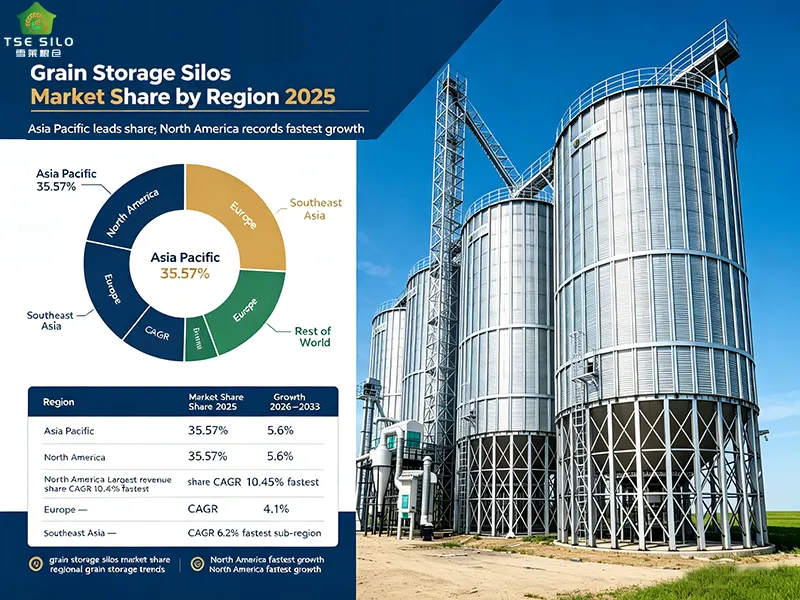
Asia-Pacific dominated the grain storage silos market with the largest revenue share of 37.9% in 2024. The region accounted for 35.57% of the grain storage and silos (storage systems) market in 2025. The Asia-Pacific grain storage silos market is expected to reach a projected revenue of US$ 1,110.9 million by 2033, growing at a CAGR of 5.6% from 2025 to 2033.
Drivers in this region include:
China and India lead the region in new installations, with Asia-Pacific accounting for 45% of new installations globally. India shows particularly rapid growth, driven by government modernization initiatives addressing high post-harvest losses and expanding commercial farming operations.
North America is projected to register the fastest CAGR of 10.45% from 2026 to 2033. This remarkable growth rate is driven by:
North America held the largest revenue share in 2024, and the region's grain storage silos market is expected to reach US$ 742.7 million by 2033, at a CAGR of 3.8%.
The U.S. Midwest, in particular, is experiencing a structural shift toward Industry 4.0 retrofitting of grain storage facilities, with major cooperatives adopting IoT-enabled monitoring and predictive maintenance systems.
The European grain storage silos market is expected to reach a projected revenue of US$ 507.9 million by 2033, at a CAGR of 4.1%.
Key drivers in Europe include:
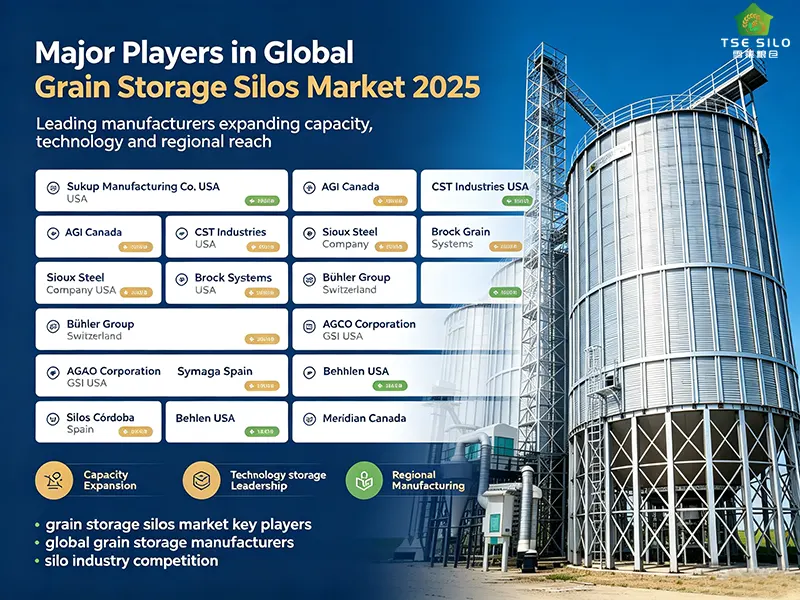
The global grain storage silos market exhibits a moderately fragmented structure, currently in a medium growth stage with an accelerating pace. Key players in the market include:
Major Global Manufacturers:
Additional players include Superior Grain Equipment, SIMEZA, Mysilo, Kangcheng, and Sioux Steel Company.
Market Characteristics:
The competitive landscape is increasingly shifting toward suppliers who embed IoT sensors, inventory management software, and predictive maintenance into silo design—a capability requiring capital and technical depth that regional fabricators often lack.
The grain storage silos market is being transformed by rapid technological advancement. Several key trends are reshaping the industry:
Smart grain storage silos use sensors, monitoring systems, and control mechanisms to optimize storage conditions and prevent losses due to pests, moisture, and other factors. IoT-driven automation is revolutionizing grain storage by turning silos into smart hubs that monitor conditions in real-time, facilitating proactive measures against spoilage.
Connected sensors now provide real-time temperature, moisture, and CO₂ readings that flag spoilage trends weeks in advance. AI-based monitoring and cloud platforms are increasingly being integrated into storage operations.
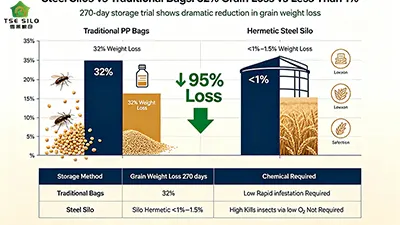
The integration of artificial intelligence (AI) and machine learning into grain silos is optimizing storage operations. Autonomous leveling robots—designed to keep grain loss rates below 1% —are being deployed in modern storage facilities.
AI-controlled grain storage systems can precisely calculate and regulate temperature, while advanced pest detection systems using improved YOLOv8-seg instance segmentation models can identify typical storage pests with accuracy exceeding 90% , combined with LSTM time-series prediction models to achieve a shift from "reactive response" to "early warning".
Innovations in materials science are extending silo lifespan and reducing maintenance costs. ProMag—an advanced metal coating composed of aluminum, zinc, and magnesium—provides over 10 times better corrosion resistance than traditional galvanized steel. These advanced coatings resist harsh environments and extend silo lifespan dramatically. Galvanized steel with a minimum thickness of 4 mm for hopper bottoms cuts corrosion-related downtime by 40% over 15 years.
Investment in digital solutions such as predictive maintenance is becoming a key differentiator for market players. Data from IoT sensors enables operators to anticipate equipment failures before they occur, reducing downtime and maintenance costs.
Environmental sustainability is becoming a priority in grain storage design. Green grain storage integration programs launched in 2025 are rolling out pilot sites nationwide. Energy-efficient aeration systems, improved insulation, and reduced energy consumption in storage operations are becoming standard requirements, particularly in markets with stringent environmental regulations.
Post-harvest losses and food wastage are primary drivers of the grain storage silos market. In some regions, post-harvest losses reach 30–40%. Reducing these losses through modern storage infrastructure has become a priority for governments and international organizations.
Global grain production is projected to grow 8% in volume through 2033, driven by emerging-market population expansion and feed-grain demand. This increased production requires commensurate investment in storage capacity.
The expansion of commercial farming operations, particularly in emerging economies, is driving demand for large-scale, mechanized storage solutions.
Rising demand from food processing, feed, and biofuel industries requires reliable and well-managed storage infrastructure to maintain a consistent supply of raw materials.
Governments in India, Nigeria, and Brazil are subsidizing on-farm storage to cut post-harvest losses. Similar initiatives in China and other developing economies are accelerating market growth.
Rapid growth in global grain trade is driving demand for bulk storage solutions at port terminals and export facilities.
While the market outlook is positive, several challenges could temper growth:
High initial capital investment remains a barrier, particularly for smallholder farmers in developing regions. Farmers in these regions often lack capital for steel silos and rely instead on traditional concrete or plastic alternatives with lower unit costs.
Fertilizer and fuel cost inflation raises the total cost of grain production, compressing farm-gate margins and delaying farmer investment in storage infrastructure.
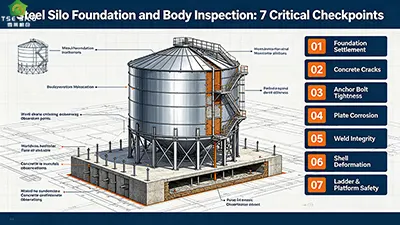
Over 30% of new silo failures trace back to inadequate foundation design for high-moisture grain loads. This highlights the importance of proper engineering and site assessment.
Supply chain disruptions and fluctuating raw material costs can impact manufacturing and installation timelines.
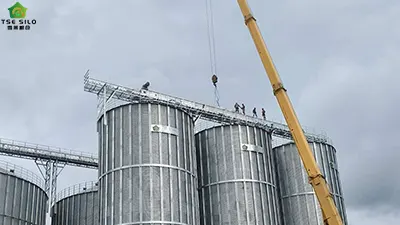
Modular steel silos that can be erected quickly and expanded over time are gaining popularity. These systems can be erected in 4–6 weeks versus concrete's 4–6 months, offering significant time and cost advantages.
The integration of IoT sensors, AI-based monitoring, and cloud platforms into grain storage represents a significant growth opportunity. Companies that can offer integrated platform solutions—where the silo becomes a "data node" rather than a static asset—are winning new contracts.
Southeast Asia, India, and Africa represent significant growth opportunities, driven by agricultural modernization, government initiatives, and rising post-harvest loss awareness. The Asia-Pacific region alone is expected to reach US$ 1,110.9 million by 2033.
In developed markets, replacement cycles and retrofitting of existing storage with smart monitoring systems represent a substantial opportunity. The U.S. Midwest, in particular, is seeing widespread adoption of Industry 4.0 retrofitting protocols.
Expansion of on-farm storage capacity enables farmers to optimize marketing timing and capture better prices. This trend is driving demand for smaller-capacity silos suitable for individual farm operations.
Growing environmental awareness and tightening regulations are creating opportunities for energy-efficient, low-emission storage solutions.
The global grain storage silos market is positioned for sustained growth through 2033. Key projections include:
| Metric | Value |
| Global Market Size (2025) | USD 1.90 billion |
| Global Market Size (2033) | USD 3.07 billion |
| CAGR (2025–2033) | 6.20% |
| Steel Grain Silo Segment CAGR (2026–2033) | 8.2% |
| Asia-Pacific Market Share (2025) | 35.57% |
| North America CAGR (2026–2033) | 10.45% |
| Flat Bottom Silos Market Share (2025) | 41.3% |
Key trends to watch:
The global grain storage silos market is on a strong growth trajectory from 2025 to 2033, driven by rising global grain production, increasing post-harvest loss concerns, technological innovation, and government initiatives supporting agricultural modernization. The market is expected to grow from USD 1.90 billion in 2025 to USD 3.07 billion by 2033, at a CAGR of 6.20%.
Steel silos—particularly flat bottom designs—dominate the market, offering superior durability, cost-effectiveness, and adaptability compared to alternatives. Asia-Pacific leads in market share, while North America exhibits the fastest growth rate.
Technology is reshaping the industry, with IoT sensors, AI-based monitoring, automation, and predictive maintenance becoming key differentiators. Companies that can integrate these technologies into comprehensive storage solutions are best positioned for success.
For manufacturers, suppliers, and investors, the grain storage silos market offers substantial opportunities across emerging markets, smart storage solutions, modular systems, and sustainable designs. As global food security concerns intensify and agricultural production continues to expand, investment in modern, efficient grain storage infrastructure will remain a priority for governments and private enterprises alike.
Written by
Shandong Shelley Grain Steel Silo Co., Ltd
Editor Jin
WhatsApp : +86-18653877118
Email : shelley@cnshelley.com