LANGUAGE
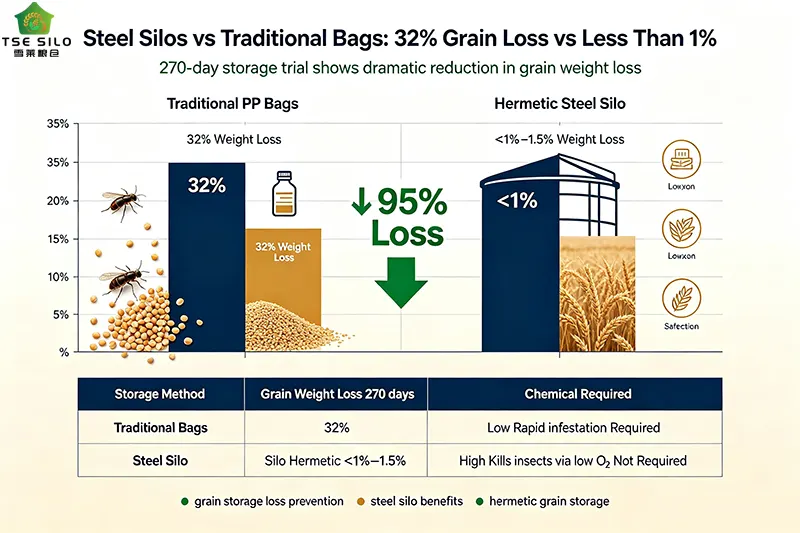
Post-harvest grain loss is one of the most significant—and most overlooked—challenges in global agriculture. Traditional storage practices in many regions cannot guarantee protection against major storage pests, leading to 20–30% grain losses, particularly due to post-harvest insect pests and grain pathogens. In China, a study conducted by the Sinograin Chengdu Storage Research Institute found that farmers experienced about 8%–10% grain losses on average, with approximately 49% caused by rodents, 30% by mold, and 21% by insects. In other parts of the world, the situation is even more severe—grain damage can reach 32% in tropical conditions after just three months of storage.
Beyond the quantitative losses, poor storage also leads to qualitative losses—grain nutritional value deteriorates, market opportunities are lost, and serious health hazards such as aflatoxin contamination arise. Aflatoxin, a toxin produced by mold growth on certain crops, has been linked to liver cancer, suppressed immune response, and child stunting.
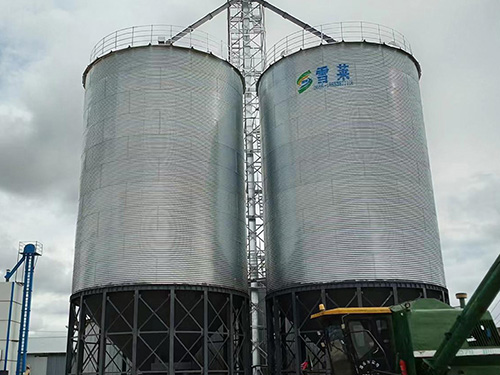
Steel silos offer a powerful solution to these challenges. Here are the seven best ways galvanized steel silos prevent grain storage loss and protect your harvest.
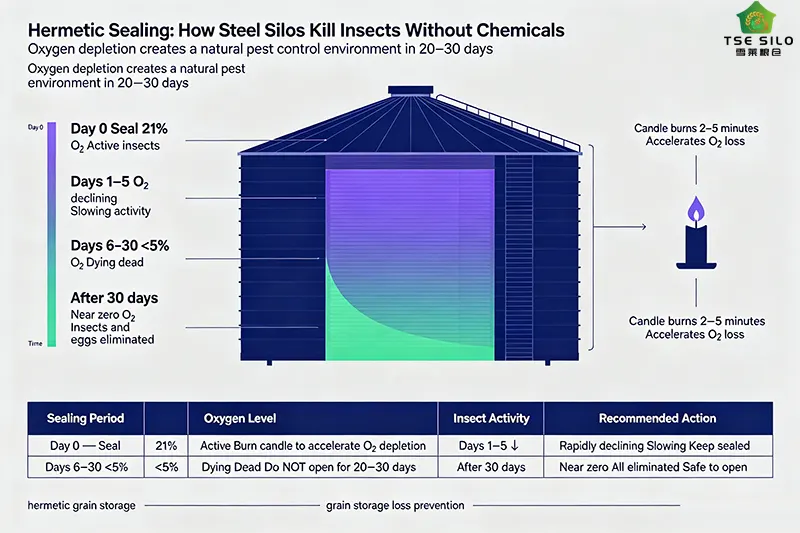
The most fundamental way steel silos prevent grain loss is through hermetic sealing. A metal silo is a cylindrical structure constructed from a galvanized iron sheet and hermetically sealed, killing any insect pests that may be present.
The principle is simple but highly effective. When a silo is sealed, the oxygen inside is gradually consumed by the respiration of the grain and any organisms present. As oxygen levels drop and carbon dioxide levels rise, insects cannot survive. Farmers can further accelerate this process by placing a burning candle inside the silo before sealing—the candle consumes the oxygen in two to five minutes, making the environment unsuitable for pests. After sealing, the silo should not be opened for 20 to 30 days, allowing weevils and eggs to die from lack of oxygen.
Research has confirmed that hermetic storage can be an effective pesticide-free alternative to synthetic pesticides. In fact, studies in Kenya found that the use of chemical insecticides in metal silos did not lead to a significant increase in insect mortality or reduction in grain weight loss, highlighting the inherent effectiveness of the hermetic storage environment itself.
Moisture is one of the biggest threats to stored grain. Excessive humidity can lead to grain clumping, fermentation, microbial growth, and mold development—all of which render grain unsafe for consumption or processing.
Rodents are responsible for a staggering proportion of post-harvest grain losses—approximately 49% of all grain losses among smallholder farmers in China are caused by rodents. Traditional storage methods such as woven bags, open warehouses, or underground pits offer little protection against these persistent pests.
The metal silo technology has proven effective in protecting harvested grains from attack not only by storage insects but also by rodent pests. This protection is particularly valuable in regions where rodent infestations are endemic and traditional storage methods offer little defense.
Temperature and moisture are the two key risk factors affecting grain preservation. If not properly controlled, these variables can lead to mold growth, insect infestation, grain deterioration, and a loss of nutritional value.
Steel silos can be equipped with comprehensive aeration and temperature monitoring systems that provide real-time control over storage conditions:
The relationship between temperature and moisture plays a critical role in determining how long grain can be safely stored. Lower temperatures and reduced moisture levels can significantly extend storage life, whereas higher temperatures may reduce safe storage periods by up to 75% .
Corrosion is a silent threat to grain storage. When a steel silo rusts, not only does the structure weaken, but rust flakes and corrosion byproducts can contaminate the stored grain. Mildewed grain attached to the inner wall of a steel silo can cause the galvanized layer to rust and fall off, further compromising both the structure and the grain quality.
The design of steel silos contributes to loss prevention in ways that are often overlooked. Unlike porous materials such as wood or concrete, smooth steel surfaces prevent pests from nesting or burrowing. There are no cracks, crevices, or gaps where insects can hide and breed.
This hygienic design is particularly important for food-grade grain destined for milling, baking, or processing, where maintaining purity and quality is essential for meeting market specifications.
Perhaps the most comprehensive way steel silos prevent grain loss is by simply extending the length of time grain can be safely stored. This has profound economic implications for farmers and grain traders.
Without proper storage, farmers are often forced to sell their grain immediately after harvest—when prices are at their lowest—only to buy it back at higher prices later in the year. This creates a poverty trap that undermines food security and economic stability.
Steel silos break this cycle. By enabling extended storage, they allow farmers to:
The potential impact on poverty reduction and greater livelihood security will not be realized, however, if farmers are unable to store grains and sell surplus production at attractive prices. Steel silos provide exactly this capability.
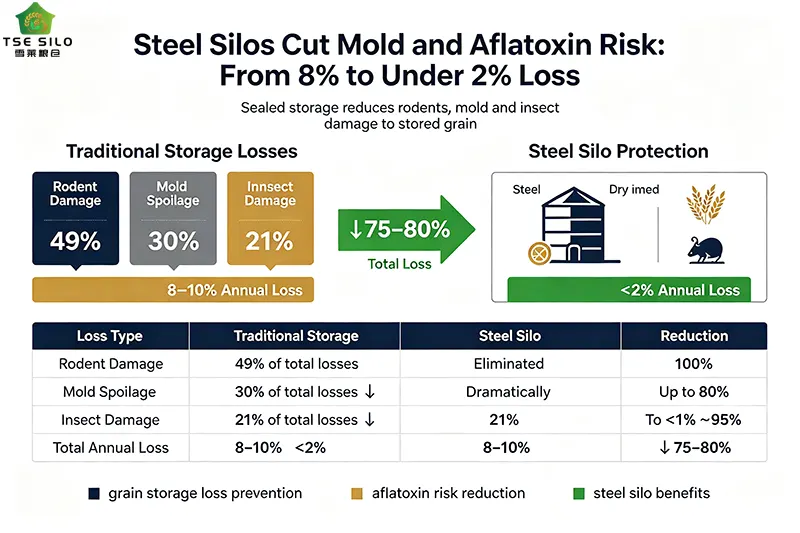
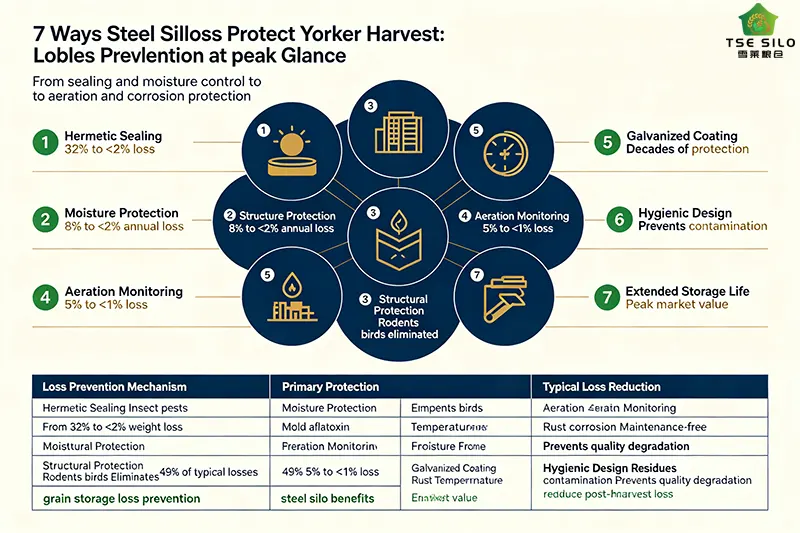
The seven ways steel silos prevent grain storage loss work together as an integrated system:
| Loss Prevention Mechanism | Primary Protection | Typical Loss Reduction |
| Hermetic sealing | Insect pests | From 32% to < 2% weight loss |
| Moisture protection | Mold and aflatoxin | From 8% to < 2% annual loss |
| Structural protection | Rodents and birds | Eliminates 49% of typical losses |
| Aeration & monitoring | Temperature/moisture damage | From 5% to < 1% loss |
| Galvanized coating | Rust and corrosion | Decades of maintenance-free protection |
| Hygienic design | Residues and contamination | Prevents quality degradation |
| Extended storage life | Market value loss | Enables selling at peak prices |
The evidence is clear. Whether in China, where steel mini silos reduced average annual losses from 8% to below 2%, in Kenya, where metal silos kept grain weight losses to just 1.5% compared to 32% in traditional bags, or in Ethiopia, where metal silos reduced post-harvest losses by up to 40%—steel silos consistently deliver dramatic reductions in grain storage losses.
By investing in galvanized steel silos, farmers, grain traders, and agricultural businesses can protect their harvest, safeguard food quality, and secure better economic outcomes. In a world where up to one-third of all food produced is lost or wasted, steel silos represent one of the most effective, proven, and accessible solutions available today.
Written by
Shandong Shelley Grain Steel Silo Co., Ltd
Editor Jin
WhatsApp : +86-18653877118
Email : shelley@cnshelley.com