LANGUAGE
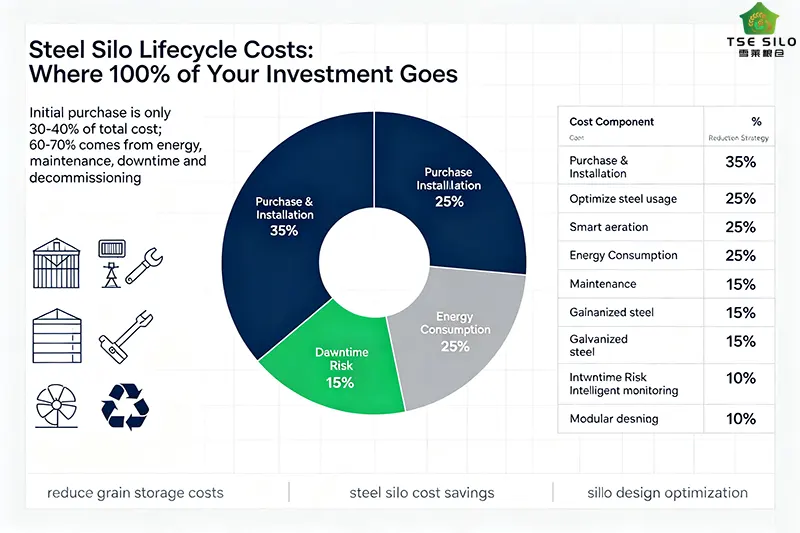
Grain storage is one of the largest ongoing expenses for farms, grain processing facilities, and agricultural businesses. The cost of storing grain goes far beyond the initial purchase price of a silo—it includes construction, land, energy, labor, maintenance, and the often-overlooked cost of grain loss due to spoilage or pest damage. According to industry analysis, the initial purchase of a galvanized steel silo accounts for only 30–40% of the total lifecycle cost; the remaining 60–70% comes from energy consumption, maintenance, downtime risk, and decommissioning.
Optimized steel silo design offers a powerful solution to reduce these costs across the entire lifecycle. By shifting from a "lowest construction cost" mindset to a "lowest total cost of ownership" approach, operators can achieve substantial savings. Here are the top seven ways optimized steel silo design can help you reduce grain storage costs.
The single largest component of a steel silo's cost is the structural material itself. Optimizing the design to use less steel without compromising strength is one of the most effective ways to reduce initial investment.
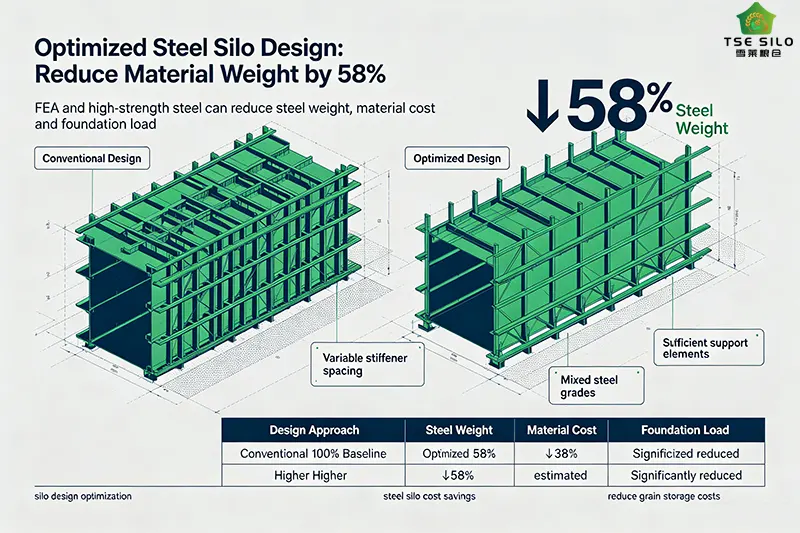
How it works: Using computer-aided design (CAD) and finite element analysis (FEA), engineers can perform precise calculations based on the specific characteristics of the stored materials—bulk density, lateral pressure, friction angle—as well as local wind loads, snow loads, and seismic loads. This precision avoids "over-design" and allows for the use of high-strength steel, which can reduce plate thickness while meeting the same strength requirements.
The numbers: A study that created 85 silo models with varying sheet thicknesses and support elements found that the overall weight could be reduced by 58% by using sufficient support elements without increasing the thickness of the steel sheets during manufacturing. This significant reduction in material weight directly translates to lower material costs, reduced transportation expenses, and lighter foundation requirements.
Practical application: For large-diameter silos, a spiral silo bending structure utilizes the high rigidity of the bending shape itself to withstand circumferential tension, reducing the need for reinforcement materials. Similarly, using variable stiffener spacing and a mix of different steel grades can reduce total expected costs by approximately 38% compared to conventional deterministic designs.
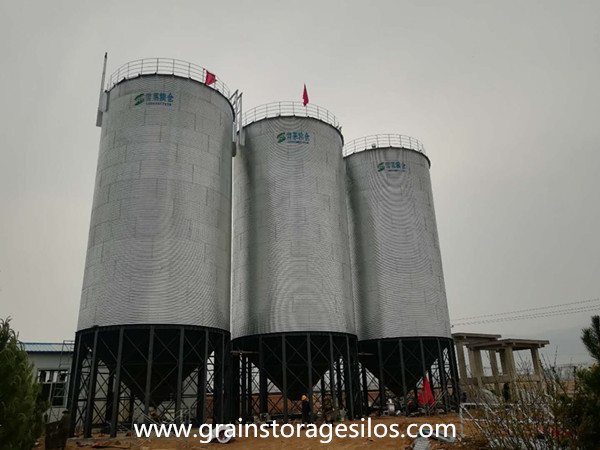
Not all silo types are created equal when it comes to cost efficiency. The choice between flat-bottom and cone-bottom silos, and between spiral and bolted construction, has a significant impact on both upfront and operating costs.
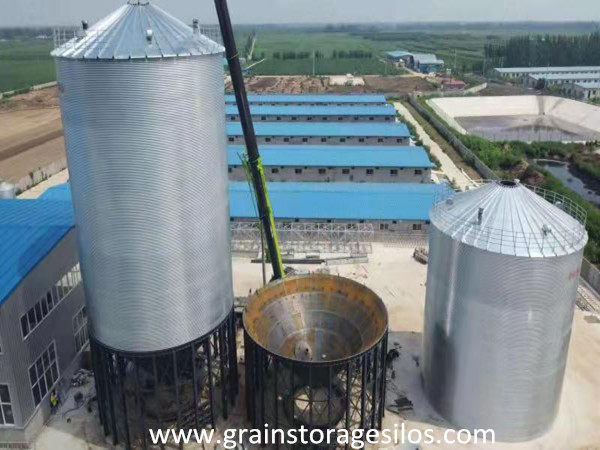
Flat-bottom silos offer substantial cost advantages for large-capacity storage. The flat-bottom structure has no cone bucket dead corners, achieving a space utilization rate of over 95%—compared to only 80–85% for cone-bottom silos. A 100,000-ton grain storage project using flat-bottom silos can save 30% of land compared to alternatives.
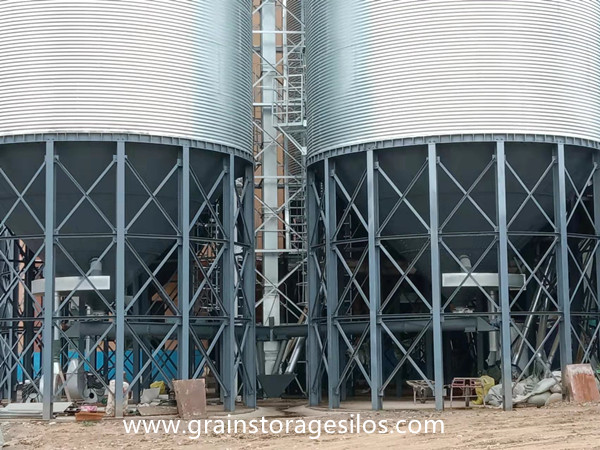
In terms of per-unit storage costs, flat-bottom silos typically reduce costs by 15–25% compared to hopper-bottom silos of the same capacity, and foundation construction time can be shortened by 30%. Steel usage is also 20–30% lower for flat-bottom designs, and foundation costs are reduced by approximately 15%.
Corrugated (bolted) steel silos generally have a 20–30% lower initial investment compared to spiral silos of the same capacity. However, spiral silos boast a design life of over 30 years and require almost no routine sealing maintenance. For operations prioritizing low upfront costs, bolted silos are attractive; for those prioritizing long-term maintenance savings, spiral silos may be the better choice.
General rule: A silo with a height similar to its diameter is considered the most cost-effective solution. For small-capacity storage (under 500 tons), cone-bottom silos have lower overall costs due to simplified unloading systems. For large-capacity storage (over 5,000 tons), flat-bottom silos are more economical.
Foundation costs can represent a substantial portion of a silo project's total expense, particularly in areas with poor soil conditions. Optimized steel silo design can significantly reduce these costs.
The advantage of steel: Steel silos are significantly lighter than concrete silos of the same capacity—approximately 1/6 the weight—which greatly reduces the load-bearing requirements of the foundation. This means simpler, less expensive foundations can be used, especially on soft or variable soil conditions.
Design innovations: For large-diameter silos, optimizing pile foundation design can yield substantial savings. Using long-slender piles instead of short-thick piles can reduce concrete consumption by 39.16% and significantly decrease secondary internal forces in the superstructure and pile cap. Conventional equal-stiffness designs often require thicker pile caps and higher reinforcement ratios, leading to increased construction costs.
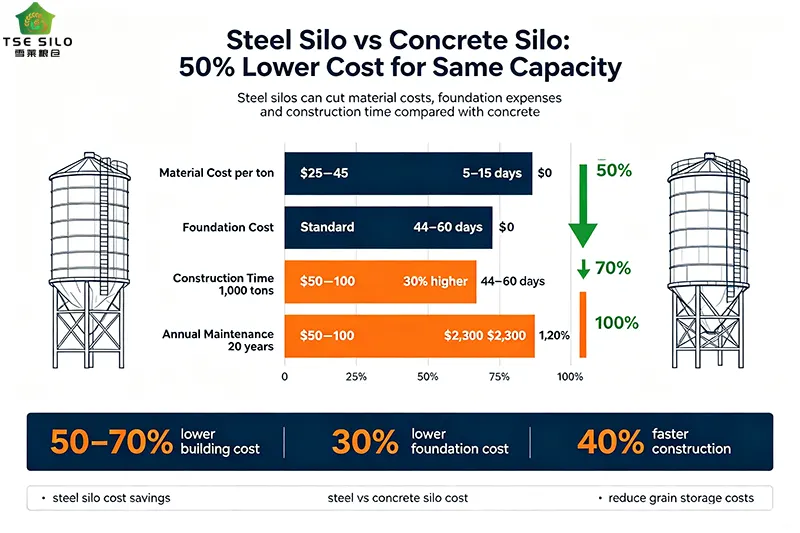
Patented solutions: Advanced designs for large-diameter grain steel silos can effectively reduce the height of the foundation platform, avoid large slope filling, and solve the problem of manual silo emptying—all while reducing civil engineering costs. Flat-bottom steel silos can reduce foundation costs by 30% and construction time by 40% compared to concrete silos.
Energy consumption for aeration and temperature control is one of the largest ongoing operational costs in grain storage, accounting for approximately 25% of total lifecycle costs. Optimized aeration system design can dramatically reduce this expense.
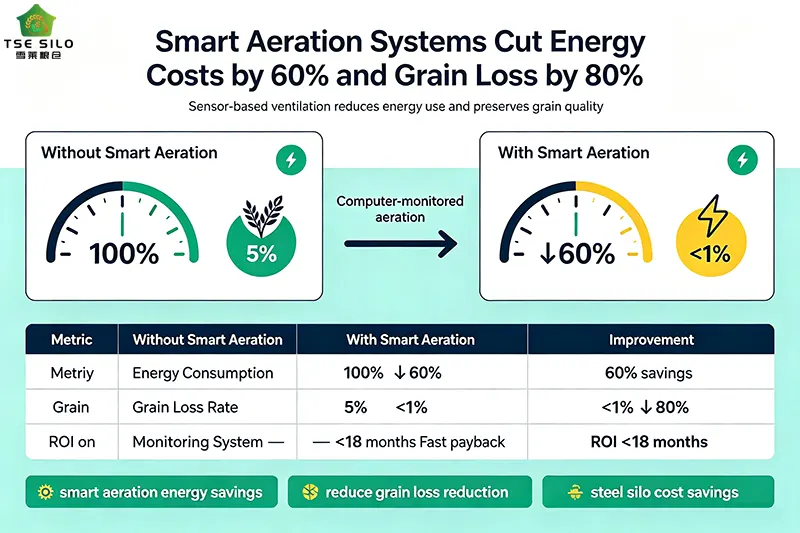
Energy-efficient design: Storage units with efficient, properly sized ventilation systems can reduce electric energy consumption in the aeration process by up to 60% while keeping temperature homogeneous across the storage. Automated aeration controllers, compared to manual control, ensure that fans run only when conditions are optimal—preventing unnecessary energy use.
Cost-effective monitoring: Low-cost aeration control systems can be 44% cheaper than traditional systems based on thermocouples, making automated temperature monitoring accessible for operations of all sizes. Computer-monitored aeration systems can reduce grain storage losses from 5% to less than 1% , representing substantial savings in grain value.
Passive strategies: In flat-bottomed silos, increasing vent open area from a typical 15% to 26% can dramatically reduce airflow "dead zones" at the bottom of the silo, improving aeration efficiency without additional energy costs.
The bottom line: By combining aeration with sensors and passive strategies, moisture and temperature requirements can be maintained with reasonable efficiency, reducing both energy costs and grain loss.
Maintenance costs can add up significantly over a silo's lifetime, accounting for approximately 15% of total lifecycle costs. Design choices made during the initial planning phase have a direct impact on these ongoing expenses.
Material selection: The use of high-quality galvanized steel with a double-sided zinc coating of ≥275 g/m² provides exceptional corrosion resistance. Hot-dip galvanized coatings can protect steel for decades even in harsh environments, eliminating the need for repainting or frequent anti-corrosion treatment.
Advanced coatings: Silos built with advanced coatings like ProMag are projected to reduce maintenance costs by up to 40% within the first three years. These coatings resist harsh environments, extend silo lifespan dramatically, and minimize material degradation.
Modular design: Bolted steel silos with modular components offer a significant maintenance advantage—when local damage occurs, only the damaged panels need to be replaced rather than the entire structure. This modularity also simplifies transport and on-site assembly, reducing both installation time and cost.
Lifecycle perspective: The use of high-grade structural steel ensures greater structural resistance while reducing weight and improving cost efficiency in transport and assembly. By optimizing the silo design and steel usage, both construction and long-term maintenance costs are reduced.
Land is an expensive and often limited resource, particularly in agricultural areas where land prices continue to rise. Optimized steel silo design can dramatically reduce the land area required for grain storage.
Vertical design: Steel silos use vertical structure design and high-density storage, which greatly saves land resources. Breakthrough vertical three-dimensional designs allow a single silo to hold thousands to tens of thousands of tons, increasing storage capacity several times under the same floor space—significantly reducing construction costs and management radius.
Intensive layout: Through the intensive layout of steel silos, construction land can be greatly reduced, construction costs and management radius can be minimized, and a "least land, low-energy management model" can be achieved.
Space efficiency: Cylindrical silos make highly efficient use of volume. In just a few meters of land area, a steel silo can store far more grain than a traditional warehouse or barn of the same footprint.
Cost comparison: Steel silos can save approximately 60% of building materials compared to traditional construction. For equal capacity, the cost of a steel silo is typically 50–70% that of a reinforced concrete silo, and foundation requirements are also simpler. Additionally, steel silos can save more than 50% of labor costs through automated management systems.
Modern steel silo design increasingly incorporates intelligent monitoring systems and automation—technologies that reduce labor costs, prevent grain loss, and optimize operational efficiency.
Labor savings: Automated loading and unloading systems significantly improve grain storage efficiency compared to traditional silos while reducing labor costs. Steel silos can save more than 50% of labor costs through automation.
Loss prevention: Integrating IoT sensors, automated controls, and smart design principles allows modern steel silos to cut storage losses below 0.5% . Grain companies using automated systems report standardized operations that minimize equipment failures and grain losses caused by inexperienced operators.
Data-driven decisions: Temperature monitoring systems provide real-time data on grain conditions, allowing operators to adjust ventilation and aeration systems accordingly. This data-driven approach transforms grain management from reactive to proactive, preventing spoilage before it occurs.
ROI: Load cell weighing systems for silos can optimize purchasing by 5 to 10% and achieve a return on investment in less than 18 months. The elimination of costs associated with emergency interventions and grain loss more than justifies the initial investment in smart monitoring technology.
Reducing grain storage costs through optimized steel silo design requires a fundamental shift in perspective—from focusing solely on the initial purchase price to considering the total cost of ownership across the entire lifecycle.
| Cost Component | % of Lifecycle Cost | Primary Reduction Strategy |
| Purchase & Installation | 35% | Optimize steel usage; choose right silo type |
| Energy Consumption | 25% | Smart aeration; passive design |
| Maintenance | 15% | Galvanized steel; advanced coatings; modular design |
| Downtime Risk | 15% | Intelligent monitoring; preventive design |
| Decommissioning | 10% | Modular design for relocation or reuse |
Steel silos offer inherent advantages that support cost reduction across all these categories: 50% lower investment cost compared to concrete silos, faster installation that reduces labor and financing costs, and simplified maintenance that keeps ongoing expenses low.
By implementing these seven optimization strategies—optimizing structural design, choosing the right silo type, reducing foundation costs, implementing smart aeration, designing for low maintenance, maximizing space utilization, and integrating intelligent monitoring—grain storage operators can achieve substantial, sustainable cost reductions while maintaining or even improving grain quality and safety.
The result is not just lower storage costs, but a more resilient, efficient, and profitable grain storage operation for years to come.
Written by
Shandong Shelley Grain Steel Silo Co., Ltd
Editor Jin
WhatsApp : +86-18653877118
Email : shelley@cnshelley.com