LANGUAGE
Efficient grain storage is one of the most critical factors in maintaining food quality, reducing post-harvest losses, and ensuring long-term food security. For farmers, grain traders, and agricultural businesses around the world, the choice of storage infrastructure directly impacts the bottom line. Among the various storage options available, galvanized steel grain silos have emerged as one of the most reliable solutions for protecting harvested grains from two of the greatest threats they face: moisture and pests.
Post-harvest losses remain a significant challenge globally. Traditional storage practices in many regions cannot guarantee protection against major storage pests, leading to 20–30% grain losses, particularly due to post-harvest insect pests and grain pathogens. Beyond the quantitative losses, pests in stored grain are also linked to aflatoxin contamination and poisoning. Moisture, on the other hand, can lead to mold growth, fungal contamination, and spoilage, ultimately reducing both quality and market value.
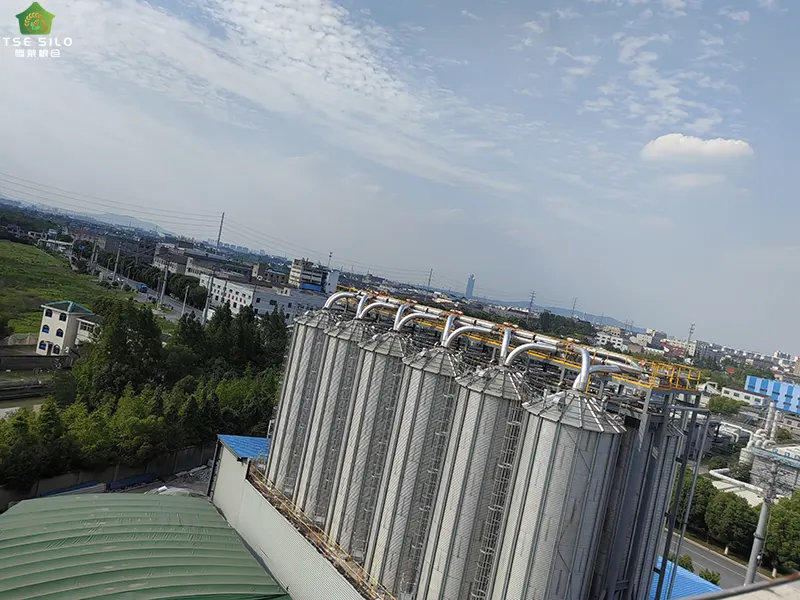
Galvanized steel silos address both challenges through a combination of material science, structural design, and engineering precision. This article explores how these storage systems work to keep your grain safe, dry, and pest-free.
Moisture is one of the biggest threats to stored grain. Excess humidity can lead to grain clumping, fermentation, microbial growth, and mold development—all of which render grain unsafe for consumption or processing. Galvanized steel silos employ multiple layers of protection to keep moisture at bay.
Galvanized steel is carbon steel coated with a protective layer of zinc, which acts as a barrier against environmental elements. This zinc coating prevents corrosion and enhances the longevity of the structure, even in humid or harsh weather conditions. Silos are often exposed to fluctuating temperatures, humidity, and external contaminants—the zinc layer ensures that the steel structure remains intact and resistant to rust, thereby safeguarding the stored grains.
The thickness of the galvanized layer is a key factor in corrosion resistance. High-quality grain silos typically use hot-dip galvanized steel sheets with a double-sided zinc coating of ≥275 g/m². In some cases, coatings can range from 275 g/m² to 600 g/m², providing even greater protection in coastal or highly humid environments. For comparison, standard electrogalvanized steel used in some applications has a coating of approximately 100 g/m²—less than half the protection.
This heavy galvanization provides significant corrosion resistance. Hot-dip galvanized coatings can last for decades even in harsh environments. In a C4 corrosivity zone (moderate to high corrosivity, typical of many agricultural areas), fabricated steel articles with proper galvanization are protected from rust for a minimum of 20 to 40 years. Some sources indicate that galvanized steel silos can achieve a maintenance-free service life in excess of 30 years. For grain storage applications, this translates to decades of reliable, rust-free performance without the need for repainting or extensive anti-corrosion treatment.
Modern steel silos are designed with tight sealing that prevents external humidity from entering the storage unit. Professional sealing technology ensures that the roof is closely connected to the side wall, preventing stored products from getting damp.
The sealing design of galvanized steel silos effectively prevents rain and moisture from invading the silo. For bolted steel silos, high-strength sealing bolts and rubber gaskets between panels create a tight barrier against moisture ingress. For spiral steel silos, the continuous spiral interlocking seam with embedded sealant provides an even more seamless seal with no bolt holes—eliminating potential leak points entirely.
Studies have shown that grains stored in metal silos can maintain safe moisture levels well below critical thresholds, ensuring long-term preservation. When grain is loaded at a safe moisture content—typically below 12% to 13% for most cereals—the sealed environment of a galvanized steel silo helps maintain that moisture level throughout the storage period. Moisture content remains stable over the storage period, preventing the conditions that lead to mold growth and spoilage.
While sealing keeps external moisture out, controlled aeration systems manage the internal environment. Galvanized steel silos can be equipped with ventilation systems that regulate temperature and humidity inside the storage unit.
Aeration is one of the most essential processes after harvest in guaranteeing food security, as it is often employed for grain cooling while the physical qualities of the stored grains are sustained. A well-designed aeration system serves multiple purposes:
Good airflow throughout the silo accelerates grain cooling and conditioning, while a daily burst of aeration may help to improve insect control. Insulating silos is ideal for maintaining stable internal conditions.
For flat-bottom silos, the aeration system typically includes a ventilation duct at the bottom of the silo, allowing air to be pushed up through the grain mass. This design can quickly remove heat and moisture from the grain, keeping it dry and cool.
One of the unique challenges of steel silos is the potential for condensation when temperature differences exist between the inside and outside of the silo. However, proper design and management can mitigate this risk.
The temperature gradient inside a steel silo is typically smaller than that outside. Stable low-temperature storage can ensure the stability of grain storage. To prevent moisture sedimentation on the surface of the grain mass, it is necessary to ventilate at filtration rates that ensure the removal of moisture outside the silo.
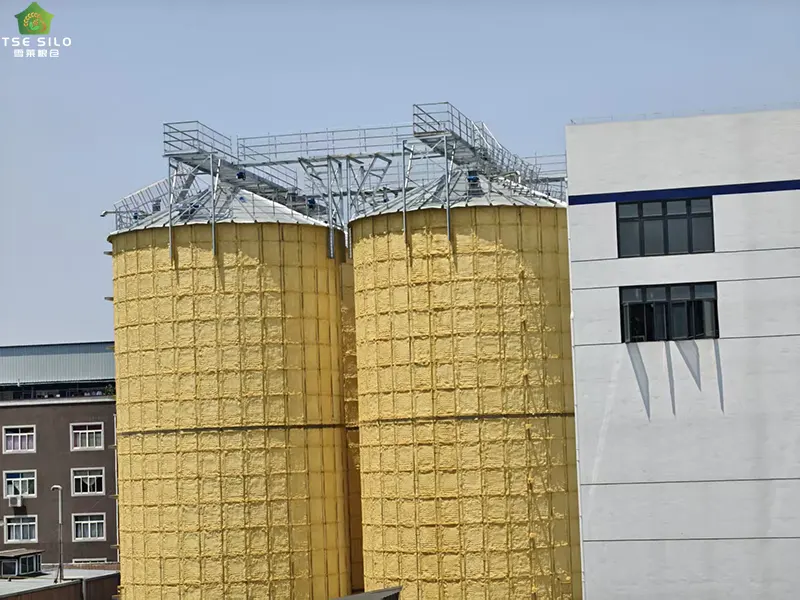
For areas with significant seasonal temperature variations, silos can be designed and installed with heat-retaining layers to meet specific insulated grain storage demands. This additional insulation reduces the temperature differential between the silo wall and the grain, minimizing the risk of condensation.
Pest infestation is another major concern in grain storage. Insects, rodents, and birds can cause significant quantitative and qualitative losses. Galvanized steel silos offer superior protection due to their robust and sealed design.
Unlike traditional storage methods such as bags or open warehouses, galvanized steel silos minimize entry points for pests. The airtight nature of these silos can create low-oxygen conditions that inhibit insect survival, making them far more effective than conventional storage systems.
The principle is straightforward: when a silo is hermetically sealed, the oxygen inside is gradually consumed by the respiration of the grain and any organisms present. As oxygen levels drop and carbon dioxide levels rise, insects cannot survive. A metal silo constructed from galvanized iron sheet and hermetically sealed can effectively kill any insect pests that may be present.
Research has consistently demonstrated the effectiveness of this approach. A study comparing metal silos with other storage methods found that metal silos were the most effective option in controlling pest infestation—and were equally effective even without any insecticide use. In fact, the use of chemical insecticides in metal silos did not lead to a significant increase in insect mortality or reduction in grain weight loss, highlighting the inherent effectiveness of the hermetic storage environment itself.
Metal silos have proven effective in protecting harvested grains from attack not only by storage insects but also by rodent pests. The robust steel construction simply cannot be penetrated by rodents, unlike woven bags or wooden structures.
Unlike porous materials such as wood, concrete, or fabric, smooth steel surfaces prevent pests from nesting or burrowing. There are no cracks, crevices, or gaps where insects can hide and breed. This smooth surface also makes cleaning and inspection far easier—any pest activity is immediately visible, and residues that might attract pests can be quickly removed.
The sealing structure of galvanized steel silos is tight, and entrances and exits are equipped with protection devices to prevent pests and rats from entering. Every potential entry point—access doors, inspection hatches, ventilation openings—can be sealed or fitted with screens to block pest intrusion.
Galvanized steel silos are typically elevated structures, which reduces access for rodents. The enclosed system blocks external contamination. Unlike ground-level storage in bags or open warehouses, silos keep grain safely above the ground, away from moisture, rodents, and ground-dwelling insects.
One of the most significant advantages of galvanized steel silos is the ability to control pests without relying on chemical insecticides. Hermetic storage can be an effective pesticide-free alternative to synthetic pesticides in reducing grain storage losses.
Both metal silos and hermetic storage bags allow pesticide-free grain storage through the creation of an environment of finite oxygen concentration when hermetically sealed. This is particularly important for organic grain production, export markets with strict chemical residue limits, and regions where access to chemical pesticides is limited or costly.
In practical terms, this means that while minor risks may exist, galvanized steel silos remain one of the most secure and efficient storage solutions available today. When combined with proper sealing, regular maintenance, inspection, and cleaning, they offer near-complete protection against pests.
Beyond moisture control, aeration also plays a role in pest management. Grain aeration and cooling reduce rates of insect infestation in stored grain. Cooler grain temperatures have several advantages for pest control:
Large silos over 200 tonnes can be sealed for fumigation when necessary, but it is recommended that aeration be installed for moisture management and grain insect suppression.
The combination of moisture protection and pest prevention in galvanized steel silos creates a storage environment that preserves grain quality far more effectively than traditional methods.
No spillage, no wastage due to rodents, insects, or birds is a key benefit of galvanized steel silos. Bulk grain storage eliminates the wastage associated with gunny bags, requires less space compared to warehouse storage, and enables mechanized handling with less manpower.
Thanks to its airtightness and weather control system, a steel silo can maintain grains in a perfect state for a whole year. The durability of galvanized steel—with corrosion resistance that outperforms standard steel and extends silo lifespan even in humid or coastal environments—means this protection lasts for decades.
Field evaluations have confirmed the effectiveness of metal silos in real-world conditions. Both metal silos and hermetic storage systems suppressed insect populations, prevented grain loss, and prevented cross-infestation of insects from the surrounding environment. In contrast, traditional storage methods such as woven polypropylene bags allowed rapid buildup of insect populations and re-infestation from the surrounding environment.
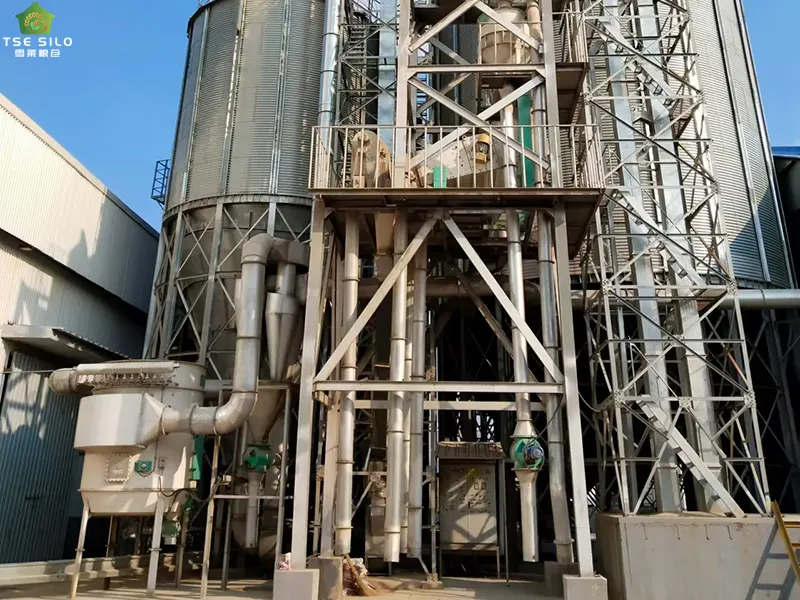
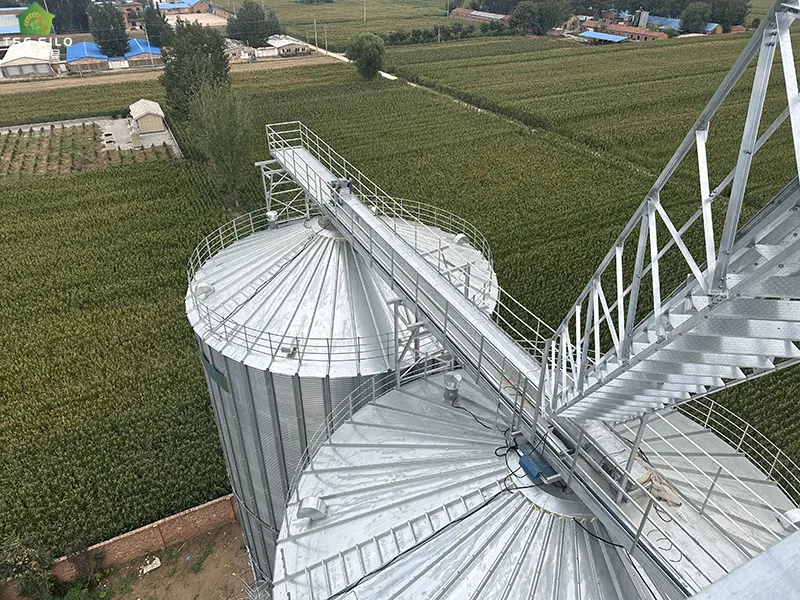
Galvanized steel grain silos protect your harvest from moisture and pests through a multi-layered defense system. The zinc coating provides exceptional corrosion resistance that keeps the structure intact for decades. The airtight design keeps external moisture out and creates an environment where moisture levels remain stable. Controlled aeration systems manage internal temperature and humidity, preventing condensation and spoilage. And the hermetic sealing creates low-oxygen conditions that eliminate pests without the need for chemical insecticides.
While no storage system can guarantee 100% protection without proper management practices, galvanized steel silos offer near-complete protection when combined with proper sealing, regular inspection and cleaning, controlled loading and unloading processes, and monitoring of temperature and humidity. For farmers, grain traders, and agricultural businesses looking to protect their investment and ensure food quality, galvanized steel grain silos represent one of the most secure, efficient, and cost-effective storage solutions available today.
Written by
Shandong Shelley Grain Steel Silo Co., Ltd
Editor Jin
WhatsApp : +86-18653877118
Email : shelley@cnshelley.com