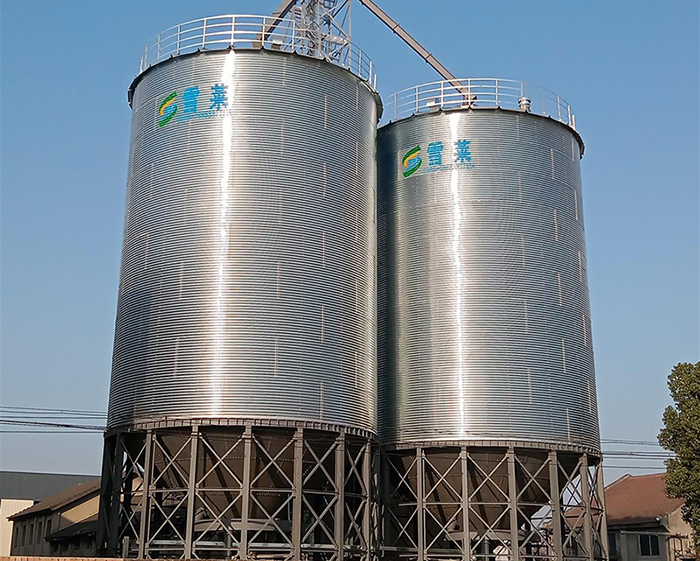
Steel silos are essential storage solutions for grain, feed, cement, and other bulk materials across agricultural and industrial sectors. Among the various types available, spiral steel silos and bolted steel silos are the two most widely used galvanized steel silo types globally. While both serve the same fundamental purpose, their construction techniques, performance characteristics, and application scenarios differ significantly.
Understanding these differences is crucial for making an informed purchasing decision. Below is a comprehensive comparison across seven key dimensions, followed by practical selection guidelines.
Difference 1: Construction Method and Core Principles
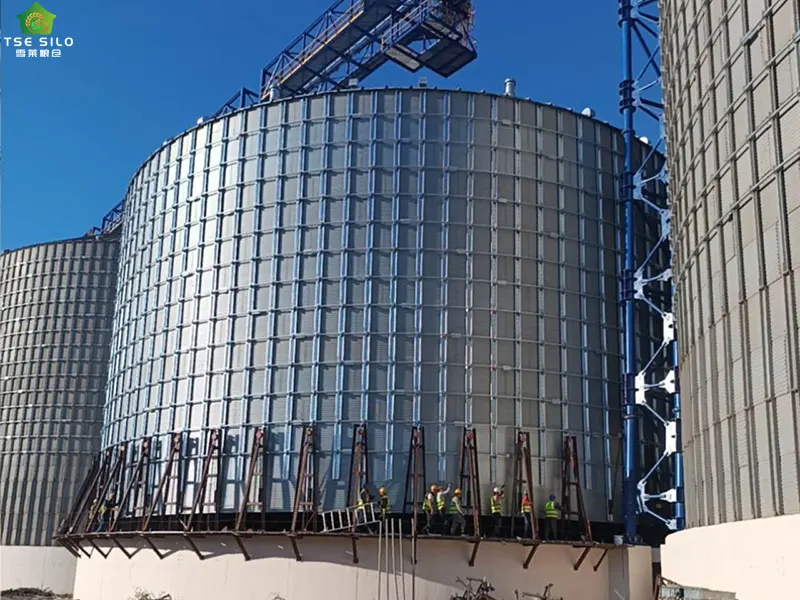
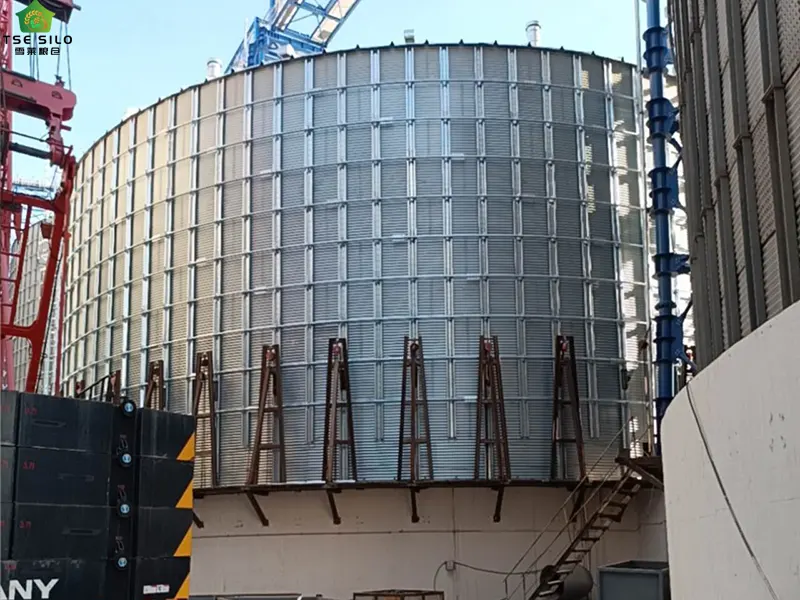
- Spiral Steel Silo: Spiral silos are constructed using continuous spiral seaming technology on-site. Specialized equipment feeds galvanized steel coils (typically 495mm wide) into a forming machine, where they are bent, folded, and interlocked to form a seamless cylindrical structure. The equipment automatically climbs upward as the silo body rises, completing the entire construction process with minimal manual intervention. This method is often compared to “folding a paper star”—coils are continuously interlocked and wound on-site.
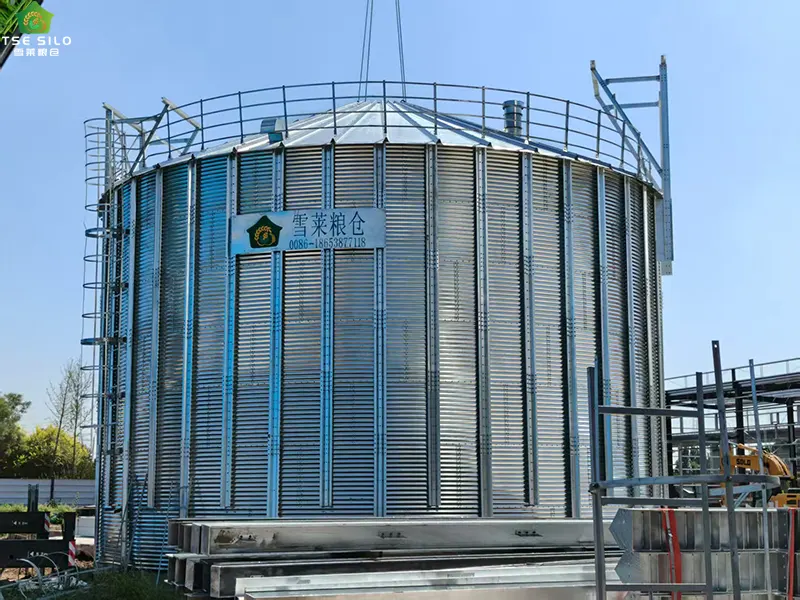
- Bolted Steel Silo: Bolted silos are assembled from prefabricated components manufactured in factories. Standardized steel panels (typically around 1.5m × 0.5m) with pre-punched bolt holes and sealing strips are transported to the site, where they are connected layer by layer using high-strength bolts. This modular approach is likened to “building blocks”—components are produced in the factory and assembled on-site.
Difference 2: Construction Speed and Efficiency
- Spiral Steel Silo: Construction is extremely fast due to full mechanization. The specialized equipment operates at speeds of up to 300 meters per hour. A 1,000-ton silo can be completed in just 5–6 days. The process requires few on-site personnel and is less affected by weather conditions.
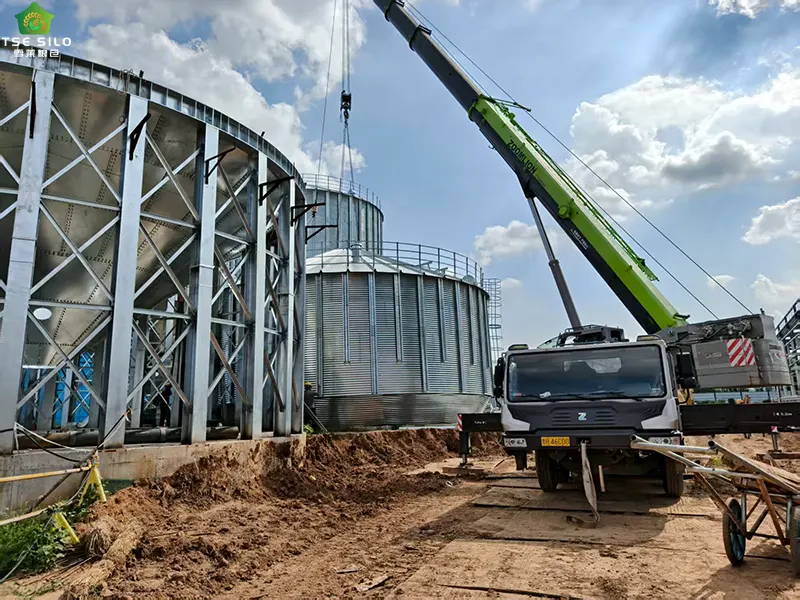
- Bolted Steel Silo: Construction takes longer because installation relies heavily on manual labor for alignment, bolting, and tightening. A typical bolted silo requires 10–15 days for completion. The process is more weather-dependent and requires lifting equipment for panel positioning.
- Verdict: Spiral silos offer significantly faster construction—often 2–3 times quicker than bolted alternatives.
Difference 3: Sealing Performance and Airtightness
- Spiral Steel Silo: The spiral interlocking seam provides exceptional airtightness and water resistance. The five-layer spiral fold is embedded with sealant during the crimping process, creating a continuous seal with no bolt holes. With no bolt holes, the risk of air leakage or moisture ingress is extremely low. This makes spiral silos ideal for controlled atmosphere storage, fumigation, and long-term preservation of moisture-sensitive grains.
- Bolted Steel Silo: Sealing relies on rubber gaskets and sealant applied between panels. Over time, gaskets may age, shrink, or harden, and bolt holes can become potential leak points. While sealing is adequate for many applications, it is generally inferior to spiral silos.
- Verdict: Spiral silos provide superior sealing performance, making them the preferred choice for grain storage requiring fumigation or long-term preservation.
Difference 4: Structural Strength and Integrity
- Spiral Steel Silo: The continuous spiral structure forms a unified, monolithic body with exceptional overall rigidity. The spiral ribs (five layers thick at each fold) increase the silo’s structural strength by up to five times compared to the base steel sheet. This integrated design provides excellent resistance to wind forces, seismic loads, and internal material pressure. Properly designed spiral silos typically have a service life exceeding 20–25 years.
- Bolted Steel Silo: Structural performance depends largely on the quality of bolt connections and the corrugation strength of panels. Long-term vibration and thermal expansion may cause bolt loosening, necessitating regular inspection and re-tightening. The overall stability is generally considered inferior to spiral silos.
- Verdict: Spiral silos offer greater structural integrity due to their seamless, continuous construction.
Difference 5: Capacity Range and Dimensional Flexibility
- Spiral Steel Silo: Spiral silos typically have diameters ranging from 3 to 28 meters and can reach considerable heights—over 40 meters—with a maximum height-to-diameter ratio of up to 5.75. However, single-silo capacity is generally limited. Most sources indicate spiral silos are suitable for capacities below 5,000 tons, with some specifying a maximum of around 6,500 tons or even 2,000 tons for certain designs. They are best described as the “slim and tall” type.
- Bolted Steel Silo: Bolted silos offer much greater dimensional flexibility. Diameters can reach up to 30 meters or more, and single-silo capacities can range from 500 to 18,000 tons. They can accommodate special designs such as cone-bottom or multi-unit configurations. This makes bolted silos the “large and wide” choice, suitable for large-scale industrial storage.
- Verdict: Bolted silos support much larger capacities and offer greater dimensional flexibility.
Difference 6: Material Specifications and Corrosion Resistance
- Spiral Steel Silo: Spiral silos are typically manufactured from double-sided hot-dip galvanized steel sheets with a zinc coating thickness of ≥275 g/m². This heavy galvanization provides excellent corrosion resistance with minimal maintenance requirements, making spiral silos suitable for humid, coastal, or corrosive environments. The surface does not require frequent repainting or anti-corrosion treatment.
- Bolted Steel Silo: Bolted silos typically utilize electrogalvanized or lightly galvanized steel sheets with a coating thickness of approximately 100 g/m². Additional anti-corrosion treatment or repainting may be required every 3–5 years during long-term operation. While individual damaged panels can be replaced, the overall corrosion resistance is lower than that of spiral silos.
- Verdict: Spiral silos offer superior corrosion resistance with significantly lower long-term maintenance requirements.
Difference 7: Mobility, Expandability, and Lifecycle Cost
- Spiral Steel Silo: Spiral silos are permanent, non-relocatable structures. Once constructed, they cannot be disassembled or moved. Expansion is also difficult. However, their low maintenance requirements and long service life contribute to favorable long-term cost efficiency. The overall weight is only about 1/6 of a concrete silo of the same capacity, reducing foundation costs.
- Bolted Steel Silo: Bolted silos are highly modular and flexible. They can be:
- Expanded by adding additional panels or rings
- Relocated—dismantled, packed into containers, and moved to a new site
- Partially repaired by replacing damaged individual panels
- However, bolted silos require ongoing maintenance—bolt re-tightening, gasket replacement, and periodic anti-corrosion treatment—which increases total lifecycle expenses.
- Verdict: Bolted silos offer unmatched flexibility for relocation and expansion, while spiral silos provide lower long-term maintenance costs.
Summary Comparison Table
| Feature | Spiral Steel Silo | Bolted Steel Silo |
| Construction Method | On-site continuous spiral winding | Factory-prefabricated panels, on-site bolting |
| Construction Speed | 5–6 days (1,000 tons) | 10–15 days (1,000 tons) |
| Sealing Performance | Excellent—continuous seam, no bolt holes | Good—relies on gaskets and sealant |
| Structural Strength | High—integral continuous structure | Moderate—depends on bolt connections |
| Capacity Range | Typically < 5,000 tons | 500–18,000 tons |
| Diameter Range | 3–28 meters | Up to 30+ meters |
| Galvanization | ≥275 g/m² hot-dip | ~100 g/m² electrogalvanized |
| Corrosion Maintenance | Minimal—no repainting needed | Repainting every 3–5 years |
| Relocation | Not possible | Possible—dismantle and move |
| Expansion | Difficult | Easy—add modular panels |
Selection Methods: How to Choose the Right Silo
Based on the seven differences outlined above, here are practical guidelines for selecting between spiral and bolted steel silos:
Choose a Spiral Steel Silo If:
- Sealing is a top priority. If you need to store grain under fumigation, controlled atmosphere, or long-term preservation conditions, the superior airtightness of spiral silos is invaluable.
- Construction speed matters. If you need to begin operations quickly, spiral silos offer the fastest installation—a 1,000-ton silo in under a week.
- Budget is limited. Spiral silos generally have lower initial construction costs due to reduced labor and faster installation.
- Space is constrained. Spiral silos have a smaller footprint—the distance between adjacent silos can be reduced to as little as 500mm.
- Site conditions are challenging. The lightweight nature of spiral silos (1/6 the weight of concrete) reduces foundation requirements and costs.
- Storage needs are permanent. If you have no plans to relocate or expand, the permanent nature of spiral silos is not a disadvantage.
Choose a Bolted Steel Silo If:
- Large capacity is required. For single-silo capacities exceeding 5,000 tons—up to 18,000 tons—bolted silos are the only viable option.
- Future expansion is anticipated. The modular design allows capacity to be increased gradually as your business grows.
- Relocation may be necessary. If you are operating on leased land or anticipate moving facilities, bolted silos can be dismantled and relocated.
- Long-term flexibility is valued. Bolted silos support special designs (cone-bottom, multi-unit) and can be customized to specific site conditions.
- You accept higher maintenance. While initial costs may be competitive, be prepared for ongoing maintenance—bolt re-tightening, gasket replacement, and periodic anti-corrosion treatment.
- Harsh climate conditions exist. Bolted silos can be designed to resist wind loads ≥30m/s (typhoon-resistant) and snow loads ≥0.5kN/m², making them suitable for coastal or high-cold regions.
Conclusion
Both spiral and bolted steel silos have established their place in the grain storage industry, but they serve different operational needs. Spiral steel silos excel in sealing performance, construction speed, structural integrity, and corrosion resistance—making them ideal for grain storage requiring fumigation, long-term preservation, and permanent installations with capacities up to 5,000 tons. Bolted steel silos offer unparalleled flexibility in capacity (up to 18,000 tons), expandability, and relocation capability—making them suitable for large-scale industrial storage, phased construction projects, and operations where future changes are anticipated.
The right choice depends on your specific storage requirements, site conditions, budget, and long-term business plans. By carefully evaluating these seven key differences against your operational needs, you can make an informed decision that ensures optimal storage performance and cost-efficiency for years to come.
Written by
Shandong Shelley Grain Steel Silo Co., Ltd
Editor Jin
WhatsApp : +86-18653877118
Email : shelley@cnshelley.com