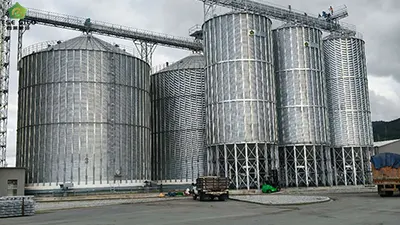
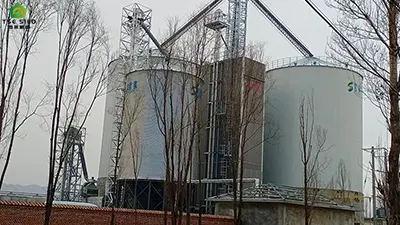
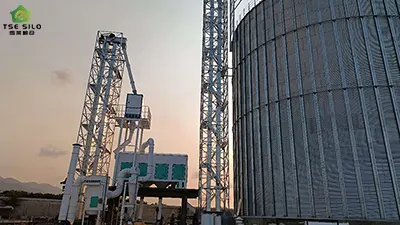
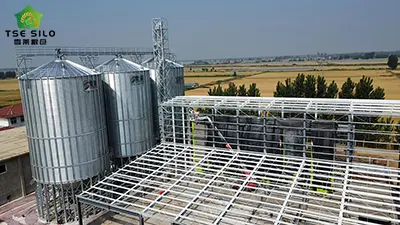
When constructing conical-bottom steel silos, if we prioritize cost-effectiveness, we should focus on four aspects: reasonable initial investment, low total life-cycle cost, core functions adapted to operating conditions, and convenient operation and maintenance. We should avoid blindly over-configuring redundant functions while also avoiding under-configuration that could lead to core issues such as material discharge and durability. Furthermore, the silos should be perfectly matched to the characteristics of the stored materials (such as grain, cement, fly ash, and mineral powder). Their core characteristics revolve around six dimensions: structural design, material selection, discharge system, process configuration, operation and maintenance design, and manufacturing and installation. All designs are centered on the "core advantages of the conical bottom (self-flowing discharge, no residue)," while strictly controlling costs and balancing the cost-effectiveness of initial construction and later use. Today, Shelley Storage will summarize the six key characteristics that the best hopper bottom silos should possess.
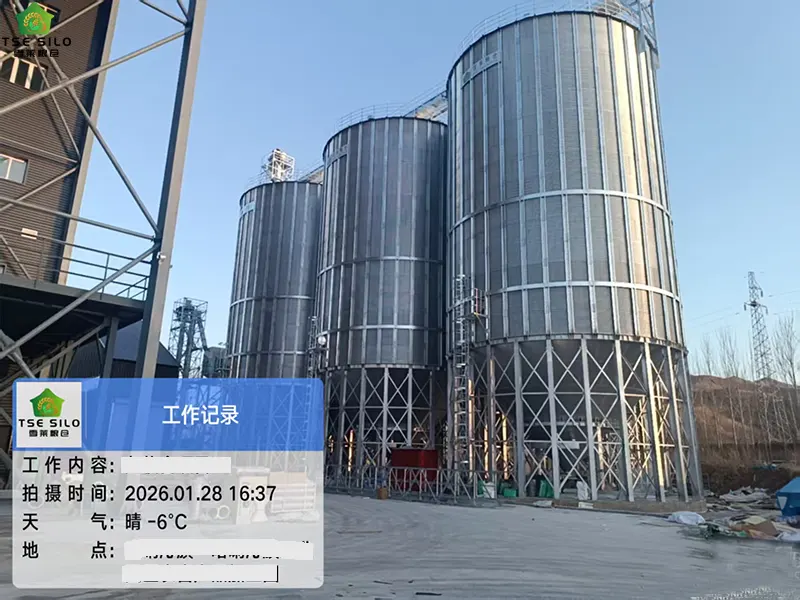
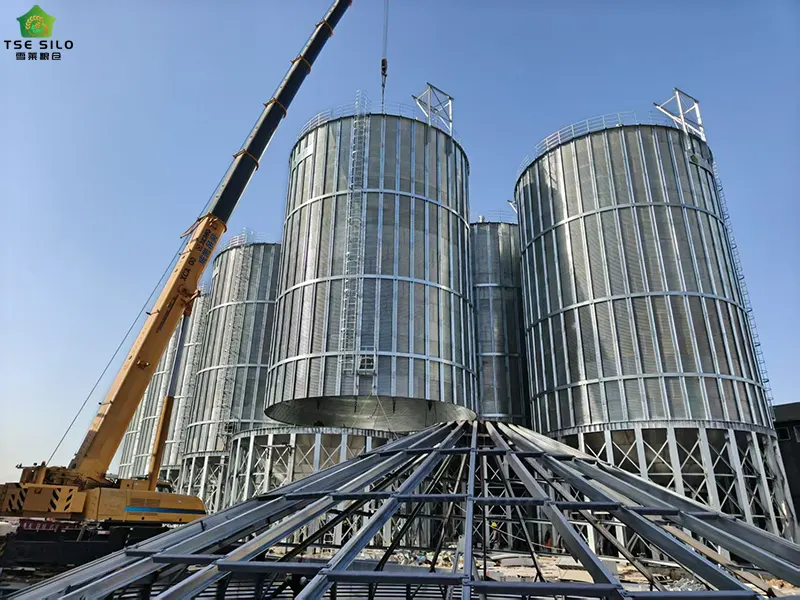
1. Structural Design Aspects
The basic standards for the structural design of hopper bottom silos are: adaptability to gravity flow, material and labor saving, and no excessive design. The core of the structure is to ensure gravity flow of materials while reducing steel consumption and civil engineering costs. A cost-effective design avoids unnecessary structures, with all parameters tailored to the operating conditions:
- 1.1. Precise cone angle adapted to materials: This is the core parameter of the cone-bottom silo. Too small an angle will cause material to stick to the walls and hinder discharge, too large an angle will increase steel consumption and civil engineering height, unnecessarily increasing costs.
- Granular materials (wheat, corn, rice): Cone angle 60°~70°, meeting gravity flow requirements and minimizing material consumption.
- Powder materials (cement, fly ash, mineral powder): Cone angle 75°~80°, solving the problem of powder sticking to the walls; no need to excessively increase to over 85°.
- Heavy materials (sand, gravel, metallurgical powder): Cone angle 65°~70°, balancing gravity flow and silo stability.
- 1.2. Optimized Connection Between Silo Wall and Conical Bottom: A rounded transition is used instead of a right-angle connection to prevent material accumulation and reduce stress concentration. No additional reinforcement is needed, ensuring efficient material discharge while saving materials and labor.
- 1.3. Lightweight Silo Roof + Standardized Silo Walls: The silo roof is a lightweight truss type, only requiring rain and snow protection and the installation of auxiliary equipment (level gauges, ventilation openings), without heavy reinforcement. The silo walls use a rolled-edge interlocking process (replacing some welding), providing good sealing and quick installation. Compared to fully welded silos, it reduces labor costs for installation and uses standard rolled plates, eliminating the need for customized irregular structures.
- 1.4. Foundation Adaptability Design: The conical bottom silo foundation uses a shallow reinforced concrete leg foundation (replacing a deep pit). The number of legs is designed according to the silo capacity and material specific gravity (4-6 legs for small silos, 8-12 legs for large silos), eliminating the need for excessive heavy foundations, reducing civil engineering costs by more than 30%, and shortening the construction period.
2. Material Selection
Material selection must be based on actual usage conditions. General-purpose materials should be used for the main body, while reinforced materials should be used for vulnerable areas, avoiding blindly using high-end materials. The core of cost-effectiveness is "using the best steel where it's most needed." The main structure uses national standard general-purpose steel to control costs, while locally reinforcing easily worn and impact-prone areas such as the cone bottom and discharge port, avoiding waste caused by using expensive materials overall.
- 2.1. Silo Wall Main Body: National standard Q235B carbon structural steel is used, suitable for over 90% of storage conditions (normal temperature, normal pressure, non-corrosive materials). The thickness is precisely matched to the silo capacity, avoiding excessive thickening:
- Small silo capacity (≤500 tons): Silo wall thickness 2~3mm.
- Medium silo capacity (500~2000 tons): Silo wall thickness 3~4mm.
- Large silo capacity (2000~5000 tons): Silo wall thickness 4~5mm (thickened only at the bottom of the silo, the upper part still uses thin material).
- 2. Localized Reinforcement at the Cone Bottom: The cone bottom is the core area of material impact and friction. The cone body uses Q235B steel 1-2mm thicker than the silo wall, with removable wear-resistant liners (such as polyethylene plates or thin manganese steel plates, selected according to the abrasiveness of the material) on the inner wall, replacing the overall use of wear-resistant alloy steel. This reduces costs by more than 40%, and the liners can be replaced individually, resulting in low maintenance costs.
- 3. Sealing and Corrosion Protection: EPDM rubber (weather-resistant, aging-resistant, with a service life of over 5 years) is used for seals, replacing expensive sealing materials such as silicone. The silo body is protected against corrosion using epoxy zinc-rich paint + polyurea topcoat (outdoor conditions) / epoxy primer + topcoat (indoor conditions), meeting national standards for corrosion protection, with a warranty of over 5 years. High-end fluorocarbon paint is not required (unless under highly corrosive conditions).
- 4. Legs and Connectors: Legs use national standard H-beams/seamless steel pipes, and connectors are standard bolts (hot-dip galvanized). There are no customized or irregularly shaped parts, resulting in low procurement costs and convenient replacement later.
3. Discharge System: Gravity-based + Auxiliary Arch Breaking, No Redundant Equipment, Low Energy Consumption
The discharge system is the core functional module of the cone-bottom silo. Its cost-effective design follows a "gravity-based, mechanically-assisted" approach, reducing equipment investment and operating energy consumption. It also ensures residue-free discharge, avoiding increased manual cleaning costs due to discharge issues:
- 3.1. Discharge ports are configured as needed, without redundancy: For single silo capacities ≤ 1000 tons, one central discharge port (at the very bottom of the cone bottom, maximizing gravity flow) is provided; for capacities 1000~5000 tons, two symmetrical discharge ports are provided. Multiple ports are unnecessary; only those meeting the discharge speed requirement are needed (e.g., grain discharge speed ≥ 50t/h, cement ≥ 30t/h).
- 3.2. Discharge equipment is selected based on simple structure and cost-effectiveness: Screw conveyors (replacing scraper conveyors/bucket elevators) are preferred. They are simple in structure, have low procurement costs, are easy to maintain, and are suitable for 90% of cone-bottom silo discharges. Only heavy/large particle materials can be handled by lightweight scraper conveyors, avoiding expensive equipment.
- 3.3. Minimal and Adaptable Arch-Breaking Device: For powdery materials, a pneumatic arch-breaking device (replacing the electric one) is used. It has low energy consumption, fewer malfunctions, and costs only 1/3 of the electric arch-breaking device. It is only required around the cone-bottom discharge port, eliminating the need for a full-bin installation. Granular materials do not require an arch-breaking device; gravity flow suffices, requiring no additional equipment.
- 3.4. Anti-Clogging/Wear-Resistant Discharge Port Design: The discharge port is lined with wear-resistant ceramic discs/manganese steel sleeves to solve the problem of material impact and wear. The discharge port diameter is compatible with the conveyor, avoiding excessive enlargement and reducing material leakage and equipment connection costs.
4. Process Support: Core Functions Essential, Auxiliary Functions Optional, No Redundant Configuration
The supporting process for hopper bottom silos follows the principle of "filling in what's missing, not making a one-size-fits-all solution," retaining only the core functions related to the stored materials. Auxiliary functions are optional based on operating conditions, strictly controlling the cost of supporting equipment:
- 4.1. Ventilation System: Only materials requiring moisture protection, such as grains, are equipped with shallow gravity-flow ventilation (replacing deep ventilation). Ventilation ducts are arranged along the upper wall of the cone bottom, with airflow adapted to the silo capacity, eliminating the need for dense ventilation throughout the silo. Standard axial flow fans are selected, offering low cost and low energy consumption. Powder materials do not require a ventilation system to avoid waste.
- 4.2. Dust Removal System: Powder materials (cement, fly ash) are equipped with pulse-jet baghouse dust collectors (the most cost-effective dust removal equipment), arranged only at the top inlet of the silo, with a dust removal efficiency ≥99%, replacing expensive equipment such as high-voltage electrostatic precipitators. Granular materials do not require dust removal; only simple dust covers are needed.
- 4.3. Material Level/Temperature Monitoring System: The basic model comes with a radar level gauge + multi-point temperature sensor (for grains), while powder materials only require a radar level gauge, eliminating the need for intelligent intensive monitoring. Larger silos can be upgraded with an intelligent system as needed, while smaller silos can use the basic model, reducing electrical control costs.
- 4.4. Feeding System: Utilizes a chute for gravity-flow feeding (replacing belt conveyors/elevators), leveraging the plant's height for gravity flow. Only a simple buffer is needed at the inlet, reducing investment in feeding equipment.
5. Operation and Maintenance Design: Easy to inspect, easy to replace, and standardized, reducing long-term operating costs.
Cost-effectiveness depends not only on initial construction but also on the entire lifecycle of operation and maintenance costs. The high-cost-effective conical bottom silo design prioritizes "easy maintenance" throughout, avoiding increased labor/parts costs due to complex maintenance:
- 5.1. Standardized and removable wear parts: The conical bottom wear-resistant liner, outlet wear-resistant sleeve, and seals are all national standard standardized parts, designed to be removable. Replacement requires no cutting of the silo body; only bolt removal is needed, which can be completed by 1-2 people.
- 5.2. Reserved Maintenance Access/Interfaces: Maintenance access is provided on the silo roof; ladders and operating platforms are installed on the silo walls according to national standards; maintenance space is reserved between the cone-shaped support legs, eliminating the need for additional scaffolding; all supporting equipment (fans, dust collectors) have reserved maintenance interfaces, and spare parts are easily procured.
- 5.3. Long Corrosion/Wear Resistance Warranty Period: The silo body uses national standard corrosion protection technology with a warranty of ≥5 years; the cone-shaped wear-resistant liner has a warranty of ≥3 years, reducing the cost of frequent corrosion protection and liner replacement in the future.
- 5.4. Universal Wear Parts: Wear parts for the conveyor and arch-breaking device (such as spiral blades and sealing gaskets) are all market-standard models, making procurement convenient and inexpensive, eliminating the need to customize expensive parts from manufacturers.
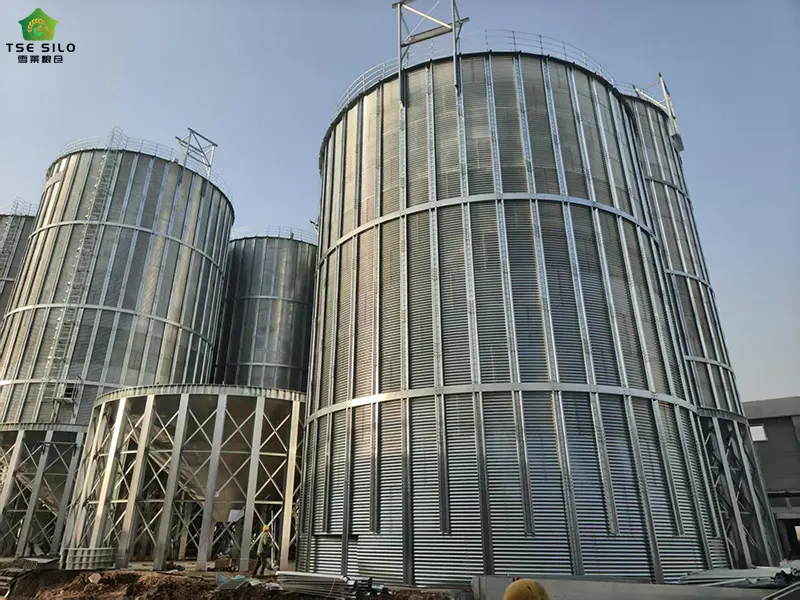
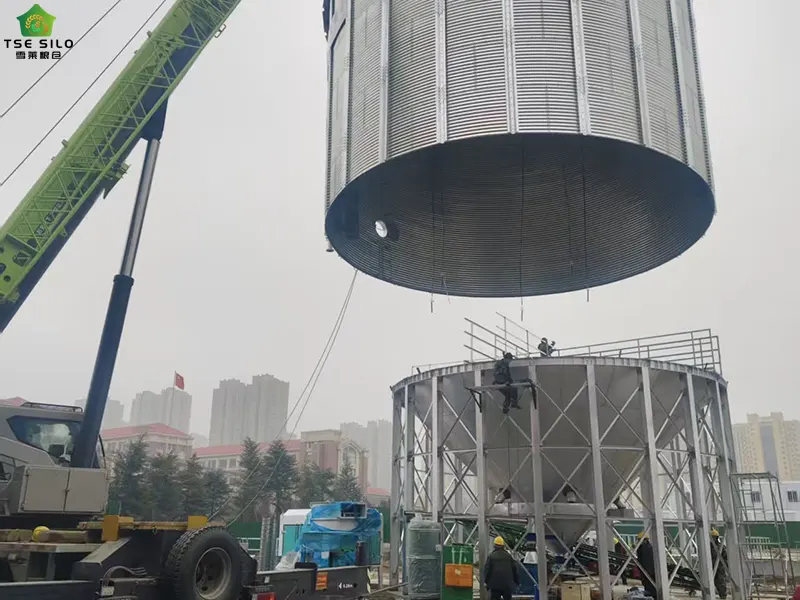
6. Manufacturing and Installation: Standardized and Modular Design, Saving Time and Labor
The manufacturing and installation costs of hopper bottom silos account for approximately 30% of the total cost. High-performance silos utilize standardized manufacturing and modular installation, avoiding the extended lead times and increased costs associated with customization:
- 6.1. Standardized Mold Production: Silo wall panels, cone-bottom structures, and roof trusses are all mass-produced using standardized molds from the manufacturer, eliminating customized irregular structures and reducing manufacturing costs by over 20% compared to customized models.
- 6.2. Modular Component Transportation: The silo is disassembled into modular components such as silo wall panels, cone-bottom structures, roof trusses, and support legs, allowing for stacking during transportation and reducing the number of trips and shipping costs.
- 6.3. Rapid On-Site Installation: The interlocking silo wall design eliminates the need for extensive welding; modular components are assembled on-site, shortening the installation time by over 50% compared to fully welded silos and reducing on-site labor installation costs.
- 6.4. One-stop installation by the manufacturer: The steel silo manufacturer completes the installation of the silo body and supporting equipment, avoiding communication costs and project delays caused by collaboration with multiple manufacturers. The installation warranty is ≥1 year, reducing after-sales disputes.
Supplement:
Core Adaptability – Precise Matching of Silo Capacity and Materials, No Waste High cost-effectiveness depends on the silo body perfectly adapting to storage needs, avoiding "using large silos for small materials" or "using small silos for large materials":
- Small batches, multiple types of materials: Select small standardized conical bottom silos (≤500 tons), with independent discharge from each silo, eliminating the need for interconnected silos.
- Large batches, single type of materials: Select medium to large conical bottom silos (1000~5000 tons), which can be designed for interconnected silos, sharing supporting equipment and reducing the cost of supporting equipment per silo.
- Corrosive materials (such as chemical powders): Only the inner wall of the silo needs anti-corrosion treatment (such as polyurea anti-corrosion), without the need for overall stainless steel construction; localized reinforcement is sufficient.
Conclusion:
Core Standards for High-Performance Conical Bottom Steel Silos In short, the most cost-effective conical bottom steel silos should have an adaptable cone angle, gravity-flow material handling, a universal main body with localized reinforcement, minimalist equipment with essential functions, rapid installation, and convenient operation and maintenance. All designs should revolve around the "core needs of stored materials," eliminating all redundant functions and over-design, while ensuring the durability of the silo and the discharge efficiency, achieving optimal initial construction costs and subsequent operation and maintenance costs. These are the six key characteristics of the most cost-effective conical bottom steel silos compiled and released by Shelley Storage. We hope this explanation will be helpful when choosing conical bottom steel silos in the future. For the highest cost-effectiveness conical bottom steel silos, choose Shelley Storage.
Written by
Shandong Shelley Grain Steel Silo Co., Ltd
Editor Jin
WhatsApp : +86-18653877118
Email : shelley@cnshelley.com