Steel grain silos are durable structures designed to withstand years of heavy use, but their longevity and safety depend entirely on how well they are maintained. Improper use and maintenance are the primary causes of steel silo failure. A well-maintained silo can operate safely well beyond its expected service life, while a neglected one may develop structural weaknesses, corrosion, or sealing failures that compromise grain quality and worker safety.
This guide outlines seven essential maintenance rules that cover every critical aspect of steel silo care—from foundation inspection to pest management. Following these rules systematically will help you extend your silo’s lifespan, protect stored grain quality, and ensure safe operation for years to come.
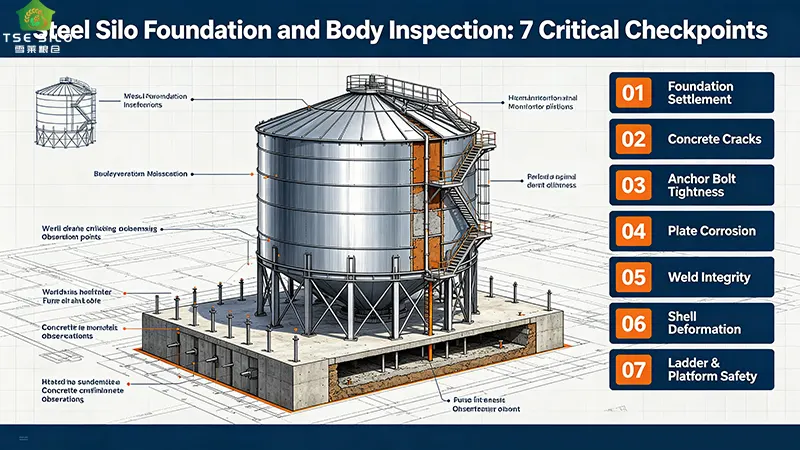
Rule 1: Inspect the Foundation and Structural Integrity Regularly
The foundation is the most fundamental component of any steel silo. It must be strong enough to support the weight of stored grain and prevent the empty silo from being damaged by wind forces. Without a stable foundation, the entire structure is at risk.
What to check:
- Look for uneven settlement, large cracks, broken concrete, or loosened anchor bolts around the base
- Check for soil erosion around or below the foundation—this can seriously compromise structural integrity
- Ensure there is a waterproof seal between the silo body and the foundation
- Observe the ground around the silo for abnormal cracks, subsidence, or water seepage
Why it matters: Foundation problems are often the first warning signs of structural failure. Cracks in the foundation reduce the silo’s load-bearing capacity and make it vulnerable to wind damage when empty. If you notice any of these symptoms, have the structure professionally assessed immediately.
Frequency: Inspect the foundation daily for visible changes, and conduct a thorough inspection at least annually.
Rule 2: Check the Silo Body for Deformation, Cracks, and Rust
The silo walls bear the immense pressure of stored grain. Over time, they can develop deformations, cracks, or rust that weaken the structure. Steel corrosion can damage the integrity of the silo wall, resulting in decreased airtightness or material leakage.
What to check:
- Look for localized deformation, bulging, dents, or scratches on the silo walls
- Inspect for cracks in welds—these are serious problems that must be found and addressed immediately
- Check for rust and corrosion on the silo wall surface
- Examine stiffening bars for bending and steel plates for bulging
- Pay special attention to sensitive areas such as through-wall supports
- Check the overall verticality of the silo—has it tilted?
Key distinction: Mild bulging of some steel plates is normal. However, excessive bulging is a sign that the corrugated steel sheet is approaching failure. Vertical cracks on the silo wall must be repaired immediately to avoid grain leakage.
Frequency: Check for deformation every time the silo is filled or emptied. Conduct a comprehensive rust inspection annually and perform anti-corrosion treatment based on the results.
Rule 3: Maintain Airtight Sealing and Replace Worn Gaskets
Sealing is critical for protecting grain from moisture and enabling effective fumigation. For sealed silos, “a seal is only as good as its last test”. Even small leaks can make fumigation ineffective and increase the risk of chemical resistance.
What to check:
- After each emptying, check the sealing of the silo door, door frame, and adjacent side panels for any cracks
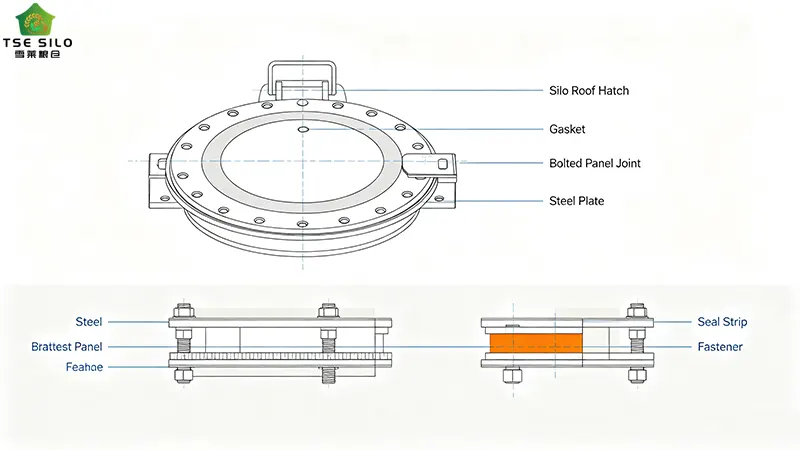
- Inspect gaskets, lids, hatches, aeration inlets, and pressure relief valves
- Check the double-seaming positions on the silo to ensure they are well sealed
- Examine the seal around the bottom of the silo—it承受 tremendous force when the silo is full
- For bolted silos, check bolt connections for looseness and gaskets for damage
- Pressure test the silo at least once a year and before every fumigation
Repair tips:
- If gaskets are damaged, replace them promptly
- Worn seals and loose fittings are inexpensive issues to fix but crucial to address
- Any joint leaks can be repaired using flexible membrane paints
Why it matters: Broken seals allow moisture ingress, which can cause grain spoilage and shorten the silo’s service life. Maintaining a seal is far more cost-effective than losing the ability to fumigate properly.
Frequency: Check sealing after each emptying. Pressure test annually and before each fumigation.
Rule 4: Inspect and Clean All Process Holes and Roof Components
Process holes—including ventilation holes, manholes, temperature measurement holes, and access seats—are common points of failure. Roof leaks can contaminate stored materials and compromise product quality.
What to check:
- Regularly check process holes for surface rust and leakage
- Inspect the silo roof cover for integrity—ensure there are no cracks or damage
- Check roof fastening bolts for looseness
- Inspect the roof platform to prevent leakage from the feed hole, platform plate, and rainproof ring
- For welded silo tops, check the condition of roof welds
- Check roof vents, manholes, and other facilities for integrity
- Look for water accumulation on the roof—this indicates drainage problems
Frequency: Inspect the roof monthly. Check process holes regularly as part of routine maintenance.
Rule 5: Clean the Silo Thoroughly and Practice Strict Hygiene
Grain hygiene is the first line of defense against pests and mold. Even a small amount of residual grain can sustain pests and lead to infestations. Effective grain storage hygiene means completely removing grain waste from silos, equipment, and other storage areas.
What to do:
- Vacuum the silo to remove residual dust, mold, and old grains
- After cleaning, ensure all seams, flanges, and floors are free of debris and dust
- For stained areas, use clean water, wipe and brush, then thoroughly dry them
- Clean grain-handling equipment (augers, conveyors) immediately after use
- Remove old grain from sheds, pads, and areas around silos
- Remove weeds and trash near the silo—they attract bugs and pests
Best practices:
- Clean silos immediately after use, before pests can establish themselves
- If a full clean wasn't completed post-harvest, winter is the next best option—insect breeding and migration are significantly reduced in cooler months
- Choose a warm, dry day for washing to ensure quick drying and prevent rust
Frequency: Clean after each use and conduct a deep clean at least annually.
Rule 6: Maintain Aeration Systems and Auxiliary Equipment
A well-designed aeration system is the foundation of grain quality management, ensuring even airflow throughout the silo so that all grain is cooled effectively. Auxiliary equipment—including ladders, platforms, conveyors, and electrical systems—also requires regular attention.
What to check for aeration systems:
- Clean aeration ducts to remove dust buildup and fallen grain kernels
- Ensure ducts are well sealed to prevent air leaks
- Check fans for technical condition—are they suitable for continued use?
- Turn on aeration fans as soon as enough grain covers the ducting while filling the silo
- For long-term maintenance mode, fans may run for approximately 100 hours per month
What to check for auxiliary equipment:
- Inspect ladders, platforms, and guardrails for looseness, cracks, or corrosion
- Check the mounting bolts of straight ladders for loosening annually
- Inspect welds and painted parts of ladders and trestle bridges every six months
- For conical bottom silos, check connecting parts and welds of the cone after emptying
- Ensure level gauges and temperature controllers are functioning normally
- Check lightning rods and electrical wiring for safety
Frequency: Inspect auxiliary equipment every six months. Conduct a major overhaul of mechanical and electrical equipment every two years.
Rule 7: Monitor Pests and Schedule Professional Inspections
Integrated pest management combines hygiene, structural treatments, aeration, protectants, and regular monitoring. Regular professional inspections catch problems that visual checks alone may miss.
Pest monitoring:
- Check silos and grain storage areas every two weeks, especially in warmer months when pests are more active
- Use grain insect sieves and traps to monitor for storage pests
- Keep a record of any insects found—even if the count is zero
- If you find any traces of bugs or pests, take immediate measures to exterminate them
- After cleaning, apply diatomaceous earth for up to 12 months of non-chemical protection
- For unsealable storage, prevention is the only option—aeration cooling to below 15°C suppresses insect reproduction
Professional inspections:
- Have the silo inspected by experts before it is put back into use after any major issue
- Conduct shutdown overhauls every 3–5 years with a professional team
- During overhaul: empty the silo, conduct a comprehensive internal inspection, and systematically overhaul all equipment
- Consider non-destructive testing of the structure if necessary
Recommended inspection schedule summary:
| Frequency | Inspection Focus |
| Daily | Visual inspection of exterior, foundation, and equipment operation |
| Every 2 weeks | Pest monitoring (especially in warm months) |
| Monthly | Roof inspection—tension rings, process holes, bolt connections |
| Each fill/empty | Silo wall deformation, door sealing |
| Every 6 months | Welds, ladders, trestle bridges, auxiliary equipment |
| Annually | Rust inspection, anti-corrosion treatment, ladder bolts, pressure test |
| Every 3–5 years | Shutdown overhaul with professional team |
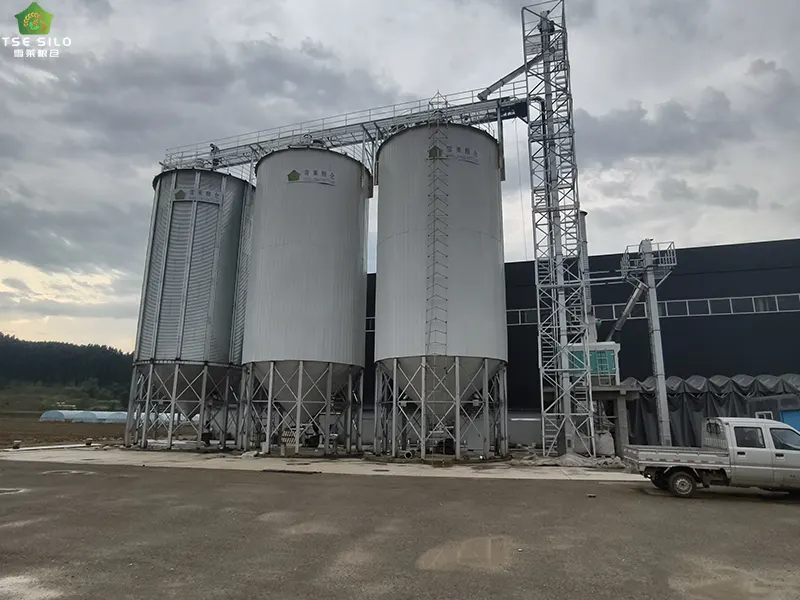
Conclusion
Steel grain silos are a significant investment, and their longevity depends on consistent, systematic maintenance. These seven rules provide a comprehensive framework for keeping your silo safe, functional, and efficient:
- Inspect the foundation for cracks, settlement, and erosion
- Check the silo body for deformation, cracks, and rust
- Maintain airtight sealing and replace worn gaskets
- Inspect process holes and the roof for leaks and corrosion
- Clean thoroughly and practice strict hygiene
- Maintain aeration systems and auxiliary equipment
- Monitor pests and schedule professional inspections
A scientific and careful maintenance approach helps reduce repair costs and extend service life. “Prevention first, prevention and treatment combined” is the guiding principle—small investments in regular maintenance are far less costly than emergency repairs or structural failures.
By following these rules and establishing a routine inspection schedule, you can ensure that your steel grain silo continues to protect your harvest and serve your operation safely for decades to come.
Written by
Shandong Shelley Grain Steel Silo Co., Ltd
Editor Jin
WhatsApp : +86-18653877118
Email : shelley@cnshelley.com