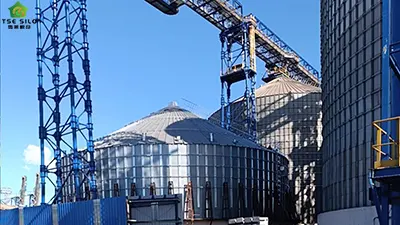
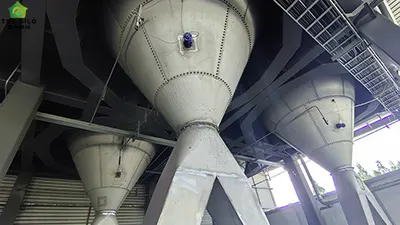
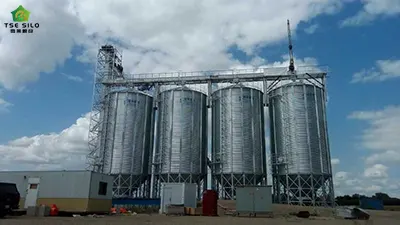
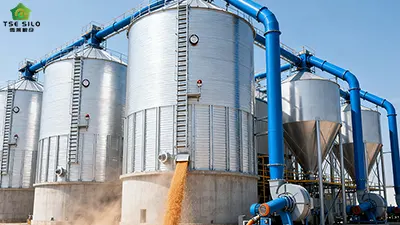
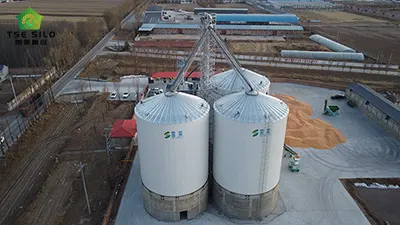
In the field of large-scale grain storage, steel silos have become the mainstream grain storage facility due to their advantages such as strong sealing, high degree of mechanization, and long storage period. However, the rapid heat conduction of metal materials and temperature fluctuations between the inside and outside of the silo can easily cause condensation on the silo roof and walls. When condensate seeps into the grain pile, it can lead to excessive local moisture content, inducing mold growth, heat generation, and toxin proliferation, seriously threatening grain safety and quality. Based on years of accumulated storage technology, Shelley Grain Steel Silos focuses on the core causes of condensation and mold growth, constructing six comprehensive and implementable prevention strategies. These strategies aim to block the intrusion of moisture and heat at the source, precisely control the internal environment of the silo, and strengthen intelligent monitoring and early warning, building a solid technical barrier for the long-term safe storage of grain.
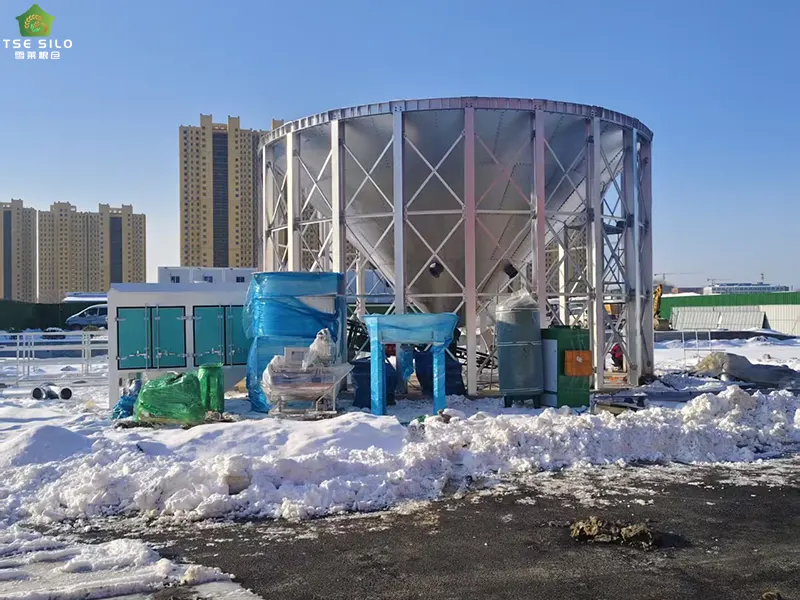
1. Construction Steps of Steel Grain Silos
1.1. Preliminary Preparation and Drawing Review
- On-site survey to determine silo location, elevation, drainage, power supply, and grain inlet/outlet lines.
- Verify drawings, technical parameters, and equipment list, and complete technical handover.
- Site leveling, fencing construction, and acceptance of materials, components, and equipment upon arrival.
1.2. Foundation Construction
- Earthwork excavation, subgrade laying, reinforcement binding according to drawings, and formwork erection.
- Pouring reinforced concrete independent/ring foundations, reserving embedded parts, ventilation ducts, and grounding devices.
- Foundation curing, re-measuring elevation, flatness, and axis position; acceptance before proceeding to the next process.
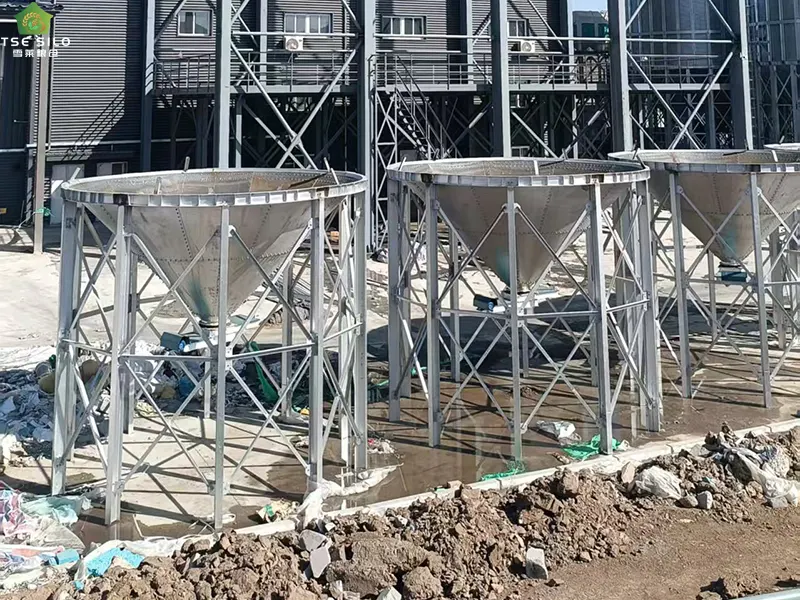
1.3. Silo Body Assembly
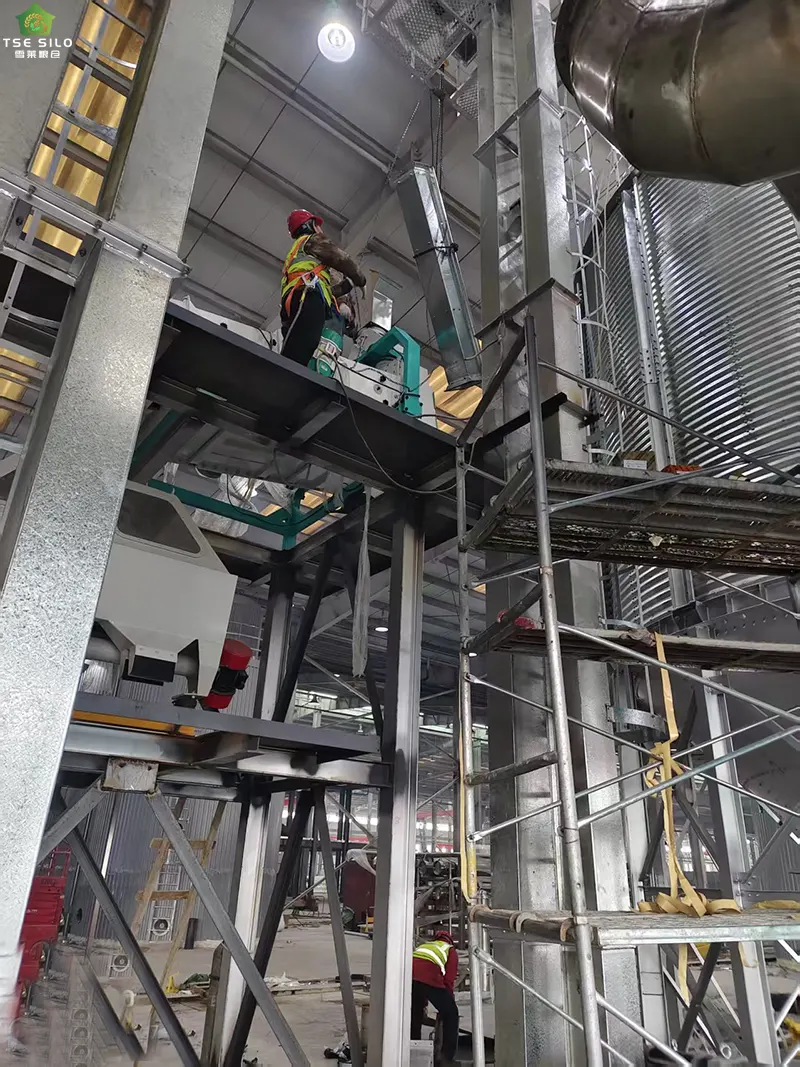
- Installing the bottom ring beam and base plate, and ensuring waterproofing and seepage prevention of the bottom layer.
- Assembling the galvanized steel silo walls layer by layer, using interlocking/bolt connections to ensure verticality and roundness.
- Installing the silo roof support, conical/flat roof, and rainproof structure, while simultaneously erecting temporary protective facilities.
- Adding silo body reinforcing ribs, ring beams, ladders, guardrails, and other auxiliary steel structures.
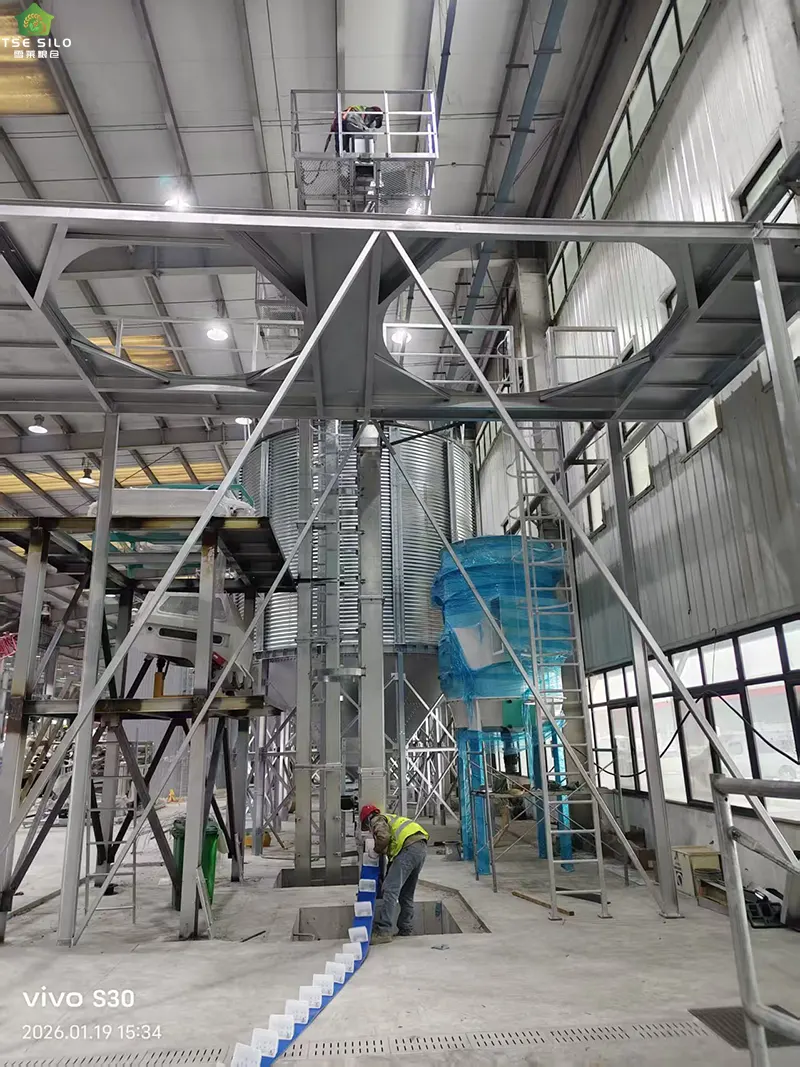
1.4. Installation of Ancillary Facilities
- Installation of doors, windows, manholes, ventilation openings, and inspection ports; preliminary sealing treatment.
- Installation of the ventilation system: above-ground/underground ventilation ducts, fans, and duct valves.
- Installation of the grain condition monitoring system: temperature measuring cables, temperature and humidity sensors, and control cabinet.
- Supporting equipment: grain inlet/outlet chutes, elevators, belt conveyors, circulating fumigation systems, dust removal devices, and lightning protection grounding.
1.5. Sealing, Insulation, Corrosion Prevention, and Waterproofing Treatment
- Apply special sealant to the silo walls, roof, and joints of the panels; ensure the entire silo is airtight.
- Apply insulation and heat-insulating coatings to the silo body as needed (essential in high-temperature/high-humidity areas).
- Touch-up painting and anti-corrosion treatment of components; apply moisture-proof and seepage-proof technology to the bottom and inner walls of the silo.
- Improve the external drainage slope and drainage ditches to prevent rainwater backflow and water accumulation in the foundation.
1.6. System Debugging, Cleaning, and Final Acceptance
- Empty Silo Trial Run: Ventilation, temperature measurement, electrical control, and conveying equipment are tested one by one.
- Full Silo Cleaning: Remove debris, dust, and construction residue; disinfect the empty silo.
- Self-inspection of overall appearance, structure, airtightness, electromechanical systems, and security systems.
- Submit documentation, jointly complete final acceptance with the client and supervisor, and hand over for use.
2. Eight Advantages of Using Steel Grain Silos for Storage
2.1. Short Construction Period and Economical Cost
Factory prefabricated components and on-site assembly reduce the construction period to only 1/3 to 1/2 of that of traditional brick-concrete silos; lightweight materials and low foundation investment result in a more advantageous overall construction cost.
2.2. High Storage Capacity Utilization and Flexible Space Planning
The cylindrical design eliminates beam and column obstructions, increasing effective storage capacity by 10%~15% compared to traditional silos. It can be arranged as a single silo or in multiple rows in a cluster, occupying a compact area and adaptable to various site plans.
2.3. Strong Sealing and Moisture Protection, Excellent Grain Storage Safety
Sealed joints in the sheet metal, coupled with specialized sealing accessories, provide waterproofing, moisture protection, rodent and insect prevention, and protection against external moisture intrusion, effectively reducing grain condensation, mold, and insect infestation.
2.4. Robust Structure and Long Service Life
Utilizing high-strength galvanized/corrosion-resistant steel plates, it is resistant to wind pressure, settlement, and corrosion. Under normal operation and maintenance, its service life can reach 20~30 years, offering superior resistance to natural disasters compared to traditional silos.
2.5. High Degree of Intelligent Adaptability and Labor-Saving Operation and Maintenance
It can be equipped with a complete set of grain condition monitoring equipment, including temperature and humidity monitoring, intelligent ventilation, circulating fumigation, and automatic grain loading and unloading systems, easily achieving automated management and significantly reducing manual inspection and maintenance costs.
2.6. Convenient Loading and Unloading, High Turnover Efficiency
It can be connected to mechanized conveying equipment such as belt conveyors, elevators, and chutes to achieve rapid grain loading, unloading, and transfer, meeting the turnover needs of large-scale grain depots and grain trading enterprises.
2.7. Flexible Disassembly and Relocation, Good Reusability
The modular assembly structure allows for disassembly, relocation, and reassembly according to production needs. No overall dismantling is required when adjusting the site or upgrading production capacity, resulting in high secondary utilization.
2.8. Environmentally Friendly and Clean, Meeting Grain Storage Standards
The inner walls of the storage silo are smooth and free of dead corners, making it difficult for grain to stick or accumulate dust, and simplifying cleaning and disinfection. The materials are non-toxic and harmless, meeting the hygiene requirements for grain storage and food.
3. Six Major Prevention and Control Strategies
3.1. Source Control of Moisture: Grain Entering the Storage Silence is "Dry, Clean, and Uniform"
- Strictly enforce safe moisture standards: Wheat ≤12.5%, Corn ≤13%, Rice ≤14%. Grain exceeding these standards is strictly prohibited from entering the storage silo.
- Thoroughly clean the grains before storage, removing broken grains, insect-damaged grains, and other impurities to reduce mold growth points.
- Implement a "five-separation" system: separate new and old grains, wet and dry grains, grade grains, insect-infested/insect-free grains, and grain varieties to avoid localized heat and moisture buildup.
3.2. Warehouse Insulation: Preventing Condensation Due to Temperature Differences
- The silo roof and walls utilize a polyurethane foam insulation layer (≥50mm), with an inner and outer steel plate composite structure. The thermal conductivity is ≤0.03W/m•K, significantly reducing diurnal temperature differences.
- A high-reflectivity heat-insulating coating is applied to the outer surface of the silo roof, reducing the internal temperature by 10–14℃ in summer and minimizing condensation caused by a cold roof and warm grains.
- A waterproof and heat-insulating pad is installed at the bottom of the silo to prevent moisture buildup from the foundation and condensation from the bottom.
3.3. Fully Sealed for Moisture Prevention: Strictly prevents external moisture intrusion.
- The steel silo features spiral-rolled seams and sealant, ensuring both airtightness and watertightness at the joints, preventing rainwater and moisture penetration.
- Doors, windows, and ventilation openings are equipped with airtight doors, insect screens, and rain caps, ensuring timely closure and sealing during rainy/humid seasons.
- The silo's inner walls are lined with food-grade epoxy resin/polyethylene, which is non-absorbent, does not condense, and is easy to clean.
3.4. Intelligent Ventilation and Temperature Equalization: Eliminates Humidity and Heat Stratification and "Hot Spots"
- Above-ground/underground ventilation ducts and axial flow fans create a "bottom-in, top-out" circulation, evenly distributing air through the grain pile.
- Summer ventilation strategies: Low-temperature ventilation at night (outside temperature < inside temperature, RH < inside RH) to avoid hot air entering the silo during the day.
- Winter ventilation strategies: Low-temperature, cold-storage ventilation, lowering the grain temperature to ≤10℃ to form a "cold core," inhibiting mold growth.
- Intelligent Linkage: Temperature and humidity sensors + PLC automatically start and stop fans to prevent secondary condensation caused by excessive ventilation.
3.5. Online Grain Condition Monitoring: Early Warning and Precise Handling
- Layered temperature monitoring cables are deployed within the grain pile (one point every 2 meters, covering the surface, middle, bottom, and edges).
- Real-time monitoring: Grain temperature, warehouse temperature, warehouse humidity, CO2; automatic alarm for abnormalities (e.g., grain temperature > 25℃, RH > 70%).
- Establish a three-level early warning mechanism: Yellow (high humidity and heat) → Blue (local condensation) → Red (heating and mold), with tiered handling.
3.6. Routine Standardized Management: Controlling Risks at the Outset
- Empty warehouse cleaning and disinfection before storage to eliminate residual grain, insect eggs, and mold sources.
- Cover the grain surface with insulating and breathable materials (such as insulation blankets or burlap sacks) to reduce surface temperature and humidity fluctuations and prevent "grain surface sweating".
- Regularly inspect and rotate the grain storage area, and ensure localized ventilation. Immediately remove surface condensation to prevent the spread of mold.
- Rotate long-term stored grains regularly to avoid prolonged localized oxygen deficiency, overheating, and rancidity.
4. Emergency Measures for Mold Growth in Grain within the Storage Area
4.1. Mild Mold Growth
- Surface Cleaning and Mold Removal: Manually/with small machinery remove moldy and clump-forming grains, bagging them separately to prevent mixing with normal grains.
- Rapid Moisture Reduction and Cooling: Activate the single-sided ventilation system intermittently (avoiding large airflow that could cause condensation throughout the storage area) to gradually reduce surface temperature and humidity.
- Localized Drying: Transfer the removed moldy grains to a dry, well-ventilated area for drying, assessing whether they should be downgraded for use or destroyed.
- Re-level the storage surface and cover with insulating and breathable material to block external moisture.
4.2. Moderate Mold
- Zone Isolation: Use partition boards to completely separate the moldy area from the intact grain to prevent cross-contamination.
- Targeted Ventilation and Cooling: Activate underground ventilation ducts, using negative pressure exhaust to prioritize the removal of hot and humid gases; avoid operation during rainy or foggy weather.
- Layered Removal and Cleaning: Remove grain from top to bottom in layers, screening as you go, removing moldy grain and surrounding affected grain section by section.
- After cleaning, partially seal the grain layer, increase the density of grain condition monitoring points, and record temperature and humidity every 2 hours.
4.3. Severe Mold
- Emergency Evacuation of All Personnel: The hot and humid environment and mold spores in the warehouse can easily cause respiratory discomfort; prolonged entry into the warehouse is strictly prohibited.
- Forced Ventilation: Fully open ventilation vents and fans, continuously force ventilation to dissipate heat and moisture, reducing the concentration of harmful gases in the warehouse.
- Whole Warehouse Clearance and Disposal: Grain is removed from the warehouse in batches, all grain is sorted separately, and spoiled grain is uniformly transported and destroyed, and must not enter the market.
- After removal from the warehouse, the warehouse is thoroughly cleaned and disinfected to remove any mold residue.
5. Safety Precautions When Handling Moldy Grain
- Two people must work together when entering the warehouse, wearing dust and gas masks and protective equipment, and ensuring proper ventilation and monitoring.
- High-temperature and high-humidity grain piles are prone to oxygen deficiency. Ensure adequate ventilation before entering the warehouse to prevent suffocation.
- Moldy grain and waste are stored in designated locations and disposed of properly to avoid secondary pollution.
6. Seasonal Specific Maintenance
6.1. Summer (High Temperature and Humidity):
Focus on checking for leaks, rain protection, and condensation hazards; strictly control ventilation timing to prevent hot air from entering the warehouse; increase the frequency of inspections.
6.2. Autumn and Winter (Low Temperature Season):
Conduct thorough insulation checks and implement appropriate low-temperature ventilation; seal any leaks to prevent excessive temperature differences and condensation inside the warehouse.
6.3. Rainy Season
Daily inspections for leaks, seepage, and water accumulation in the foundation; a comprehensive review of the silo structure and sealing areas after rain.
7. Storage Area Environment and Ancillary Facilities
- The storage area surrounding the warehouse should be kept clean, free of weeds, garbage, and standing water, and away from pollution sources.
- Doors, windows, and rainproof facilities should open and close smoothly; hinges and locks should be regularly maintained and rust-proofed.
- Fire extinguishers and emergency exits should be regularly inspected to ensure they are in good working order and unobstructed.
In summary, Shelley's six major prevention and control strategies for condensation and mold growth in steel grain silos are based on structural impermeability, centered on temperature and humidity control, guaranteed by intelligent monitoring, and supported by refined management, forming a closed-loop prevention and control system of "prevention before the event, control during the event, and post-event handling." By systematically implementing these strategies, risks such as condensation due to temperature differences and moisture accumulation can be effectively avoided, significantly reducing grain mold loss and extending the safe storage period. In the future, Shelley Grain Depot will continue to iterate its technological solutions, integrating intelligent and green grain storage technologies to provide solid technical support for ensuring national food security and improving the economic benefits of grain storage.
Written by
Shandong Shelley Grain Steel Silo Co., Ltd
Editor Jin
WhatsApp : +86-18653877118
Email : shelley@cnshelley.com