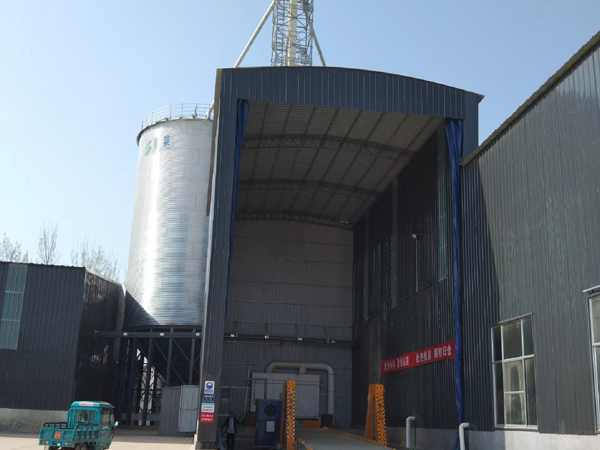
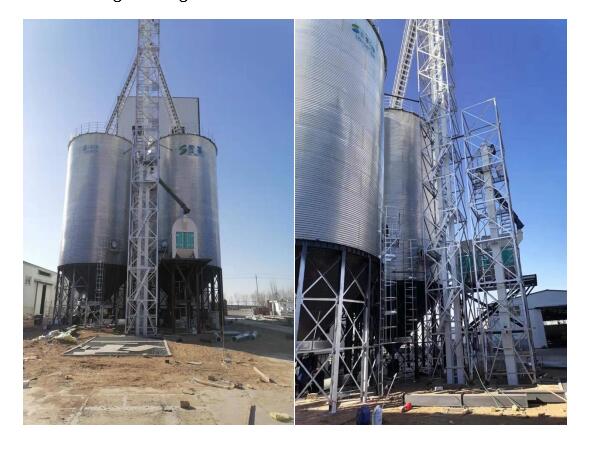
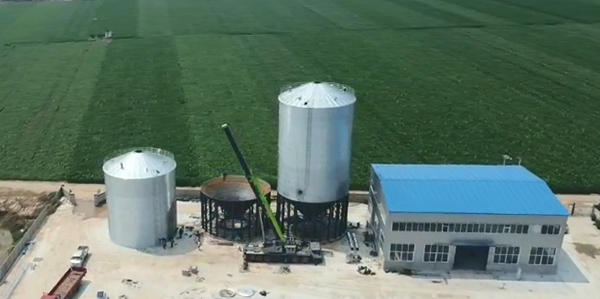
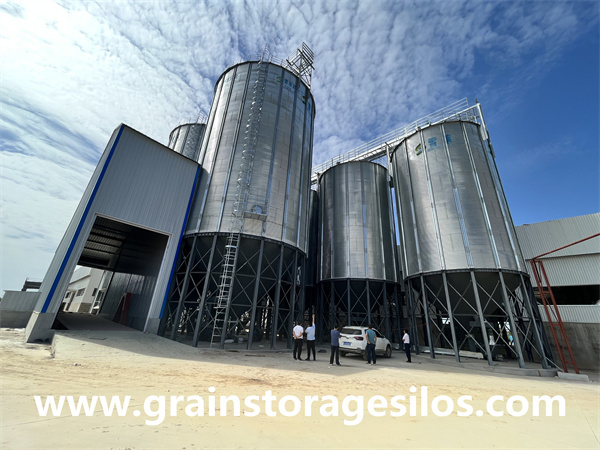
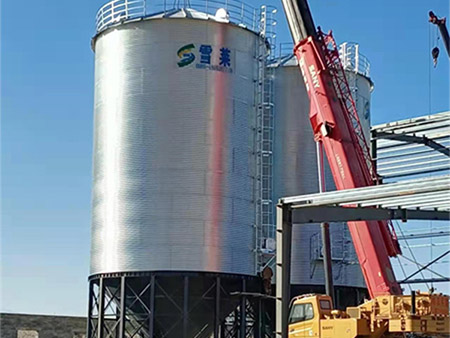
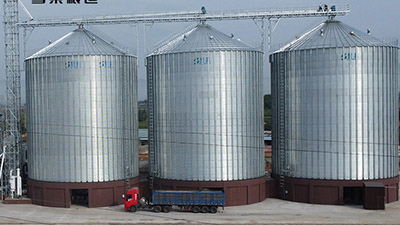
The automated control system for grain steel silos is the core of achieving "unmanned operation, intelligent control, and safe storage" in grain warehousing. Through the coordinated operation of four core modules—detection and sensing, central control, execution and drive, and communication management—it automates the entire process of grain temperature and humidity monitoring, material level control, ventilation and drying, conveying and cleaning, and security early warning. By integrating various devices and software, it achieves visualized, automated, and remote control of the entire process of grain entering and leaving the silo, storage, ventilation, and fumigation. The following are the system's components and detailed technical information:

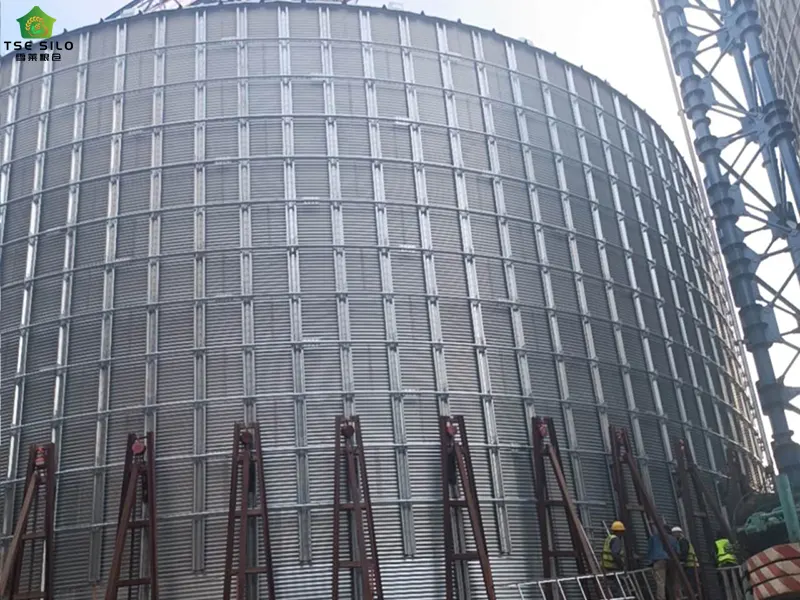
1. Central Control Unit (System Core)
The central control unit is the "brain" of the automated system, responsible for data reception, logical operations, command issuance, and human-machine interaction. Core equipment includes:
1.1. PLC Controller (Programmable Logic Controller)
- Function: Receives sensor signals, executes preset control logic (such as triggering ventilation when temperature and humidity exceed limits, starting and stopping conveyor equipment when material level reaches a threshold), and outputs control commands to the actuators.
- Technical Parameters: Primarily uses Siemens S7-1200/1500 and Mitsubishi FX/Q series, supporting digital/analog input/output (I/O points configured according to warehouse group size, typically 32-64 points per warehouse, expandable to over 128 points for warehouse groups), communication protocols support Modbus, Profinet, and EtherNet/IP.
- Application Considerations: Requires redundant power supply, adaptable to grain warehouse operating environments of -20℃ to 60℃, and installed in a dustproof and moisture-proof electrical control cabinet.
1.2. Industrial PC (IPC)
- Functions: Runs host computer monitoring software, enabling data visualization, historical data storage, report generation, fault diagnosis, etc.
- Technical Parameters: Industrial-grade motherboard, Core i5/i7 processor, 8GB or more of RAM, 500GB or more of solid-state drive, equipped with a touch screen or external monitor, supports Windows/Linux systems.
1.3. Human-Machine Interface Terminal (HMI Touchscreen)
- Functions: Local on-site operation interface for parameter setting (e.g., ventilation temperature threshold, drying time), manual/automatic equipment switching, real-time status viewing, and fault alarm confirmation.
- Technical Parameters: 7-15 inch color touchscreen, resolution 1024×600 or higher, supports seamless communication with PLC, IP65 protection rating (front end).
1.4. Control Server
- Functions: Centralized management of large grain warehouses, storing monitoring data and control logs from all grain warehouses, providing a data sharing interface, and supporting integration with enterprise ERP systems and grain supervision platforms.
2. Detection and Sensing Unit (System "Sensing Organ")
The detection and sensing unit is responsible for collecting key parameters of the grain and environment within the grain warehouse, providing data for control decisions. Core equipment includes:
2.1. Temperature Monitoring Sensors
- Types: Distributed fiber optic temperature sensors, thermistor (NTC) sensors, thermocouple (K-type) sensors.
- Functions: Collects the temperature inside the grain and the warehouse space to prevent grain overheating and mold growth.
- Technical Parameters: Temperature measurement range -40℃~80℃, accuracy ±0.5℃. Distributed fiber optic sensors enable continuous temperature measurement throughout the warehouse. Thermistor sensors are arranged in layers (generally one layer every 3~5 meters, with 4~8 measuring points per layer).
- Application Notes: Sensors must be encapsulated in waterproof and corrosion-resistant metal housings. Fiber optic sensors should be protected from bending. Thermistor sensors are connected to the data acquisition unit via cables.
2.2. Humidity Monitoring Sensors
- Types: Capacitive humidity sensor, resistive humidity sensor.
- Function: Collects relative humidity of the air and moisture content of the grain in the warehouse (requires a moisture meter) to determine if ventilation and dehumidification are needed.
- Technical Parameters: Humidity measurement range 0~100%RH, accuracy ±3%RH, response time < 5s. Some sensors can simultaneously measure temperature.
2.3. Grain Level Monitoring Sensors
- Types: Radar level gauges, ultrasonic level gauges, plumb bob level gauges, RF admittance level gauges.
- Functions: Real-time monitoring of grain level in the silo, controlling the start and stop of feeding/discharging equipment, preventing overflow from a full silo or dry grinding from an empty silo.
- Technical Parameters: Radar level gauges have a measurement range of 0~70 meters, accuracy ±1mm, frequency 26GHz, suitable for dusty grain silo environments; ultrasonic level gauges have a measurement range of 0~30 meters, accuracy ±0.5%, lower cost, suitable for small and medium-sized grain silos.
2.4. Grain Quality Monitoring Sensors
- Online Moisture Analyzer: Near-infrared moisture analyzer, installed on conveying equipment, measures grain moisture content in real time, accuracy ±0.5%, measurement range 8%~30%.
- Dust Concentration Sensor: Laser scattering sensor, monitors dust concentration on the silo roof and conveyor corridor, preventing dust explosions, measurement range 0~1000mg/m³.
2.5. Equipment Status Sensors
- Motor Current Sensor: Monitors the current of the conveying pump, elevator, and fan to determine if the equipment is overloaded or stalled.
- Vibration Sensor: Installed on the fan and motor to monitor the vibration amplitude of the equipment and prevent mechanical failures.
- Limit Switch: Used for position control of the cleaning machine and unloading valve to achieve automatic positioning and limit protection.
3. Execution Control Unit (System "Actuator")
The execution control unit, based on instructions from the central control unit, completes operations such as grain conveying, ventilation, drying, and cleaning. Core equipment includes:
3.1. Conveying Equipment Control Module
- Core Equipment: Frequency converter, soft starter, motor protector, contactor.
- Controlled Objects: Belt conveyor, scraper conveyor, elevator, screw conveyor, unloading valve.
- Functions: Achieves stepless speed regulation of the conveying equipment through the frequency converter, automatically starts and stops based on material level sensor signals, reduces motor starting current through the soft starter, and provides overload, short circuit, and phase loss protection through the motor protector.
- Technical Parameters: The inverter power is configured according to the motor power (e.g., 11kW, 15kW, 30kW), supports vector control, and uses the Modbus communication protocol.
3.2. Ventilation Equipment Control Module
- Core Equipment: AC contactor, intermediate relay, inverter.
- Controlled Objects: Axial flow fan, centrifugal fan, circulating fumigation fan, exhaust fan.
- Function: Automatically starts and stops the fans based on temperature and humidity sensor signals, adjusts ventilation time and fan speed, and achieves mechanical ventilation, circulating fumigation, and cooling/dehumidification.
- Application Considerations: Fan control needs to be configured with delayed start and interlock functions to prevent multiple fans from starting simultaneously and causing power grid overload.
3.3. Drying Equipment Control Module
- Core Equipment: PLC expansion module, temperature controller, flow controller, solenoid valve.
- Controlled Objects: Grain dryer, hot air furnace, grain discharge mechanism, feeding mechanism.
- Function: Automatically adjusts hot air temperature, grain discharge speed, and feed rate based on online moisture meter signals to achieve automated control of grain drying and ensure the moisture content of the dried grain meets standards.
- Technical Parameters: Temperature controller accuracy ±1℃, flow controller accuracy ±0.5%.
3.4. Cleaning Equipment Control Module
- Core Equipment: Servo driver, stepper motor, limit switch, remote controller.
- Controlled Objects: Intelligent cleaning machine, bottom unloader, scraper cleaning machine.
- Function: Controls the walking, rotating, and lifting of the cleaning machine via the servo driver to achieve automatic cleaning of the grain inside the silo; limit switches provide safety protection.
4. Security and Auxiliary Automation Units
4.1. Fire Protection Automation System
- Core Equipment: Smoke sensor, temperature sensor, flame detector, fire pump controller, carbon dioxide extinguishing system, sprinkler system.
- Function: Monitors fire hazards within the storage area, automatically starts the fire pump and extinguishing system, cuts off power to conveying equipment, and issues an alarm signal.
4.2. Dust Removal Automation System
- Core Equipment: Differential pressure sensor, pulse controller, solenoid valve, dust collector fan.
- Controlled Objects: Baghouse dust collector, cyclone dust collector.
- Function: Automatically starts the pulse jet cleaning system based on differential pressure sensor signals to clean the dust collector filter bags, ensuring dust removal efficiency. When dust concentration exceeds the standard, it triggers the fan to increase airflow or shut down.
4.3. Alarm System
- Core Equipment: Audible and visual alarm, SMS alarm, voice alarm.
- Function: Issues audible and visual alarms and notifies management personnel via SMS and voice when temperature and humidity exceed standards, material level is abnormal, equipment malfunctions, or fire hazards occur.
5. Communication and Management Unit
5.1. Communication Equipment
- Industrial Ethernet Switch: Enables wired communication between PLCs, industrial computers, sensors, and actuators, supporting Profinet and EtherNet/IP protocols.
- Wireless Communication Modules: 4G/5G, LoRa, and WiFi modules for communication between field devices and remote servers, suitable for scenarios with widely distributed warehouses.
- Data Acquisition Unit: Collects signals from dispersed sensors, converts them into standard communication protocols, and transmits them to the PLC.
5.2. Management Software
- SCADA Monitoring Software: Such as WinCC, KingSCADA, or ForceControl, enabling real-time data monitoring, equipment status display, historical data query, and report generation.
- Intelligent Warehouse Management System: Integrates functions such as grain warehousing, outbound storage, storage, quality inspection, and financial settlement, achieving full-process management of the grain warehouse.
- Remote Monitoring Terminal: Mobile APP and web interface, allowing managers to view the grain warehouse status and issue control commands anytime, anywhere.
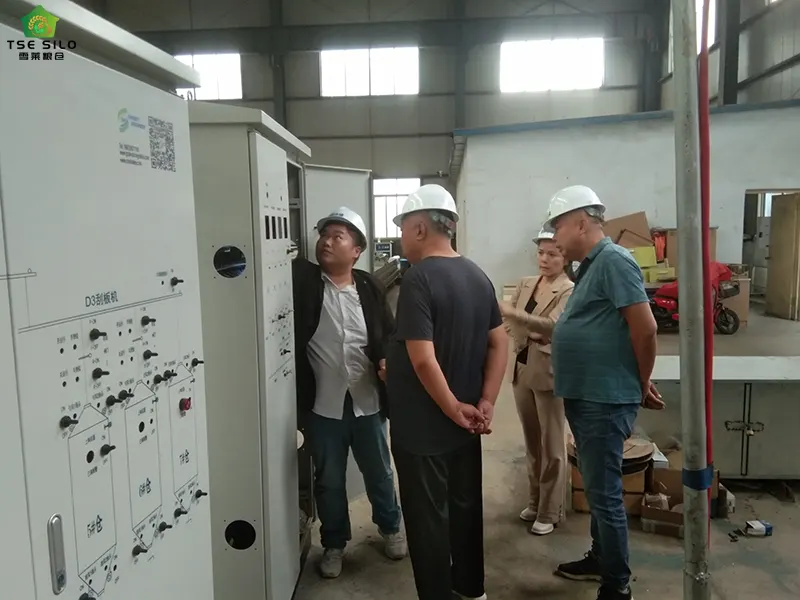
6. System Core Functions and Advantages
- 6.1. Intelligent Grain Condition Monitoring and Early Warning: 24/7 uninterrupted monitoring, automatic alarm for exceeding limits, and prediction of grain condition changes through historical trend charts.
- 6.2. Intelligent Ventilation Control: The system automatically judges and starts/stops ventilation based on real-time temperature and humidity differences and set conditions, achieving energy-saving and efficient water retention and cooling.
- 6.3. Automated Inbound/Outbound Operations: One-button start or automatic operation according to preset procedures to complete the sequential start/stop and linkage of conveyor lines, gates, and metering equipment, significantly reducing manual labor and errors.
- 6.4. Automated Fumigation and Safety Monitoring: Automatic fumigation, circulation, and concentration monitoring ensure fumigation effectiveness and personnel safety.
- 6.5. Centralized Monitoring and Remote Management: "One control room manages multiple grain warehouses," reducing labor costs and improving management efficiency.
- 6.6. Data Traceability and Analysis: All operational data and grain condition changes are recorded throughout the process, generating various reports to provide data support for optimizing warehouse management.
- 6.7. Safety Interlocks and Protection: Electrical and logical interlocks should be installed between equipment (e.g., opening subsequent equipment before opening preceding equipment) to prevent accidents such as material blockage and leakage.
7. Application Precautions
- 7.1. Environmental Adaptability: Grain silos are characterized by high dust levels, high humidity, and large temperature fluctuations. Equipment must be dustproof, moisture-proof, and corrosion-resistant, with a protection rating of at least IP54.
- 7.2. Communication Stability: When silos are widely distributed, a hybrid communication method combining industrial Ethernet and wireless communication is recommended to ensure stable communication.
- 7.3. Redundancy Design: Key equipment (such as PLCs, servers, and communication equipment) must be configured with redundancy to prevent system failure.
- 7.4. Calibration and Maintenance: Sensors need to be calibrated regularly, and actuators need to be maintained regularly to ensure system accuracy and reliability.
8. Conclusion:
The automated control system for grain steel silos is a complex mechatronics and information integration project. It is not merely a collection of equipment, but a deep integration of process knowledge (grain storage technology), control logic, and information technology. An excellent system can significantly improve the safety of grain storage (preventing mold, insects, and fire), reduce losses, lower operating costs (labor and energy consumption), and realize the digital and intelligent upgrade of warehouse management. It is an indispensable part of the modern grain logistics system.
Written by
Shandong Shelley Grain Steel Silo Co., Ltd
Editor Jin
WhatsApp : +86-18653877118
Email : shelley@cnshelley.com