LANGUAGE
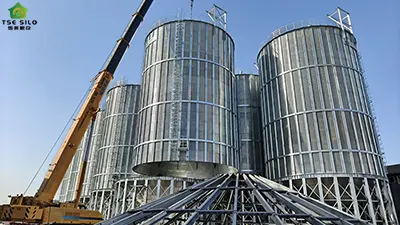
In modern warehousing and logistics and industrial production systems, 2000-ton steel silos, with their advantages of stable structure, large capacity, short construction period, and wide applicability, are widely used in various fields such as grain, cement, fly ash, chemical raw materials, and mining. Material level, as a core parameter for the operation and management of steel silos, directly affects warehousing safety, production scheduling, metering and accounting, and cost control. Traditional material level monitoring methods are easily affected by factors such as dust, material buildup, temperature, and material characteristics, resulting in insufficient accuracy, poor stability, and limited data, making them insufficient to meet the high-efficiency requirements of modern, intelligent warehousing.
With the rapid development of technologies such as radar sensing, 3D scanning, AI algorithms, and the Internet of Things, material level monitoring in grain steel silos is upgrading from single-point, contact-based measurement to high-precision, non-contact, full-area imaging, and intelligent prediction. The new generation of material level monitoring technology has achieved significant breakthroughs in anti-interference capabilities, measurement accuracy, operational reliability, and data visualization, providing crucial support for the safe and stable operation, refined management, and intelligent upgrading of steel silos with a capacity of 2000 tons or more. This article focuses on current mainstream advanced material level monitoring technologies, analyzing their principles, advantages, and application scenarios to provide a reference for engineering selection and system optimization.
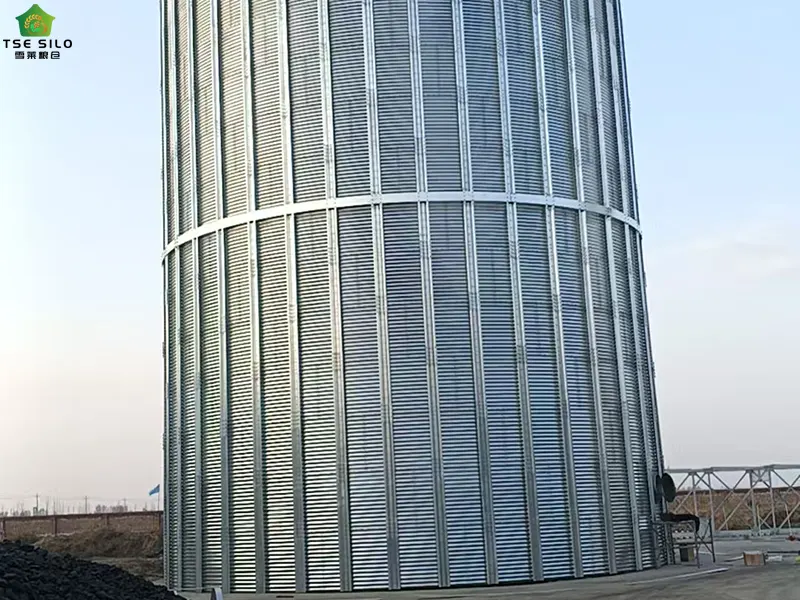
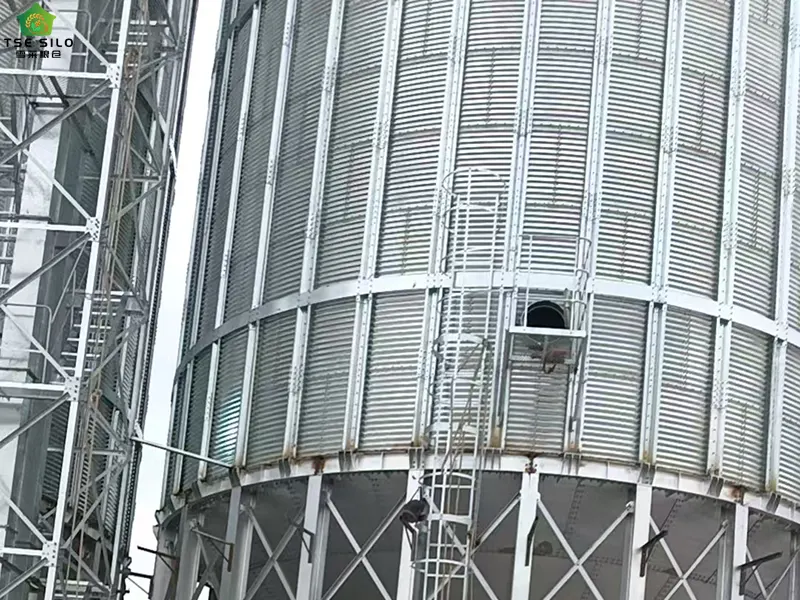
The 3D scanning radar level gauge is currently the most advanced and practical non-contact measurement solution in the field of steel silo level monitoring. It is specifically designed for large, high-dust, and irregular material surface scenarios, completely solving the pain points of traditional single-point measurement such as blind spots, false levels, and insufficient accuracy.
Utilizing an 80GHz/140GHz high-frequency FMCW frequency-modulated continuous wave + dual-axis rotating scanning mechanism, it performs a 360° full-area scan of the silo, collecting tens of thousands of data points in a single scan. Through AI point cloud algorithms, it reconstructs the three-dimensional shape of the material, directly outputting the highest/lowest/average material level, volume, and weight, achieving "silo visualization."
High-frequency pulse radar level gauges are currently the most widely used and cost-effective non-contact measuring instrument for steel silo level monitoring. With advantages such as dust resistance, maintenance-free operation, and high stability, they have become the mainstream choice for various powder and granular material silos such as cement, fly ash, mineral powder, and grain with a capacity of 1000 tons or more.
Utilizing high-frequency microwave pulse transmission technology, the antenna emits high-frequency electromagnetic waves into the material inside the silo, typically in the 26GHz basic high-frequency band with a wavelength of approximately 11.5mm. These waves are received after reflection from the material surface. The material level is accurately calculated by measuring the round-trip time of the electromagnetic waves. Compared to low-frequency radar, it has a narrower beam, stronger directionality, and superior anti-interference capabilities.
A guided wave radar level gauge is a contact-type, high-precision level measurement instrument. It relies on a probe or cable to guide microwave pulses, which travel along a conductor to the material surface and are reflected back. The level height is calculated based on the time difference, making it particularly suitable for solving the problems of interference and misjudgment due to material accumulation in traditional radar under complex operating conditions.
The guided wave radar level gauge operates based on the time domain reflection (TDR) principle. The probe or cable acts as the microwave transmission conductor. The instrument generates nanosecond-level high-speed pulse signals, which are transmitted downwards along the waveguide. When the pulse reaches the interface between the material and the gas, due to the abrupt change in the dielectric constant of the medium, part of the pulse is reflected back to the instrument's receiving end. The system calculates the actual material level by precisely measuring the time difference between pulse transmission and reception. Because the microwave signal is guided and transmitted entirely by the probe/cable, it is independent of spatial radiation and unaffected by dust, steam, or turbulence within the silo. It can also effectively distinguish between material clinging to the probe and the actual material level, thus achieving stable, continuous, and high-precision material level measurement.
Based on the mechanical contact measurement principle, it consists of a servo motor, a high-precision encoder, a dustproof weight, a wire rope, and an intelligent control unit. During operation, the servo motor drives the wire rope to lower the weight at a uniform speed. When the weight contacts the material surface and encounters preset resistance, a signal feedback is triggered, and the motor immediately reverses to retract the weight. The encoder simultaneously records the weight's descent and retraction stroke, and combined with preset silo height parameters, accurately calculates the actual material level height. Simultaneously, intelligent algorithms complete data calibration and error correction.
Primarily suitable for monitoring extreme working conditions and complex materials in steel silos. Core scenarios include: high-dust steel silos (cement silos, fly ash silos, ash silos), highly interfering industrial silos (coal silos, ore silos), silos for easily adhered/sticky materials, and warehousing scenarios with extremely high requirements for measurement reliability where non-contact instruments cannot be adapted. Especially suitable for routine level monitoring in unattended steel silos.
Based on the principle of sound wave reflection, the instrument's ultrasonic transducer emits high-frequency ultrasonic pulses towards the surface of the material inside the silo. The ultrasonic waves propagate in the air, reflect off the material surface to form echoes, which are received by the transducer. The system precisely calculates the time difference between ultrasonic wave transmission and reception, combines this with the speed of sound in the air, and calculates the distance from the transducer to the material surface. Based on the preset height of the silo, it ultimately determines the actual material level, achieving continuous, real-time material level monitoring.
Primarily suitable for small to medium-sized steel silos. Core scenarios include silos for clean materials such as grains, feed, and plastic granules, as well as storage conditions with low dust levels, stable ambient temperatures, and no strong steam. Suitable for users with moderate measurement accuracy requirements and a high cost-performance ratio.
Highly affected by the environment. High dust levels, large amounts of steam, and strong airflow within the silo will attenuate the ultrasonic signal, leading to increased measurement errors. Not suitable for silos containing highly viscous materials or materials prone to dust generation. The measurement range is limited by the speed of sound propagation, making it unsuitable for ultra-large and ultra-deep steel silos.
Based on the principle of radio frequency admittance measurement, using high-frequency radio frequency signals, a measurement loop is formed between the probe and the steel silo wall to detect the admittance value (a combined parameter of capacitance and resistance) between the probe and the silo wall in real time. When there is no material in the silo, the admittance value of the measurement loop is stable at a preset reference value. When material comes into contact with the probe, the dielectric constant and conductivity of the material will change the loop admittance value. The instrument distinguishes between empty and material-containing states by recognizing the sudden changes in the admittance value, and simultaneously calculates continuous material level data through a precise algorithm.
Core compatibility with high-temperature, high-adhesion, and easily adhered steel silos, primarily including asphalt silos, coke silos, lime silos, high-temperature powder silos, and silos for corrosive materials in the chemical industry. Suitable for industrial storage scenarios with high requirements for measurement stability and complex operating conditions.
This is a contact measurement method; the probe must directly contact the material. It is not suitable for materials that easily crystallize, easily agglomerate, or will coat the probe. During installation, ensure sufficient distance between the probe and the silo wall to prevent material adhesion from affecting measurement accuracy. Regularly check the probe for wear and corrosion and replace it promptly to ensure long-term stable operation.
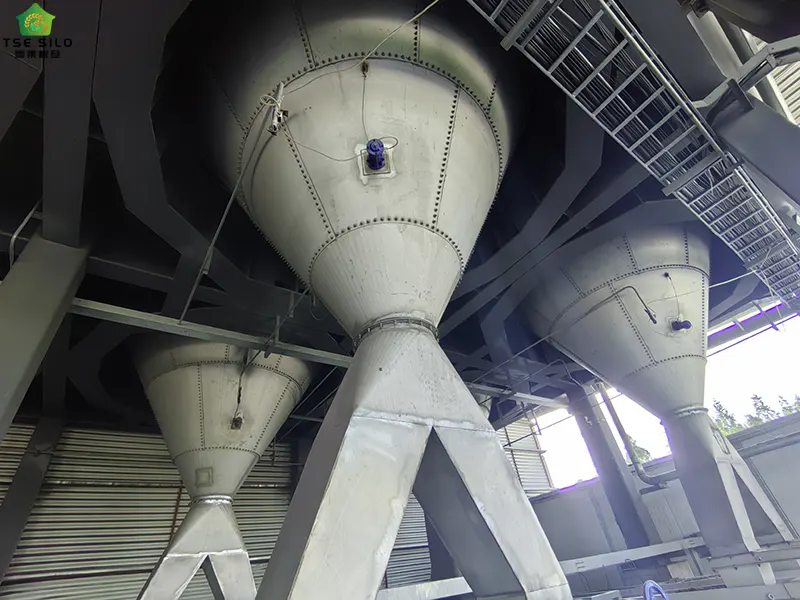
The AI-integrated multi-point level monitoring system represents the highest level of intelligence and digitalization in the field of steel silo level monitoring. Breaking away from the limitations of single-sensor measurements, it achieves comprehensive, accurate, and intelligent monitoring of steel silo levels through multi-technology integration, AI intelligent analysis, and IoT linkage. It is suitable for high-end needs such as large steel silo clusters, smart factories, and unmanned warehouses, providing core support for the digital upgrade of warehouse management.
The system is based on "multi-sensor fusion + edge computing + AI intelligent algorithms" to construct a distributed monitoring network. The system integrates multiple sensors, including 3D scanning radar, high-frequency pulse radar, ultrasonic sensors, and intelligent counterweights, deploying monitoring points at various locations within the steel silo to achieve multi-point, all-around data collection of material levels. An edge computing module aggregates, filters, and calibrates multi-source data in real time, eliminating abnormal data. AI algorithms analyze material level change trends and surface morphology to create 3D material surface models and predict anomalies, simultaneously transmitting data to the cloud platform and on-site control system, achieving integrated "collection-analysis-early warning-control."
Corely adaptable to high-end smart warehousing needs, primarily including large steel silo clusters (cement, grain, mining, etc.), smart factory warehousing systems, unmanned silos, and large warehousing projects requiring accurate inventory checks and intelligent scheduling. Particularly suitable for scenarios with high requirements for digital and intelligent warehouse management.
The initial investment in this system is relatively high. Sensor placement should be planned rationally based on the warehouse scale to avoid resource waste. Regular calibration and maintenance of sensors and transmission modules are necessary to ensure stable data transmission. System software needs regular upgrades to optimize AI algorithms and improve the accuracy of risk prediction. Professional personnel are required for system operation and maintenance to fully leverage the system's intelligent advantages.
In summary, steel silo level monitoring has gradually moved from traditional mechanical measurement to a new stage of high precision, intelligence, and digitalization. Advanced technologies such as 3D scanning radar, high-frequency radar, guided wave radar, and intelligent weights each have their strengths and can be precisely adapted to different working conditions, material characteristics, and management needs, effectively solving measurement challenges in complex environments such as dust, material buildup, and high/low temperatures, significantly improving the accuracy and stability of level data.
With the deepening of smart warehousing and digital factories, level monitoring is no longer limited to simple liquid and material level displays, but is developing towards integrated 3D modeling, data fusion, AI early warning, and remote control, providing core guarantees for warehouse safety, accurate metering, and efficient scheduling.
In the future, with the deep integration of sensing technology with the Internet of Things and big data, steel silo level monitoring will be further upgraded to high reliability, maintenance-free operation, and full life cycle management, injecting stronger momentum into improving the quality and efficiency of warehousing systems in various industries and ensuring safe operation.
Written by
Shandong Shelley Grain Steel Silo Co., Ltd
Editor Jin
WhatsApp : +86-18653877118
Email : shelley@cnshelley.com