LANGUAGE
Global food security remains one of the most pressing challenges of the 21st century. With the world population projected to reach nearly 10 billion by 2050, the demand for food will continue to rise. Yet, even today, millions of tons of grain are lost every year due to inadequate storage, pest infestation, moisture damage, and poor handling practices. According to the Food and Agriculture Organization (FAO), roughly one-third of all food produced for human consumption is lost or wasted globally—and a significant portion of that loss occurs after harvest.
Grain storage infrastructure is the backbone of a resilient food system. It bridges the gap between harvest and consumption, stabilizes prices, and ensures that food reaches people in good condition. Among the various storage solutions available, the steel grain silo has emerged as a critical tool for safeguarding global food security. Its durability, airtight design, and adaptability make it indispensable for modern agriculture.
This article explores seven ways grain storage infrastructure—and particularly the steel grain silo—helps secure global food security.
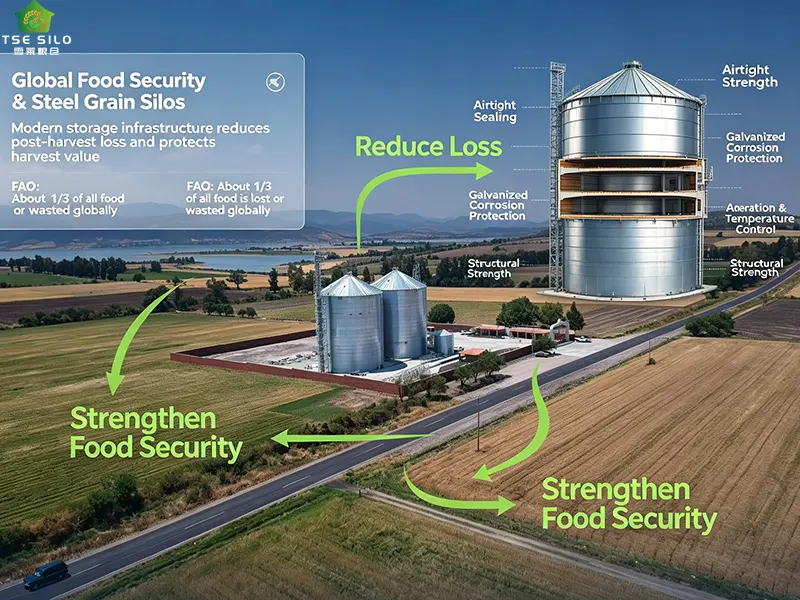
Post-harvest losses represent a direct threat to food security. In many developing regions, losses can reach 20–30% or more due to poor storage conditions. Rodents, insects, mold, and moisture are the primary culprits. Every ton of grain lost means less food available for consumption and wasted resources used in production.
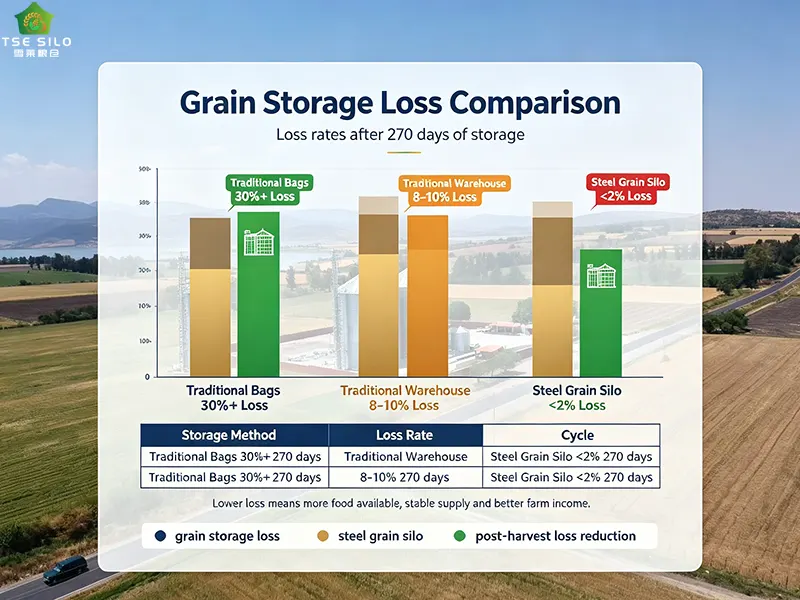
Steel grain silos directly address this challenge through their superior sealing and structural integrity. A well-designed galvanized steel grain silo can reduce storage losses to under 2%, compared to 8–10% in traditional storage methods. Hermetic sealing creates a low-oxygen environment that naturally suppresses insect activity and prevents mold growth without the need for chemical pesticides. In pilot projects across Asia and Africa, farmers using steel grain silos have reported dramatic reductions in losses—sometimes from double-digit percentages to less than 2%.
By minimizing post-harvest losses, steel grain silos effectively increase the amount of food available without requiring additional land, water, or fertilizer. This directly enhances food security at the local, regional, and global levels.
Food security is not just about quantity—it is also about quality. Grain that is contaminated by mold, mycotoxins, or pests is unsafe for consumption and may be rejected by markets. Aflatoxin, a toxin produced by mold in poorly stored grain, is linked to liver cancer and stunting in children.
Steel grain silos provide a controlled storage environment that preserves grain quality. The smooth interior surfaces of a steel grain silo prevent material adhesion and make cleaning easier, reducing the risk of contamination. The airtight structure prevents moisture ingress, which is essential for preventing mold growth. Temperature monitoring and aeration systems integrated into modern steel grain silos allow operators to maintain optimal conditions, further protecting grain quality.
By preserving nutritional value and preventing contamination, steel grain silos help ensure that stored grain remains safe and nutritious for human consumption—a fundamental requirement for food security.
Food insecurity is often driven not by absolute scarcity but by volatility in supply and prices. When harvests are good, prices can plummet, hurting farmers. When harvests are poor, prices soar, making food unaffordable for the most vulnerable. Effective storage infrastructure helps smooth out these fluctuations.
Steel grain silos enable farmers and traders to store grain safely for extended periods, allowing them to sell when market conditions are favorable rather than immediately after harvest when prices are lowest. This storage capacity acts as a buffer, stabilizing supply throughout the year. In times of shortage, stored grain can be released to the market, moderating price spikes.
At the national level, strategic grain reserves stored in large-scale steel grain silos allow governments to respond to emergencies such as droughts, floods, or conflicts. By maintaining a reliable reserve, countries can prevent food crises and protect their most vulnerable populations. The durability and low maintenance requirements of steel grain silos make them ideal for long-term strategic storage.
Climate change is increasing the frequency and severity of extreme weather events, disrupting agricultural production and food supply chains. Droughts, floods, and unpredictable rainfall patterns can lead to sudden shortages. In this context, robust storage infrastructure becomes a critical adaptation strategy.
Steel grain silos are engineered to withstand harsh environmental conditions. Galvanized steel offers excellent corrosion resistance, ensuring that the structure remains intact even in humid or coastal environments. Modern steel grain silos can be designed to resist high wind loads, snow loads, and seismic activity, making them suitable for diverse climates.
Moreover, the rapid installation time of steel grain silos—often just days or weeks compared to months for concrete alternatives—allows for quick deployment in emergency situations or in regions where storage capacity is urgently needed. This agility is invaluable for building climate resilience in vulnerable food systems.
Smallholder farmers produce a significant share of the world's food, yet they often lack access to adequate storage. Without proper storage, they are forced to sell their grain immediately after harvest at low prices, only to buy back food later at higher prices. This cycle perpetuates poverty and food insecurity.
Steel grain silos offer a practical solution for smallholders. Smaller-capacity steel grain silos are affordable, easy to install, and require minimal maintenance. They allow farmers to store grain for household consumption and for sale at better prices. By reducing losses and improving bargaining power, steel grain silos help increase household income and food security.
In many development programs, the introduction of steel grain silos has been shown to reduce poverty and improve nutrition. When farmers can store their harvest safely, they can feed their families year-round and invest in their farms, creating a positive cycle of growth and resilience.
Global food security depends on the smooth flow of grain from surplus regions to deficit regions. International trade in grains such as wheat, maize, rice, and soybeans is essential to balance supply and demand. Efficient storage infrastructure at ports, export terminals, and processing facilities is critical for this trade.
Large-capacity steel grain silos are widely used at port terminals for temporary storage before loading onto ships or after unloading. Their fast discharge capabilities, airtight sealing, and ability to handle large volumes make them ideal for commercial operations. The modular nature of bolted steel grain silos allows for expansion as trade volumes grow.
By enabling efficient handling and storage, steel grain silos help reduce shipping delays, prevent spoilage during transit, and ensure that grain arrives at its destination in good condition. This supports international trade and contributes to global food availability.
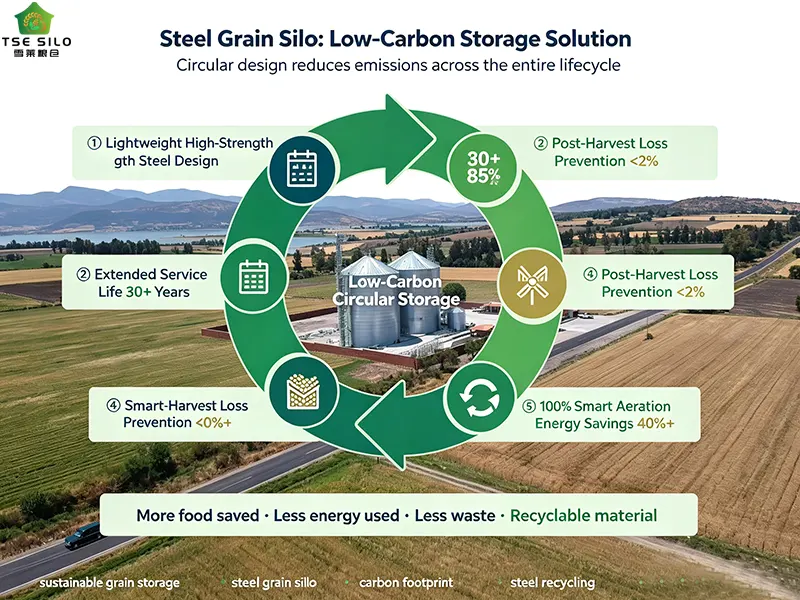
Sustainability is an increasingly important dimension of food security. Food systems must not only provide enough food but also do so without depleting natural resources or exacerbating climate change. Grain storage infrastructure plays a role in reducing the carbon footprint of food production.
Steel grain silos contribute to sustainability in several ways. First, by preventing post-harvest losses, they avoid the emissions associated with producing food that is never consumed. Second, steel is highly recyclable—approximately 85% of steel is recycled globally—making steel grain silos a circular economy solution. Third, modern steel grain silos can be equipped with energy-efficient aeration and monitoring systems that reduce operational energy consumption.
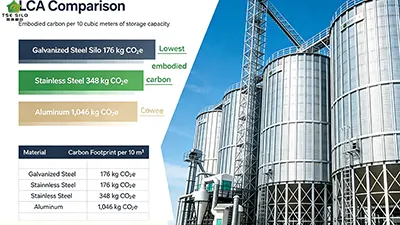
Compared to concrete silos, steel grain silos use less material, require lighter foundations, and can be installed faster, reducing construction-related emissions. Life cycle analyses have shown that galvanized steel grain silos have a significantly lower carbon footprint than alternatives. By choosing steel grain silos, businesses and governments can support both food security and environmental sustainability.
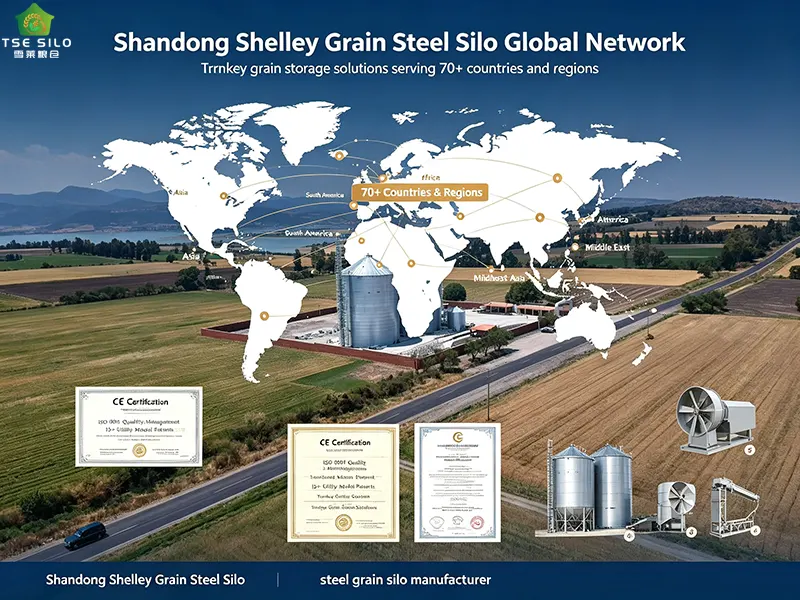
Behind every effective storage solution is a manufacturer committed to quality, innovation, and long-term reliability. Shandong Shelley Grain Steel Silo Co., Ltd. has established itself as a leading designer, manufacturer, and exporter of steel grain silos, delivering turnkey grain storage solutions to clients across more than 70 countries and regions. Headquartered in Tai'an High-tech Zone, Shandong Province—a hub for steel structure manufacturing in China—the company integrates R&D, design, manufacturing, sales, installation, and after-sales service into a single comprehensive system.
The company's contribution to global food security is rooted in the quality and performance of its steel grain silos. Built with high-quality hot-dip galvanized steel plates, these silos offer exceptional corrosion resistance and structural durability, ensuring that stored grain remains protected from moisture, pests, and contamination for decades. The company's steel grain silos are designed to be airtight, a critical feature that enables controlled atmosphere storage and effective fumigation—both essential for long-term grain preservation without excessive reliance on chemicals.
Shandong Shelley's steel grain silos are also engineered for flexibility and efficiency. With CE certification, ISO9001 quality system accreditation, and 15 utility model patents, the company provides customized solutions ranging from small on-farm storage units to large industrial facilities capable of holding thousands of tons. This scalability allows the company to serve a diverse range of clients—from smallholder cooperatives to national strategic grain reserves—thereby strengthening food security at multiple levels.
Beyond manufacturing, Shandong Shelley supports food security through its commitment to intelligent storage technology. The company's steel grain silos can be equipped with advanced aeration systems, temperature monitoring sensors, and automated control mechanisms that help maintain optimal storage conditions. By enabling real-time monitoring and precise environmental control, these systems reduce the risk of spoilage and extend the safe storage life of grain. This directly contributes to reducing post-harvest losses—one of the most effective ways to increase food availability without expanding agricultural production.
In practical terms, the company's steel grain silos have helped farmers and grain handlers in developing regions reduce storage losses from double-digit percentages to under 2%. Every ton of grain saved through better storage represents food that remains available for consumption, income that stays in the hands of farmers, and resources that are not wasted. By providing reliable, durable, and affordable storage infrastructure, Shandong Shelley Grain Steel Silo Co., Ltd. is helping build more resilient food systems worldwide.
The company's mission extends beyond business. By advancing intelligent grain storage technology and promoting sustainable practices, Shandong Shelley contributes to the global effort to achieve food security, reduce waste, and support agricultural sustainability. For governments, development organizations, and private enterprises seeking dependable steel grain silo solutions, Shandong Shelley represents a trusted partner in the fight against hunger and food loss.
Grain storage infrastructure is not a peripheral issue—it is central to global food security. Without adequate storage, food is lost, quality deteriorates, prices fluctuate, and vulnerable populations suffer. The steel grain silo has proven to be one of the most effective, durable, and sustainable solutions for addressing these challenges.
From reducing post-harvest losses and protecting grain quality to stabilizing prices, enhancing climate resilience, supporting smallholders, facilitating trade, and promoting sustainability, steel grain silos deliver benefits across the entire food system. As the world works to achieve Sustainable Development Goal 2—Zero Hunger—investing in modern grain storage infrastructure, particularly steel grain silos, must be a priority.
For governments, development organizations, and private enterprises, the message is clear: steel grain silos are not just storage vessels; they are instruments of food security. By expanding access to this technology, we can build a more resilient, equitable, and sustainable food future for all.
Written by
Shandong Shelley Grain Steel Silo Co., Ltd
Editor Jin
WhatsApp : +86-18653877118
Email : shelley@cnshelley.com