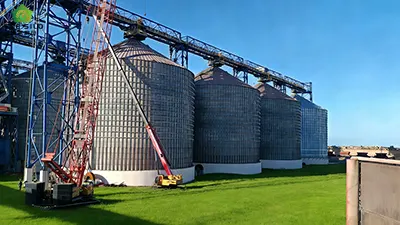
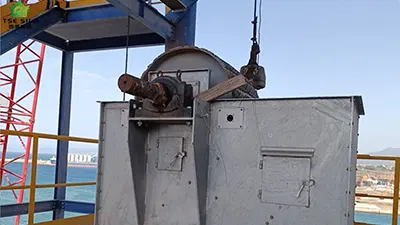
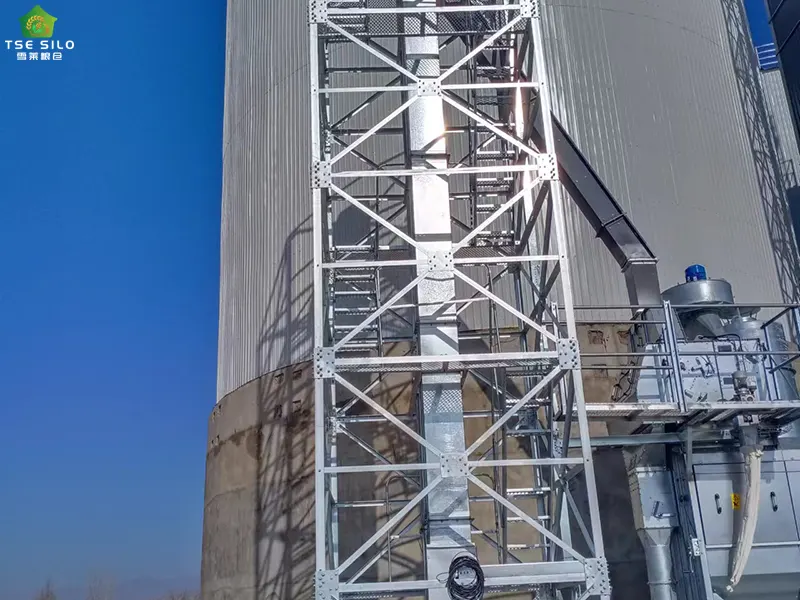
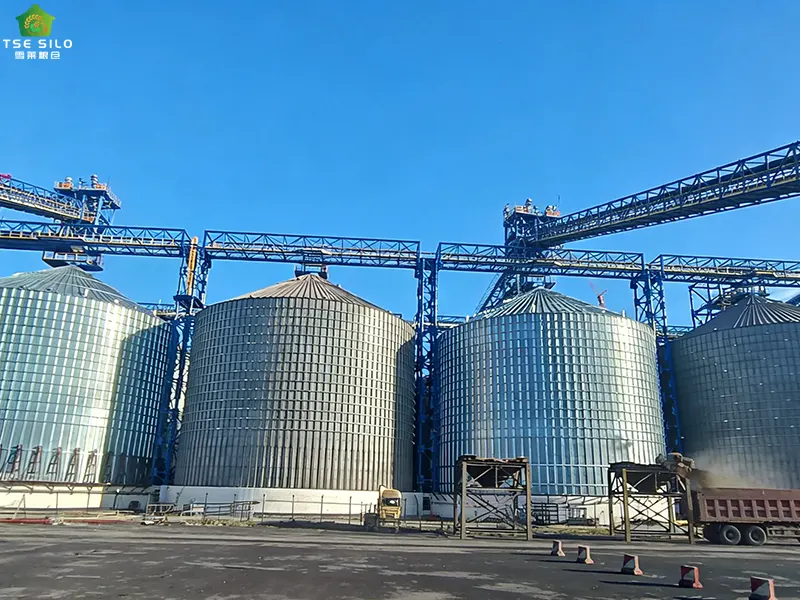
As a core facility for the storage of bulk materials-such as grain, cement, and fly ash-flat bottom silos rely heavily on the operational reliability of their vertical conveying systems: the bucket elevators. In actual production environments, the occurrence of abnormal noises within an elevator often serves as the earliest and most intuitive warning sign of an internal mechanical failure. If these sounds are ignored, minor scraping can escalate into belt tearing, bucket detachment, or even motor burnout; in severe cases, it may even trigger a dust explosion. To assist on-site operators and maintenance personnel in rapidly diagnosing issues, this article draws upon common industry cases to summarize the ten primary factors behind abnormal noises in flat bottom silos elevators, serving as a reference for routine inspections and troubleshooting.
1. Bucket Belt Misalignment and Scraping
Guide plates are colliding with the buckets; the position of the guide plates should be adjusted.
- Sound Characteristics: A periodic "scraping" sound (e.g., cha-cha), resembling rubber rubbing against metal.
- Root Causes: Uneven bucket belt tension, misaligned belt splices, or non-parallel head and tail pulleys, leading to belt misalignment where the buckets (hoppers) scrape against the side walls or flanges of the elevator casing.
- Consequences: Bucket wear, belt tearing, or even fire.
2. Damaged Head or Tail Pulley Bearings
Bearing failure preventing smooth rotation; the bearing should be replaced.
- Sound Characteristics: A low, dull "rumbling" sound or a sharp, metallic grinding sound, often accompanied by vibration.
- Root Causes: Lack of lubrication, fatigue spalling, fractured bearing cages, or abrasive wear caused by dust ingress.
- Consequences: Bearing overheating and seizure, potentially leading to belt breakage or motor overload.
3. Detached or Loose Buckets
Material is wedged between the guide plates and the buckets; the material feed angle at the elevator boot (base) section should be increased.
- Sound Characteristics: Irregular "clicking" or "clacking" impact sounds; in severe cases, it may sound like falling metal.
- Root Causes: Loose or broken bolts securing the buckets, or buckets becoming detached due to deformation caused by impact.
- Consequences: A dislodged bucket may become jammed within the boot or head section, leading to belt tearing or chain breakage.
4. Improper Chain Tensioning or Worn Sprockets
The drive chain is running slack; the chain length should be adjusted.
- Sound Characteristics: A periodic "clicking" sound, accompanied by chain vibration.
- Root Causes: The chain is excessively loose, causing it to whip and strike the casing; alternatively, the sprocket teeth are severely worn, causing the chain to "climb" the teeth and generate impact.
- Consequences: Tooth skipping, chain breakage, or the need to scrap the sprocket.
5. Material Blockage at the Inlet or Outlet
Lumps of material or other foreign objects have become jammed inside the boot casing; the machine must be shut down immediately to remove these obstructions.
- Sound Characteristics: A dull "thumping" sound, increased motor current, and the sound of material being compressed inside the casing.
- Root Causes: Excessive feed rate, a clogged discharge chute, or a blocked return chute, causing material to accumulate in the boot or head section and hindering the buckets' ability to scoop or discharge material.
- Consequences: Motor burnout, bucket belt slippage, or casing rupture at the boot section.
6. Detachment of Head/Tail Pulley Lagging
The drive sprocket is failing to properly disengage from the chain teeth; the sprocket tooth profile should be corrected.
- Sound Characteristics: An irregular "flapping" or "slapping" sound, similar to a slipping belt or a foreign object striking the surface.
- Root Causes: Aging, debonding, or localized peeling of the rubber lagging, resulting in uneven belt travel and potentially causing vibration.
- Consequences: Increased slippage and belt misalignment, leading to a reduction in lifting capacity.
7. Hard Foreign Objects Trapped Inside the Casing
The casing is misaligned; the vertical alignment of the entire casing length should be corrected.
- Sound Characteristics: A sharp "crunching" sound or the loud, violent sound of metal-on-metal impact.
- Root Causes: Maintenance tools (wrenches, screws) have fallen into the unit, or metal scraps/stones have become mixed into the conveyed material and subsequently jammed between the buckets and the casing. - Consequences: Can instantly tear the belt, shatter the buckets, or even cause the head pulley to seize up.
8. Drive Coupling or Gear Reducer Failure
The keys on the drive shaft or driven shaft are loose, causing the sprocket to shift position and the chain buckets to collide with the casing. The sprocket position must be adjusted, and the keys securely tightened.
- Sound Characteristics: The coupling will emit a periodic metallic knocking sound or a harsh grinding noise; the gear reducer will produce a high-frequency "humming" or "rattling" sound.
- Root Causes: Aging of the coupling's elastic element; shaft misalignment exceeding tolerance limits; pitting or broken teeth in the gear reducer's gears; or critically low oil levels.
9. Loose or Aging Belt/Chain Joints
The tooth profiles of the sprockets (both drive and driven) are irregular; the sprocket tooth profiles should be corrected, or the sprockets replaced.
- Sound Characteristics: A distinct "clunking" impact sound is heard as the joint passes over the head or tail pulley, occurring once or twice per full rotation.
- Root Causes: Deformation or loosening of mechanical belt fasteners (such as belt clips); wear on chain connecting links; or dislodged cotter pins.
- Consequences: Sudden failure of the joint, resulting in an abrupt equipment shutdown or the belt detaching and falling.
10. Base/Casing Resonance or Loose Mounting Foundation
The base plate of the grain elevator's housing is colliding with the chain buckets; the tensioning mechanism at the base must be adjusted to properly tighten the chain.
- Sound Characteristics: A low-frequency "humming" or "thumping" sound, accompanied by overall structural vibration; the intensity and pitch of the sound vary with the rotational speed.
- Root Causes: Loose anchor bolts; insufficient structural rigidity of the casing; or resonance within the supporting beams. This phenomenon is often coupled with the vibration frequencies of the bearings or the belt.
- Consequences: Accelerated wear on all moving components, and potentially even fatigue cracking in the steel structural framework.
Conclusion
- Acoustic Localization: Use a listening rod or a screwdriver (held against the ear) to probe four specific areas-the machine base, the intermediate casing section, the head section, and the gear reducer-to pinpoint and compare the source of any abnormal noises.
- Monitor Current: If abnormal noise is accompanied by current fluctuations, it indicates an issue with material flow or a blockage. If the current remains stable while the noise persists, it suggests mechanical wear or scraping.
- Check Bucket Belt Tension: After shutting down the machine, inspect the belt for excessive slack (sagging) and check for any misalignment (running off-track).
- Clean the Boot Section: Open the cleaning access door at the base (boot) of the elevator to check for any accumulated material or foreign objects.
During normal operation, the sound produced by a flat bottom silos bucket elevator should be steady and rhythmic. The sudden appearance of sharp friction sounds, dull thuds, or periodic "clicking" noises indicates that the equipment is operating abnormally. The causes of such abnormal noise are diverse-ranging from bucket belt misalignment and damaged bearings to material blockages and lodged foreign objects-and each factor has the potential to trigger a chain reaction of failures. The following summary outlines the ten most common causes, covering critical areas such as mechanical transmission, material flow, and installation foundations, to help you quickly pinpoint the source of the abnormal noise.
Written by
Shandong Shelley Grain Steel Silo Co., Ltd
Editor Jin
WhatsApp : +86-18653877118
Email : shelley@cnshelley.com