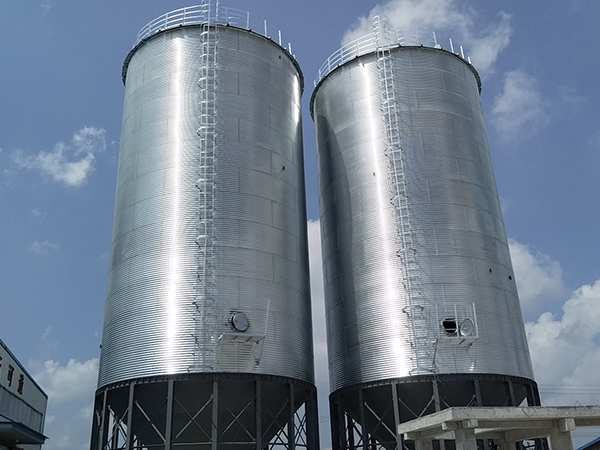
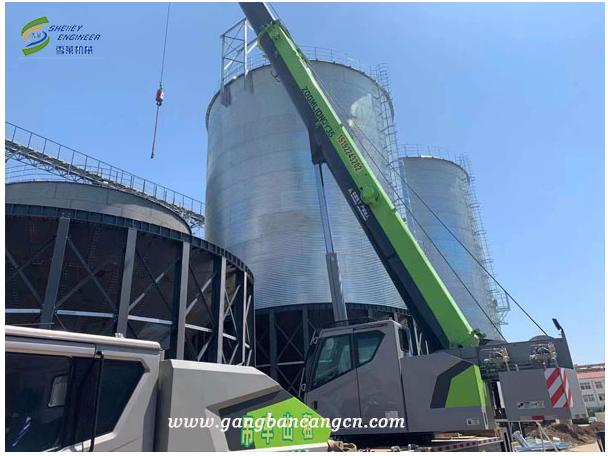
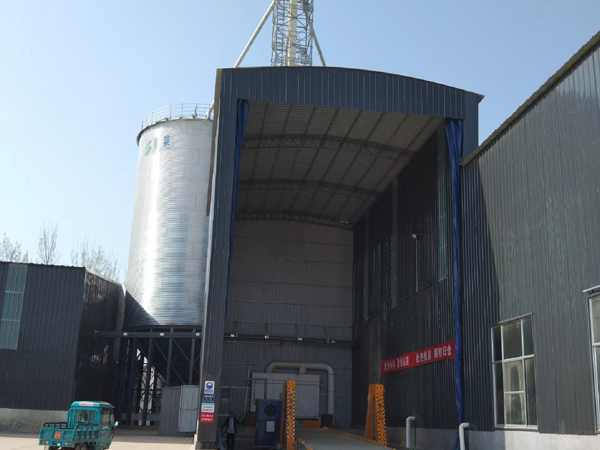
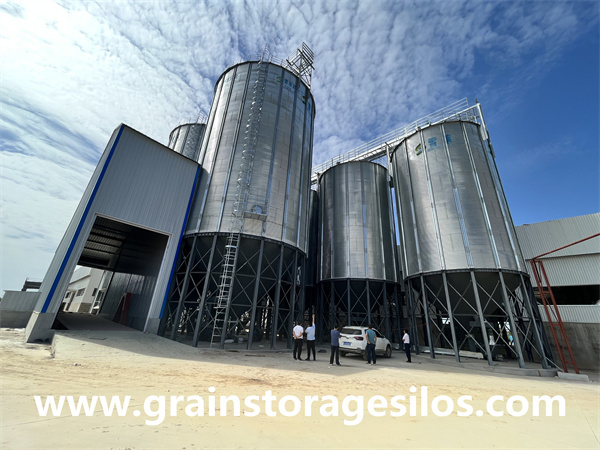
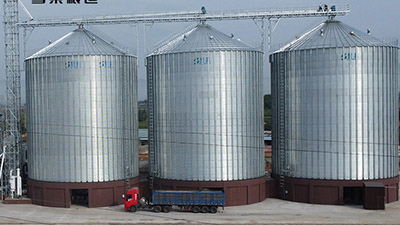
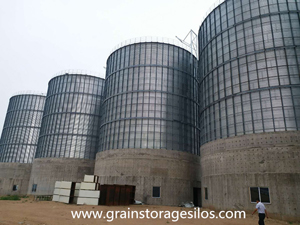
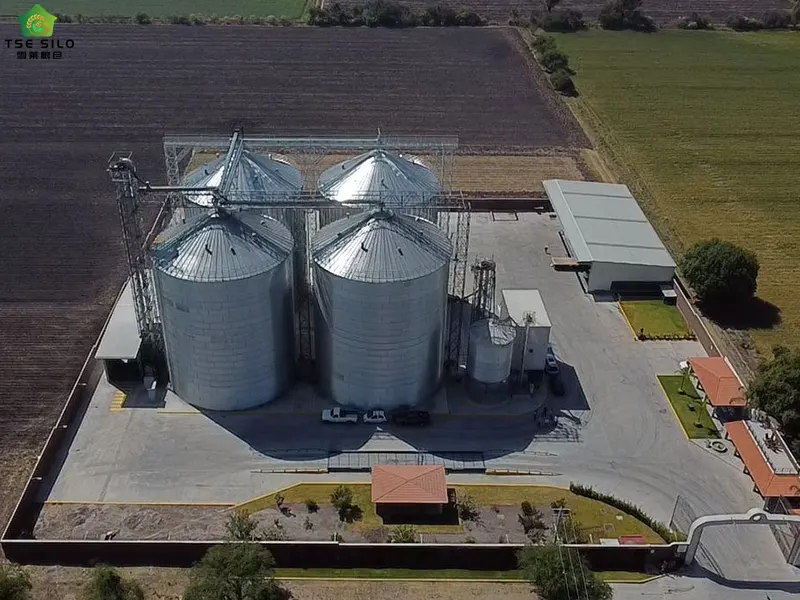
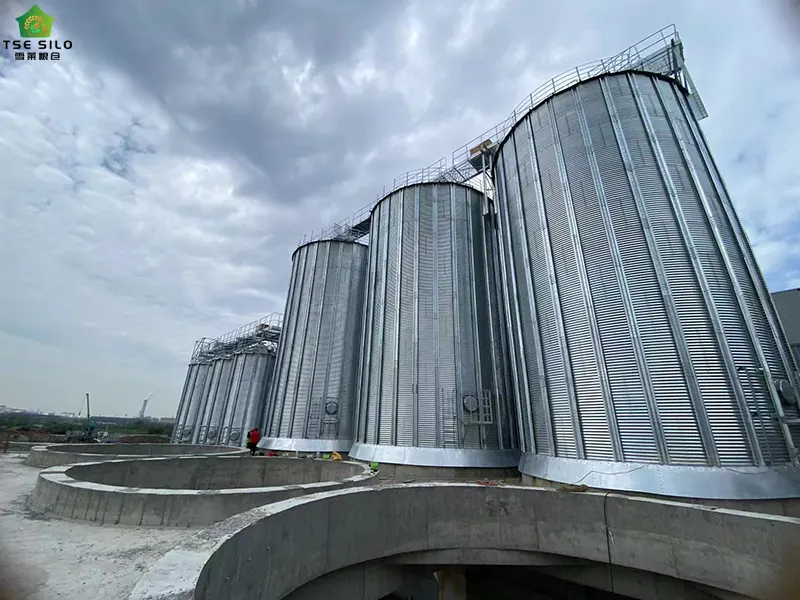
Flat-bottomed steel silos, due to their structural characteristics-a flat bottom, large diameter, and the potential for dead corners during unloading-and their thin-walled metal structure, are highly sensitive to temperature differences between the inside and outside. This makes mechanical ventilation a crucial element in ensuring the quality and safety of stored materials. Scientific and reasonable mechanical ventilation can effectively reduce material temperature, balance humidity within the silo, prevent condensation and mold growth, eliminate the risk of localized overheating, and extend the storage period. However, improper operation and indiscriminate ventilation can be counterproductive, leading to condensation on the silo walls, material moisture regain, and even serious accidents such as dust explosions. Therefore, seven operating procedures for mechanical ventilation of shelley flat-bottomed steel silos have been established to clarify operating procedures, standardize technical standards, strengthen risk management, and ensure safe, efficient, and standardized ventilation operations.
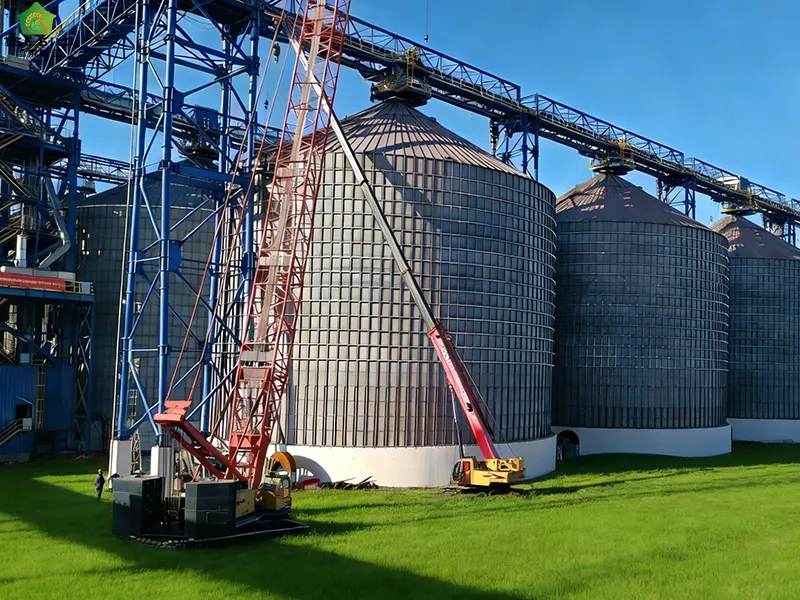
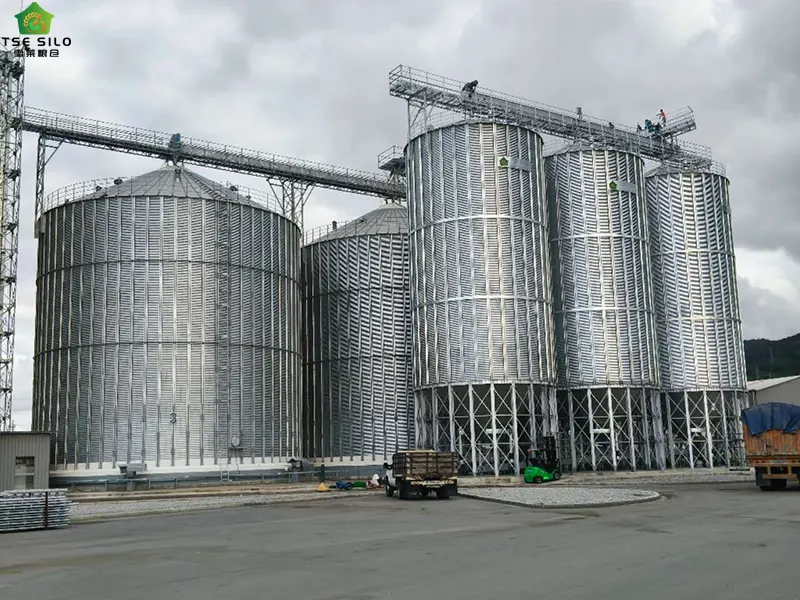
The following are the 7 operational guidelines for mechanical ventilation of flat-bottomed steel silos:
1. Pre-ventilation Inspection and Confirmation
Before starting the ventilation system, a rigorous on-site inspection must be conducted:
1.1. Fan and Motor Inspection
- Rotation Verification: Jog the fan for 3-5 seconds to confirm that the fan rotation direction matches the markings and there is no reverse rotation. During the test rotation, the current fluctuation should be <=+(-)5% (within the rated current range).
- Motor Insulation: Use a megohmmeter to test the motor winding insulation resistance to ground. >=2Mohm (380V motor), >=1Mohm (220V motor). Starting is strictly prohibited if the insulation is substandard.
- Wiring and Grounding: Wiring should be undamaged, connections should be secure, grounding resistance <=4ohm, grounding lead cross-sectional area >=2.5mm2, and static electricity accumulation should be avoided.
- Operating Status: Run idle for 10 minutes. The fan should have no abnormal noise (noise <=75dB), no significant vibration (vibration amplitude <=0.8mm/s), and bearing temperature <=70oC.
1.2. Duct and Valve Inspection
- Duct Unobstructedness: Clean debris from the ventilation cage, main duct, and branch ducts to ensure unobstructed duct cross-sectional area and ventilation resistance <=150Pa (at rated airflow).
- Valve Performance: Valve should open and close flexibly, seal tightly when closed, with a leakage rate <=5%; opening error <=+(-)5% to ensure uniform airflow distribution.
- Duct Spacing: Duct spacing within the cage <=1.5m, side ducts <=0.5m from the silo wall, duct joints well-sealed with no leakage points.
1.3. Auxiliary Ventilation Equipment Inspection
- Silo Roof Exhaust Fan: Test run for 5 minutes; operation should be stable, exhaust volume should meet design requirements (single unit exhaust volume >=1200m3/h), and there should be no jamming or abnormal noise.
- Sensor Calibration: Grain temperature sensor error <= +(-)0.5oC, moisture sensor error <= +(-)0.3%, temperature and humidity sensor error <= +(-)1oC (temperature), +(-)5%RH (humidity); data transmission is normal.
1.4. Silo Sealing and Structural Inspection
- Airtightness Test: Using the pressure decay method, after the internal pressure rises to 500Pa, the pressure half-life is >=5 minutes (>=40 seconds for fumigation-specific silos), and the leakage is <=0.02m3/(m2.min).
- Silo Structure: Silo walls are free from deformation and damage; welds are free from cracks; and the silo roof is free from leakage. Silo doors and windows are tightly closed, with sealing strip compression >=3mm, and no air leakage gaps.
- Internal Environment: Dust concentration inside the silo is <=10g/m3, free from flammable and explosive materials, and ventilation openings are unobstructed, ensuring smooth airflow.
1.5. Grain Condition Pre-treatment Inspection
- Grain Surface Flatness: The grain surface slope should be <=3。, with no obvious protrusions or depressions. Remove any crusts (crusts >=2cm thick must be broken) and clumps (clumps >=5cm in diameter must be dispersed) to prevent airflow short-circuiting.
- Grain Temperature Monitoring: Monitor the top, middle, and bottom layers of the grain pile (at least 5 monitoring points per layer). Record the average grain temperature accurately, with a temperature gradient <=1oC/m, and no localized hot spots (local temperatures >=3oC higher than the average grain temperature are considered hot spots).
- Grain Moisture: Sampling and testing should be conducted. Moisture content should meet safety standards (corn <=20%, wheat <=16%, soybean <=18%), with a moisture gradient <=0.3%/m, and no localized high-moisture areas (moisture deviation >=1% is abnormal).
- Grain Pile Condition: The grain pile should be free of mold and odor, with impurity content <=1.5%, ensuring no impurities block the air ducts during ventilation.
1.6. Safety Protection Inspection
- Explosion-proof and Anti-static: All metal components of the ventilation system are properly grounded, with an electrostatic grounding resistance <=100ohm; open flames and sparks are strictly prohibited inside the chamber; electrical equipment in the dust explosion-proof area is of Exd II BT3 level or higher explosion-proof rating.
- Personnel Protection: Work passages inside the chamber are unobstructed, and emergency exit signs are clearly marked; if early entry for inspection is required, ventilation for 30 minutes is necessary, and the oxygen concentration must be >=19.5% and the carbon dioxide concentration <=1% before entry is permitted.
- Emergency Equipment: The site is equipped with dry powder fire extinguishers (at least one per 50㎡, pressure value between 1.2-1.4MPa) and emergency lighting (continuous lighting time >=90 minutes), all in good working order.
2. Strictly Control Ventilation Conditions
Blindly ventilating is strictly prohibited. Operations must be based on the "dew point principle" or "atmospheric humidity conditions":
2.1. Temperature and Humidity Control Data
- Start-up Conditions: The outside air temperature must be >=8oC lower than the average temperature of the grain pile (>=6oC in subtropical regions), and the relative humidity outside the warehouse must be <=75%. If the outside humidity is 75%-85%, the ventilation time per cycle must be shortened, with a 1-hour shutdown every 4 hours of operation.
- Operating Conditions: During ventilation, the outside air temperature must consistently be >4oC lower than the grain pile temperature (>3oC in subtropical regions). Ventilation is strictly prohibited when the temperature difference between inside and outside the warehouse is <=3oC.
- Prohibited Conditions: Temperature difference between inside and outside the warehouse >15oC (easily causing condensation on the grain pile); rain, snow, or fog/haze (relative humidity outside the warehouse >=90%); extreme temperature and humidity periods at dawn and midnight. Ventilation equipment must not be started during these times.
- Termination Conditions: The average temperature of the grain pile drops to the target value (0-5oC in northern regions, 5-10oC in southern regions), the temperature difference between inside and outside the storage <=4oC (<=3oC in subtropical regions), and the temperature difference between the upper and lower layers of the grain pile <=1oC/m.
2.2. Airflow and Operating Time Control Data
- Unit Ventilation Volume: Fixed value 0.04–0.08 m3/(t.h), upper limit (0.06–0.08 m3/(t.h)) for grain pile height >7m, lower limit (0.04–0.06 m3/(t.h)) for grain pile height < 7m.
- Operating Duration: Initial stage (grain temperature >25oC): continuous ventilation for 8–12 hours; middle stage (grain temperature 10–15oC): intermittent ventilation, shutdown for 3–5 days after every 8 hours of operation; final stage (grain temperature < 10oC): single ventilation for 2–4 hours to avoid excessive drying.
- Fan Start-up: Run at low speed for 30 minutes initially. If no abnormalities are observed, adjust to rated speed. When multiple fans are started simultaneously, the valve opening error should be <=+(-)5%.
2.3. Grain Condition and Air Humidity Control Data
- Initial Grain Moisture: Corn <=20%, Wheat <=16%, Soybeans <=18%. If exceeding these ranges, pre-treatment by drying is required. Direct activation of the ventilation system is strictly prohibited.
- Air Humidity Requirements: The absolute humidity of the air outside the storage area must be >=2g/m3 lower than the equilibrium humidity of the grain pile, the relative humidity <=70%, and the wind speed must be stable at 1.5–3m/s, with no extreme winds or rainfall.
- Termination Conditions: Grain moisture content drops to safe standards (corn <=14%, wheat <=13%, soybeans <=12%), grain pile moisture gradient <=0.3%/m, and overall storage moisture deviation <=1%.
2.4. Airflow and Operating Time Control Data
- Unit Ventilation Volume: Fixed value 0.1–0.2 m3/(t.h), 1.5–2 times higher than cooling ventilation, ensuring airflow penetrates the grain pile and removes moisture.
- Operating Duration: Continuous ventilation is possible, but a single continuous operation should not exceed 48 hours. Grain pile moisture content should be checked every 24 hours. If the moisture reduction rate is <=0.1%/day, increase the airflow or suspend ventilation.
- Duct Control: At high material levels (>7m), the outer zone air valves are fully open, and the inner zone air valves are open to 50%; at low material levels (< 7m), only the outer zone air valves are open to ensure uniform airflow and prevent moisture accumulation.
2.5. Core Control Data for Dispersed Ventilation Conditions
- Start-up Conditions: After fumigation, dispersed ventilation should begin when the phosphine concentration in the storage area is >=5mL/m3; ventilation is strictly prohibited before the concentration meets the standard.
- Operational Control: Unit ventilation volume >= 0.2 m3/(t.h), continuous ventilation >= 24 hours, with phosphine concentration measured every 6 hours during this period.
- Termination Conditions: Phosphine concentration in the silo < 0.2 mL/m3, oxygen concentration >= 19.5%, carbon dioxide concentration <= 1%, ventilation can only be stopped after 2 hours of continuous ventilation.
2.6. General Control Data
- Silo Airtightness: Tested before ventilation; after the pressure rises to 500 Pa, the pressure half-life >= 5 minutes (>= 40 seconds for fumigation silos), leakage <= 0.02 m3/(m2.min), air leakage rate <= 5%.
- Grain Pile Condition: Grain surface slope < = 3。, no crusting (thickness >= 2 cm requires breaking), no lumps (diameter >= 5 cm requires dispersing), impurity content < = 1.5%. • Safety Data: During ventilation, dust concentration inside the silo < 20g/m3, fan vibration amplitude < =0.8mm/s, motor bearing temperature < =70oC, grounding resistance < =4ohm.
- Monitoring Frequency: Record grain temperature (top, middle, and bottom layers), and temperature and humidity inside and outside the silo every hour; check grain pile moisture and dust concentration every 2 hours. Data recording error <=+(-)0.5oC (temperature), +(-)0.3% (moisture).
3. Standard Start-up Sequence
Specific start-up and shutdown procedures must be followed to prevent duct blockage or equipment damage:
3.1. Pre-adjustment of Dampers and Valves
Before pressing the start button, the mechanical status must be confirmed: 0% closure / 100% opening:
- Fan inlet damper (regulating damper): Must be adjusted to the closed state (0% opening). For centrifugal fans, this is to meet the "no-load start" condition and reduce the starting current to a minimum (approximately 30%-50% of the rated current).
- Underfloor ventilation duct gate valve: Must be fully open (100% opening). If the gate valve is not open or is only partially open, direct start-up will cause fan surge or instantaneous current overload tripping.
- Underfloor skylight/exhaust valve: Must be opened in advance, at an opening angle of >=90 degrees (fully open), to ensure smooth airflow and prevent positive pressure build-up inside the underfloor that could damage the underfloor structure.
3.2. Equipment Start-up Interval
To prevent impact on the power grid and to avoid cascading failures caused by a single unit malfunction, the following time intervals should be followed when multiple units are used in combination for ventilation, typically 5-30 seconds:
- Single fan soft start: From pressing the start button to the fan reaching its rated speed, the start-up ramp time set by the soft starter is typically 10-30 seconds. If star-delta starting is used, the switching time from star to delta is typically set to 5-15 seconds (depending on motor power and load inertia).
- Sequential Start-up of Multiple Fans: After starting the first fan (main fan), wait 30-60 seconds until the ammeter pointer stabilizes and drops back to the no-load current value (approximately 40%-60% of the rated current) before starting the next fan.
- Auxiliary Fans:These must be started only after the main fan at the silo bottom has stabilized (usually with a 60-second delay) to prevent dust from rushing to the top of the silo and overloading the dust collector.
3.3. Gradual Loading of Damperes
This is the most critical and easily overlooked "specific data" in the start-up sequence. It is strictly forbidden to fully open the dampers immediately after the fans start. The opening must be increased by 10%-20% every 2-5 minutes.
- Run the fans under no-load for 2-3 minutes to confirm there are no abnormal noises and the vibration value (vibration velocity <=4.5mm/s) is normal.
- Gradually open the dampers: Increase the opening by 10%-15% each time.
- After each adjustment, observe the ammeter every 2-5 minutes. The current should rise smoothly and must not exceed the rated current on the motor nameplate (usually controlled below 95% of the rated current as a safety threshold).
3.4. Airflow Balance and System Stability
After completing the startup sequence, the structural safety data of the silo needs to be verified. A negative pressure range of -50Pa to -200Pa is typically required.
- Internal Negative Pressure: The design pressure bearing capacity of a flat-bottomed steel silo is typically around +(-)500Pa. After the ventilation system is operating stably, the pressure difference between the inside and outside of the silo should be controlled between -50Pa and -200Pa (the negative pressure value should not be too high to prevent the silo walls from collapsing).
- Airflow Target: Depending on the stored materials, the unit ventilation volume should reach the designed airflow volume.
3.5. Shutdown Thresholds for Abnormal Data
During the startup sequence, if any of the following specific abnormal data is detected, subsequent operations must be stopped immediately and the machine shut down urgently:
| Monitoring Item |
Safety Threshold |
Dangerous Action |
| Motor Current |
Exceeds rated current by 110% and lasts for > 5 seconds |
Do not continue to open the valve; immediately stop the machine and check for blockages in the air duct. |
| Vibration Value |
Fan bearing vibration speed > 6.3 mm/s |
Indicates dynamic balance failure or loose foundation; shutdown is required. |
| Motor Temperature |
Winding temperature > 130oC (F-class insulation) |
Check for overheating or overload causes. |
| Silo Top Pressure |
Positive pressure > 300 Pa |
Immediately stop the machine and check if the silo top exhaust port is not open or blocked to prevent silo bursting. |
4. Dynamic Monitoring During Ventilation
During ventilation, operators must implement continuous or periodic monitoring:
4.1. Motor and Fan Operating Parameters
These data reflect whether the equipment is operating in a healthy state. Monitoring frequency should be recorded every 30 minutes.
| Monitoring Items |
Safety Range/Threshold |
Anomaly Judgment and Handling |
| Motor Current |
60% - 95% of rated current |
If current > 110% for more than 10 seconds, or if current suddenly increases by > 15% without damper adjustment, the machine should be stopped immediately to check for duct blockage or impeller entanglement with foreign objects. |
| Three-Phase Current Balance |
Three-phase current difference <= 5% |
Excessive difference indicates a phase loss or motor winding fault, requiring immediate shutdown. |
| Motor winding temperature |
<= 130oC (Class F insulation) / <= 155oC (Class H insulation) |
Monitoring should be intensified when the temperature exceeds 120oC; if the threshold is exceeded, the machine should be shut down immediately for cooling. |
| Bearing temperature |
<= 75oC (sliding bearing) / <= 95oC (rolling bearing) |
Temperature rise rate > 10oC/hour is considered abnormal, possibly due to poor lubrication or bearing wear. |
| Fan vibration speed |
<= 4.5 mm/s (excellent) / <= 7.1 mm/s (maximum allowable) |
If the vibration value exceeds 6.3 mm/s, the machine should be shut down for inspection of the foundation bolts, impeller dynamic balance, and coupling alignment. |
4.2. Air pressure and air volume parameters
These data reflect whether the ventilation system forms an effective airflow organization. Monitoring frequency is recorded every 1-2 hours.
| Monitoring Items |
Safety Range/Thresholds |
Anomaly Judgment and Handling |
| Negative Pressure Inside the Silo |
-50 Pa - -200 Pa |
Negative pressure > 300 Pa indicates blockage at the exhaust vent on the silo top or excessive damper opening, posing a risk of silo wall collapse; negative pressure < 20 Pa indicates severe air leakage or duct blockage, resulting in low ventilation efficiency. |
| Fan Outlet Air Pressure |
+(-)10% of Design Value |
A sudden drop in air pressure > 20% usually indicates a broken air network or accidental valve opening; an increase in air pressure > 15% indicates a clogged filter or obstructed duct. |
| Estimated Air Volume |
80% - 110% of Design Air Volume |
If the air volume consistently falls below 70% of the design value, ventilation effectiveness cannot be guaranteed, and duct dust accumulation or fan speed issues need to be investigated. |
4.3. Material Temperature and Humidity
This is a direct indicator for evaluating ventilation effectiveness and is crucial for preventing mold and spontaneous combustion. Monitoring frequency is every 2-4 hours, with key monitoring areas being the center of the grain pile, near the silo walls, and the surface of the silo top.
| Monitoring Items |
Safety Range/Threshold |
Anomaly Judgment and Handling |
| Grain Temperature (Material Temperature) Change |
Single Point Temperature <= 25oC (Low-Temperature Storage) / Grain Temperature Gradient <= 3oC/m |
If the temperature at a certain point > 30oC and continues to rise, or the temperature difference at the same level > 5oC, it indicates localized overheating. Ventilation should be stopped immediately and an investigation should be conducted (possibly due to mold or pest infestation). |
| Grain Temperature Decrease Rate |
0.5oC - 1.5oC / hour |
Decrease rate > 2oC/hour may indicate condensation on the silo walls due to excessive temperature difference; decrease rate < 0.2oC/hour indicates ineffective ventilation or insufficient airflow. |
| Material Moisture Change |
Moisture reduction after ventilation <= 0.5% (single ventilation) |
If moisture increases instead of decreasing, it indicates that the outside air humidity is higher than the inside humidity, and ventilation should be stopped immediately. |
| Condensation Risk Assessment |
Inside silo air dew point temperature >= silo wall temperature |
When the silo wall temperature is 2oC lower than the inside air dew point temperature, condensation will inevitably occur on the silo walls, and ventilation should be stopped immediately or the silo wall temperature should be increased. |
4.4. Environmental Meteorological Parameters
Ventilation decisions must be dynamically adjusted based on real-time meteorological data. Monitoring frequency is recorded once per hour, or linked with meteorological station data.
| Monitoring Items |
Permissible Ventilation Conditions |
Prohibited Ventilation Conditions |
| Relative Humidity |
<= 65% - 75% (depending on the material; rice can be relaxed to 75%, corn needs <=70%) |
> 80% Ventilation is prohibited under any circumstances |
| Atmospheric Temperature |
2oC - 8oC lower than the warehouse temperature |
Higher than the warehouse temperature, or a temperature difference of < 2oC (poor effect) |
| Dew Point Judgment |
External dew point temperature lower than the warehouse dew point temperature |
External dew point temperature higher than the warehouse dew point temperature |
| Weather Conditions |
Sunny, Cloudy, Dry |
Rain, Snow, Fog, or within 4 hours after rain |
4.5. Material Condition and Warehouse Appearance
These qualitative observations are equally important, and the monitoring frequency is every 1-2 hours.
| Monitoring Items |
Normal Status |
Abnormal Phenomena and Handling |
| Silo Top Exhaust Vent |
Exhausting transparent or slight mist |
Exhausting large amounts of dust (dust runoff): Excessive airflow or dust removal failure; immediately reduce the damper; Exhausting dense white mist: Severe humidity and heat inside the silo; check for condensation. |
| Silo Wall Condition |
No abnormalities |
Silo wall sweating (water droplets): Indicates condensation has occurred; immediately stop ventilation and turn on natural ventilation to dry; Abnormal noises or bulging of the silo wall: Immediately stop the machine and evacuate personnel. |
| Silo Bottom Inspection |
No standing water, no odor |
Water seepage at anchor bolts: Foundation settlement or sealing failure; Smelling a sour/mold odor: Material has deteriorated; ventilation is ineffective; transfer to another silo. |
4.6. Comprehensive Judgment and Adjustment Strategy for Dynamic Monitoring
During ventilation, dynamic decisions should be made based on the combined trends of the above data:
| Data Combination Characteristics |
Judgment Conclusion |
Operation Instructions |
| Grain temperature steadily decreasing + current stable + humidity not rising |
Ventilation effective |
Maintain current parameters and continue ventilation |
| Grain temperature decreasing slowly + negative pressure inside the silo is low |
insufficient airflow or airflow short circuit |
Check if the air duct is blocked, whether the exhaust at the top of the silo is unobstructed, and appropriately increase the opening of the damper |
| Grain temperature decreasing + external humidity rapidly rising to >75% |
meteorological conditions deteriorating |
Immediately stop mechanical ventilation, close the damper, switch to natural ventilation or suspend ventilation |
| Grain temperature rising locally + moisture content in the area is high |
localized heating |
Stop overall ventilation, use local auxiliary fans or plan to transfer the grain |
| Motor current slowly increasing + air pressure increasing |
filter or air duct gradually becoming blocked |
|
5. Preventing Condensation and Managing Dead Corners
Shelley Flat-bottomed steel silos, due to their flat bottom, are prone to creating dead corners during unloading. Special attention must be paid to ventilation:
- Avoid Low-Temperature Ventilation: Forced ventilation for extended periods is strictly prohibited in cold winters or at night when the material temperature differs significantly from the ambient temperature. Otherwise, materials near the silo walls and roof are highly susceptible to condensation due to the "cold wall effect."
- Dead Corner Treatment: For the corners of flat-bottomed silos, if uneven ventilation is observed (due to excessively high local temperatures or moisture), manual turning or the use of auxiliary mobile fans should be combined to provide supplementary ventilation, ensuring no ventilation blind spots.
6. Sealing and Insulation After Ventilation
After ventilation, timely sealing is essential:
- Strict Sealing: Close all air valves, fan inlet and outlet gates, and silo roof ventilation openings to ensure the silo's airtightness. For flat bottom silos requiring controlled atmosphere storage (such as nitrogen filling), an airtightness test must be conducted again after ventilation to prevent gas leakage.
- Preventing Moisture Reabsorption: After ventilation, if the external environment becomes hot and humid, unsealed vents will become channels for hot and humid air to enter, causing the material surface to become damp or even moldy.
7. Safety Protection and Emergency Response
Mechanical ventilation involves mechanical transmission and a potentially dusty environment; therefore, safety regulations must be strictly followed:
- Explosion-proof and Fire-proof: For environments with a high risk of dust explosion, explosion-proof fans must be selected, and motors and electrical connections must be sealed with explosion-proof seals. Hot work is strictly prohibited on the silo roof or near the vents during ventilation.
- Emergency Plan: In the event of a sudden power outage or fan malfunction during ventilation, the ventilation valves at the bottom of the silo should be manually closed immediately to prevent backflow of debris or rainwater from the outside into the silo. If an abnormal temperature rise is detected inside the silo (exceeding the safe storage temperature), ventilation should be stopped immediately, and emergency heat dissipation or silo transfer procedures should be initiated.
8. Conclusion
Mechanical ventilation of flat-bottomed steel silos, seemingly a routine operation, actually involves the coordinated operation of multiple factors, including equipment operation, weather conditions, material characteristics, and structural safety. The seven operational guidelines mentioned above permeate the entire process of ventilation operations, encompassing "pre-operation inspection, in-process control, and post-operation management," with the core principle being "operation based on weather conditions, data-driven decision-making, and dynamic adjustment." Strict adherence to these guidelines is not only fundamental to ensuring stable material quality within the silo but also a crucial measure for preventing safety accidents and extending the lifespan of the silo and equipment. All operators should firmly establish a sense of responsibility, eliminate reliance on experience and wishful thinking, and implement the guidelines in every start-up, shutdown, inspection, and record-keeping process. Only in this way can the effectiveness of mechanical ventilation be truly maximized, ensuring the safe operation of flat-bottomed steel silos and the long-term preservation of stored materials.
Written by
Shandong Shelley Grain Steel Silo Co., Ltd
Editor Jin
WhatsApp : +86-18653877118
Email : shelley@cnshelley.com