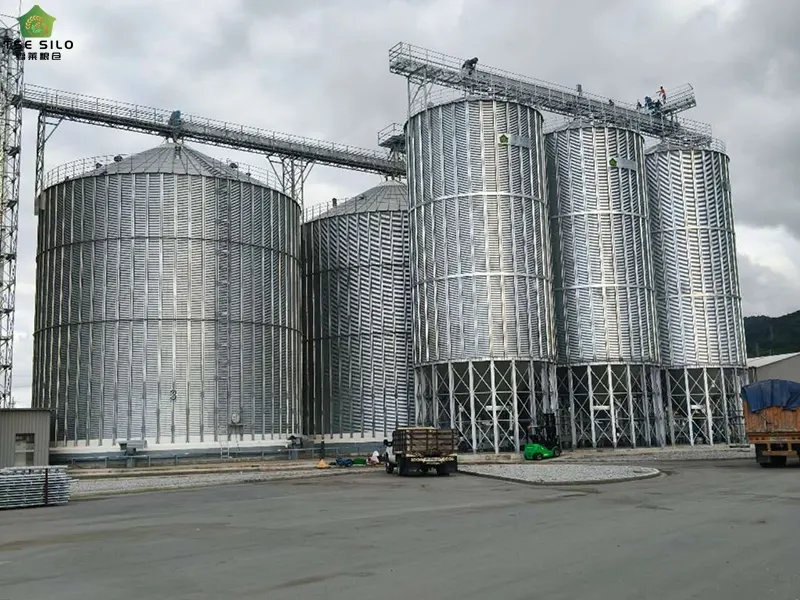
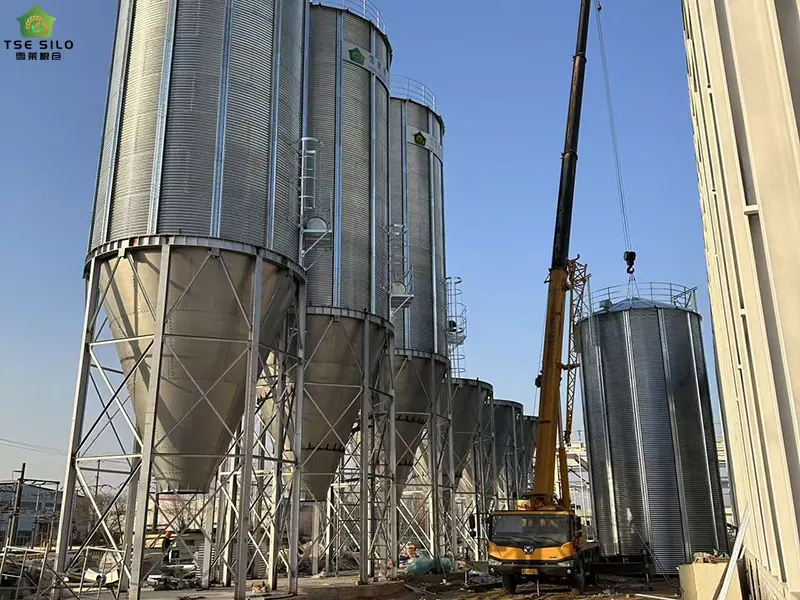
If the grain discharge mechanism of a hopper bottom silo gets stuck or stops, it's not just a simple matter of "no grain being discharged." It directly triggers a quadruple risk affecting safety, equipment, grain, and production, with serious consequences. The most direct harm is that the grain cannot be discharged, leading to mold, overheating, and clumping. It also causes serious damage to the equipment itself, such as overloading and burning out the drive motor, or twisting and deforming the discharge screw or impeller. Therefore, if we encounter a stuck or stopped grain discharge mechanism in a hopper bottom silo, we must immediately investigate the cause and then develop an appropriate repair plan. Today, we will mainly explain the ten main reasons for stuck or stopped grain discharge mechanisms in hopper bottom silos.
Most Common Causes (Over 80%)
1. Material Bridging/Arching
- The grain is damp, clumpy, or contains many impurities, forming an arch at the top of the conical hopper, causing the discharge port to be suspended under stress.
- Symptoms: Motor runs, but discharges are low/not at all; the load on the reducer fluctuates.
2. Foreign Objects Entering the Silo
- Burlap sacks, wire, bricks, woven bags, rope ends, tools, etc., fall into the silo.
- Directly jamming the screw conveyor, auger, feed arm, or discharge impeller.
3. High Moisture Content, Mold, or Clumping of Material
- High moisture content grain easily adheres to the silo walls and cone bottom, accumulating and increasing resistance dramatically.
- In severe cases, it can completely jam the discharge mechanism.
Equipment-Related Problems
4. Deformation or Wear of the Discharge Screw/Feeding Arm
- Worn, thinned, or broken screw blades, resulting in insufficient thrust.
- Bent cone bottom center post or feed teeth, scraping against the silo body.
5. Reducer/Motor Failure
- Insufficient oil in the reducer, damaged bearings, or worn gears.
- Insufficient motor power, unstable voltage, thermal protection tripping, or inverter malfunction.
- Symptoms: Difficulty starting, abnormal noise, stalling, or overload alarm.
6. Seals and Bearings: Grain and Dust Ingress
- Shaft head seal failure allows grain to enter the bearing chamber → seizing and immobilization.
7. Poor Concentricity and Scraping
- Discharge mechanism and cone bottom misalignment cause blades to scrape the hopper plate → significant resistance and jamming.
Structural and Usage-Related Causes
8. Insufficient Cone Angle and Small Discharge Port
- Insufficient cone bottom angle allows poorly flowing materials to easily accumulate and clog.
9. Localized Material Accumulation and Dead Zones
- Dead zones form near reinforcing ribs, support legs, and temperature measuring cables within the hopper, leading to long-term material accumulation and hardening.
10. Improper Discharge Sequence
- Discharging only from the bottom without upper fluidization/arch breaking aids results in increasing blockage.
Conclusion:
When starting the discharge mechanism, start with no load first. Once it is running normally, slowly load material to avoid excessive instantaneous loading that could overload the equipment and cause blockage. During discharge, closely observe the discharge situation and stop the machine immediately if any abnormalities are detected. When unloading, first activate the top auxiliary fluidization and arch-breaking devices, then start the bottom discharge mechanism. Avoid only activating the bottom discharge mechanism, which can cause bridging and arching of the upper material. If there is a large amount of material in the silo, use layered unloading to gradually reduce the material height. The above are ten reasons why the discharge mechanism of a hopper bottom silos might become blocked or stop working, compiled by Shelley Storage. We hope this information will be helpful when using hopper bottom silo in the future.
Written by
Shandong Shelley Grain Steel Silo Co., Ltd
Editor Jin
WhatsApp : +86-18653877118
Email : shelley@cnshelley.com