LANGUAGE
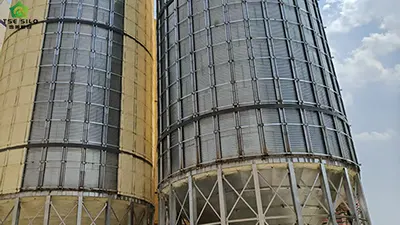
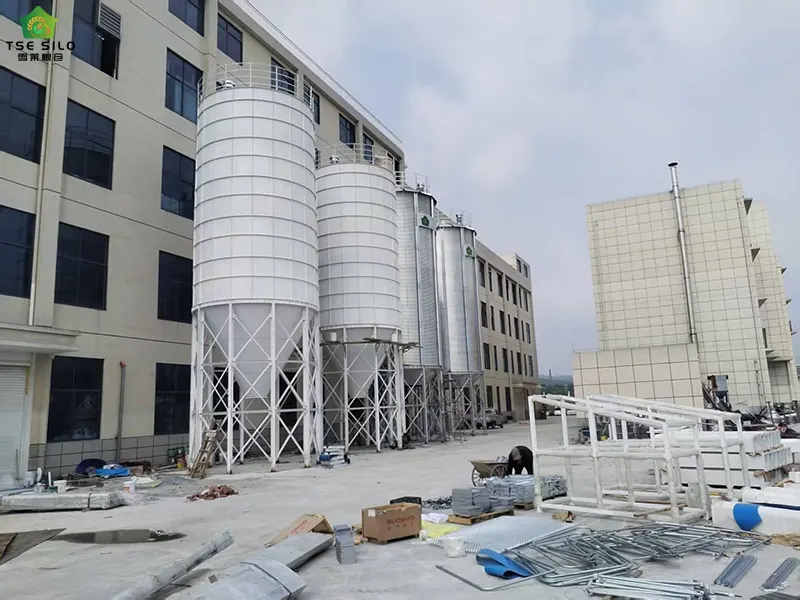
The intelligent grain condition monitoring system for grain steel silos is a core technological equipment for ensuring safe grain storage, reducing losses, and achieving refined management. Its core logic is "sensing-transmission-analysis-control-visualization," achieving real-time grain condition monitoring, anomaly warning, and automated control through multi-module collaboration. Below, Shelley Storage has compiled a list of the main components and core functions of the intelligent grain condition monitoring system, along with detailed explanations based on industry standards and practical application scenarios:
As the system's "eyes and nose," it is responsible for collecting key physical and chemical indicators of the grain pile and the silo environment. The accuracy of the data directly determines the system's reliability.
| Components | Specific Types | Core Functions |
| Temperature Sensors | 1. Multi-point distributed grain pile sensor (PT100, DS18B20) 2. Warehouse air temperature sensor | 1. Monitors the temperature at different depths (surface, middle, bottom) and in different areas (center, perimeter) of the grain pile, capturing localized heat points (early signals of grain mold and pests); 2. Monitors the ambient temperature inside the warehouse, providing a basis for ventilation and temperature control decisions. |
| Humidity/Moisture Sensors | 1. Grain pile moisture sensor (capacitive, resistive) 2. Warehouse air humidity sensor (integrated temperature and humidity sensor) | 1. Directly measures the moisture content of the grain (key indicator: below the safe moisture level can prevent mold growth, such as 12.5%~13.5% for wheat); 2. Monitors the relative humidity inside the warehouse to prevent condensation (excessive air humidity easily leads to condensation and mold growth on the surface of the grain pile). |
| Gas Sensors | 1. Carbon Dioxide (CO₂) Sensor 2. Oxygen (O₂) Sensor 3. Phosphine (PH₃) Sensor (for fumigation) | 1. Monitors the CO₂ concentration produced by grain respiration (elevated concentration indicates vigorous grain metabolism, making it prone to heating and mold growth); 2. Monitors O₂ concentration (controls O₂ content during low-oxygen storage to inhibit the growth of pests and mold); 3. During fumigation operations, monitors pH₃ concentration in real time to ensure fumigation effectiveness meets standards and prevents residue exceeding limits (ensuring personnel safety and grain quality). |
| Auxiliary Sensors | 1. Pest Sensors (Acoustic, Optical) 2. Silo Pressure Sensor 3. Dust Sensor | 1. Monitor pest activity within the grain pile (supplementing the limitations of temperature and humidity monitoring for early pest detection); 2. Monitor pressure changes within the silo (used during ventilation and airtightness tests); 3. Monitor dust concentration during operations inside the grain silo (ensuring personnel health). |
Responsible for transmitting the raw data collected by the sensing layer to the data processing center. Requirements include stability, interference resistance, and low power consumption (suitable for long-term operation of grain silos).
| Components | Transmission Method | Core Function | Applicable Scenarios |
| Data Acquisition Unit (RTU/MCU) | Local Signal Conversion (Analog Signal → Digital Signal) | Centrally receives sensor data, performs preliminary filtering and calibration (e.g., removing outliers), reducing transmission bandwidth pressure. | Single warehouse or small warehouse cluster |
| Wired Transmission Module | RS485 bus, CAN bus, Ethernet | Stable transmission, strong anti-interference, high data transmission rate. | Internal wiring of a single steel silo or close-range wiring within a silo complex (e.g., distance between silos < 100 meters) |
| Wireless Transmission Module | 1. Short range: LoRa, ZigBee 2. Wide range: NB-IoT, 4G/5G | 1. No wiring required, suitable for large silo complexes (long distance between silos, complex terrain); 2. Low power consumption design, supports battery power (suitable for remote silos); 3. 4G/5G supports remote data transmission, suitable for cross-regional silo management. | Large grain depots, distributed silos, remote silo complexes |
| Edge Gateway | Data protocol conversion (e.g., Modbus → MQTT) | Enables unified access to data from different devices and different protocols, while simultaneously performing local data caching (preventing data loss due to network interruptions). | Compatible with multi-brand devices, silo complexes with mixed transmission modes |
Responsible for in-depth data analysis, logical judgment, and long-term storage, providing a basis for decision-making.
| Components | Core Functions | Description |
| Local Server/Edge Computing Gateway | 1. Data cleaning (filtering noise, calibrating errors); 2. Threshold judgment (comparing with safe grain condition indicators to identify anomalies); 3. Trend analysis (e.g., temperature rising for 3 consecutive days, sudden changes in CO₂ concentration); 4. Control command generation (e.g., triggering ventilation, alarms). | 1. Reduce reliance on cloud computing power and achieve rapid local response (e.g., emergency ventilation control); 2. Ensure normal system operation during network outages. |
| Storage Devices | 1. Local storage (hard drive, SD card); 2. Cloud storage (cloud server, private cloud) | 1. Local storage: caching recent data (1-3 months) for fast querying; 2. Cloud storage: long-term storage of historical data (1-5 years), supporting traceability analysis (e.g., annual grain condition trend analysis, loss rate correlation analysis). |
| Data Calibration Module | Automatically calibrates sensor data | Eliminates sensor drift (such as decreased accuracy after long-term use), ensuring data accuracy (compliant with GB/T 26881-2011 requirements for data error: temperature ±0.5℃, moisture ±0.5%). |
Automatically executes control operations based on instructions from the data processing layer, achieving a "monitoring-control" closed loop and reducing manual intervention.
| Components | Controlled Object | Core Function | Linkage Logic |
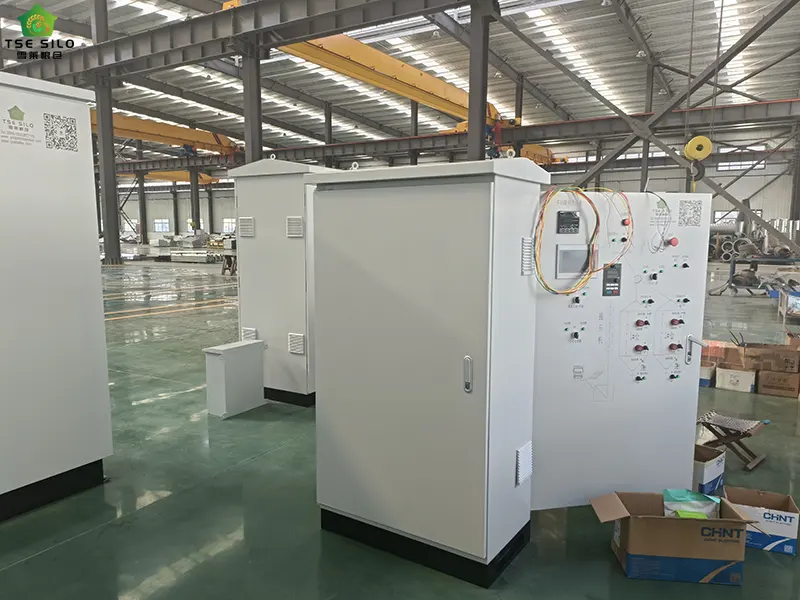
| Controller (PLC/Microcontroller) | All Actuators | Receives instructions from the data processing center, precisely controlling the start/stop and operating parameters of the actuators (such as fan speed and dehumidifier humidity setting). | Core control unit, ensuring reliable and timely command execution |
| Ventilation Equipment | Axial flow fan, centrifugal fan, circulating fan | 1. Cooling ventilation: When the grain temperature exceeds the standard, the fan automatically starts to introduce low-temperature, dry air from outside the grain pile; 2. Moisture reduction ventilation: When the moisture content of the grain pile exceeds the standard, ventilation is used to reduce the moisture content of the grain; 3. Post-fumigation ventilation: After the phosphine concentration reaches the standard, the fan automatically starts to replace the gas in the warehouse. | Triggering conditions: Grain temperature > 25℃, grain pile moisture > safe moisture content, pH₃ concentration < 0.3mg/m³ |
| Dehumidification Equipment | Industrial dehumidifier, integrated dehumidification and ventilation unit | Reduces the humidity of the air in the warehouse and prevents condensation on the grain pile (starts when the air humidity > 75%). | Triggering Conditions: Relative humidity inside the warehouse > 75% and temperature difference between grain and warehouse > 3℃ |
| Fumigation Equipment | Phosphine generator, circulation device | When pests exceed the limit, the system automatically controls the release and uniform distribution of fumigant, while simultaneously monitoring pH₃ concentration in real time to ensure fumigation effectiveness. | Triggering Conditions: Pest density > 5 individuals/kg, or continuously rising CO₂ concentration (pests accelerate grain metabolism) |
| Insulation/Refrigeration Equipment | Electric control of insulation layer, refrigeration unit (high-temperature areas) | In extreme high temperatures, the system automatically activates refrigeration to maintain the grain silo temperature within a safe range ( < 20℃). | Triggering Conditions: Warehouse temperature > 28℃ for 3 consecutive days |
Provides users with a window for data viewing, operation control, and report analysis, adaptable to different management scenarios (on-site management, remote monitoring, group management).
| Platform Type | Core Functions | Description | |
| Local Monitoring Software (PC) | 1. Real-time data visualization (dashboards for grain temperature, moisture, gas concentration, etc., heat maps); 2. Historical data query (curves, tables, supports filtering by time/warehouse number); 3. Local control operations (manual/automatic mode switching, equipment start/stop); 4. Access control (hierarchical authorization for administrators and operators). | Suitable for on-site grain warehouse management personnel, easy to operate, and fast response. | |
| Cloud Management Platform (Web/APP) | 1. Remote real-time monitoring (centralized management of multiple warehouse clusters, supports access via mobile phone and computer); 2. Anomaly alarms (SMS, APP push, email reminders, marking abnormal warehouse number and indicators); 3. Remote control (remotely start ventilation, fumigation, and other operations after authorization); 4. Automatic report generation (daily, weekly, and monthly grain condition reports, supports export to Excel/PDF); 5. Big data analysis (grain condition trend prediction, loss rate analysis, equipment maintenance reminders). | Suitable for grain steel silo management personnel and remote monitoring of group enterprises, achieving "unmanned operation and manned inspection". | |
| Alarm Module | Audible and visual alarm (on-site), remote alarm (mobile phone/computer) | When grain condition indicators exceed safety thresholds, the system immediately reminds users to take action (such as excessive grain temperature or excessively high pH concentration) to avoid delaying the response. | Alarm thresholds can be customized based on grain type (wheat, corn, rice) and storage period. |
This is the most basic and frequent maintenance, mainly performed by grain warehouse managers or on-duty personnel.
Common faults in grain condition monitoring systems can be categorized according to their components. Understanding these fault phenomena, possible causes, and troubleshooting approaches is crucial for system maintenance and rapid recovery.
Activate immediately when the system alarms or problems are discovered during inspections.
The intelligent grain condition monitoring system for grain steel silo is an organic whole composed of end-point sensors, a reliable transmission network, stable hardware, and an intelligent software platform. Its role extends far beyond "measuring temperature"; it is the cornerstone for modern grain depots to achieve "safe, green, intelligent, and efficient" grain storage, and an indispensable technical means to ensure national grain quantity and quality security.
Written by
Shandong Shelley Grain Steel Silo Co., Ltd
Editor Jin
WhatsApp : +86-18653877118
Email : shelley@cnshelley.com