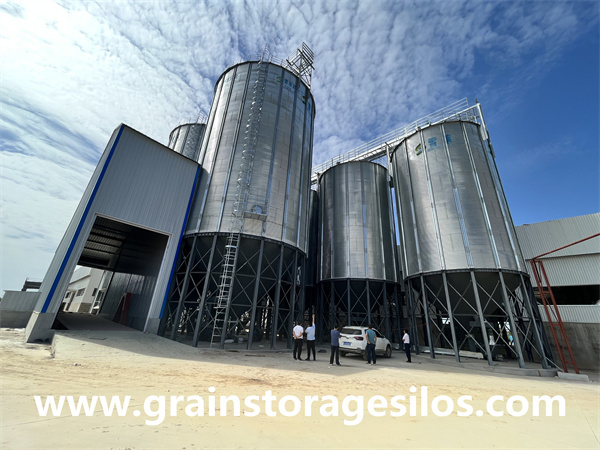
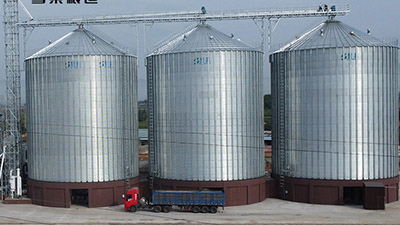
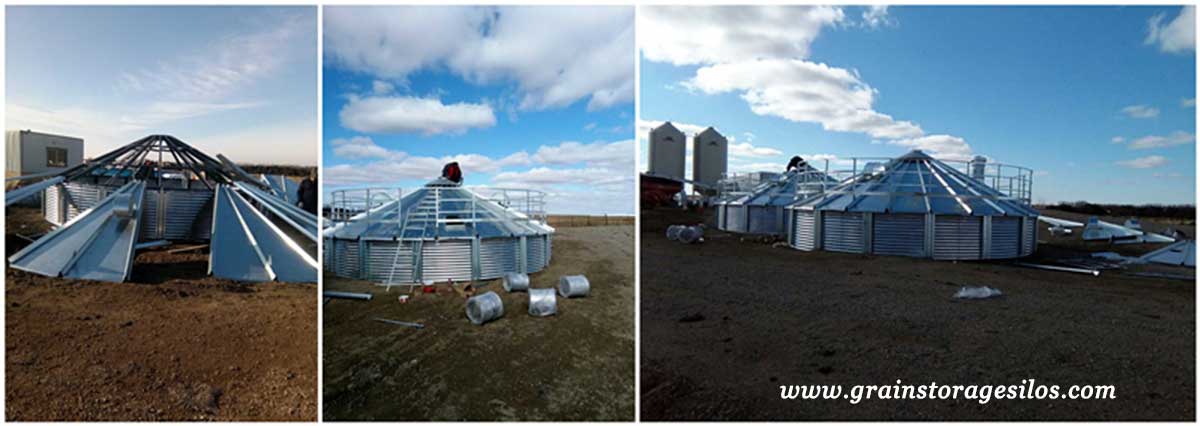
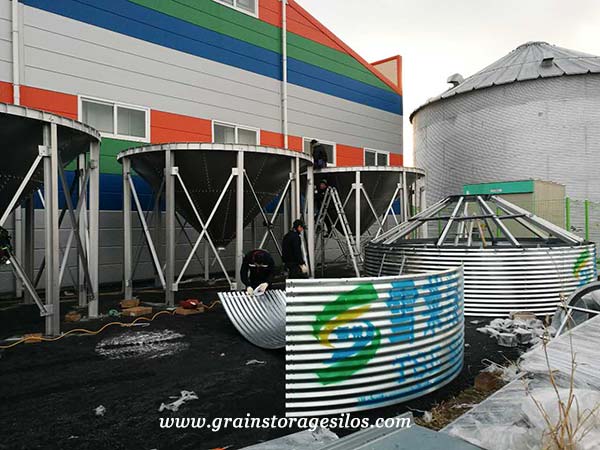
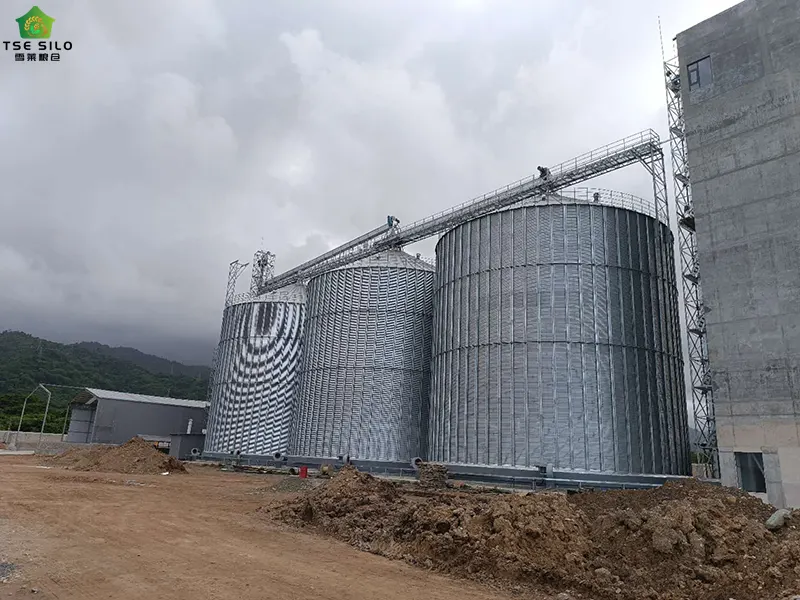
The final step in constructing a flat-bottomed steel silo is conducting a pressure test on the entire storage system. This ensures project quality and further eliminates potential safety hazards. The pressure test for a flat-bottomed steel silo, also known as a full-load test or settlement test, is a crucial step in verifying the structural strength, stability, and foundation bearing capacity of the steel silo. It is typically conducted after the silo is installed but before it is officially put into use. Today, Shelley Storage, the world's best-selling warehousing company, will explain the five basic procedures of a flat-bottomed steel silo pressure test.
1. Test Preparation Stage (Core Prerequisites)
1.1. Technical Document Review and Scheme Formulation
- Verify design drawings, geological survey reports, construction records, and material inspection reports to confirm the structural integrity and foundation construction quality of the silo.
- Prepare a specific silo loading test plan, clearly defining the loading stage, settling time, settlement observation requirements, safety measures, and emergency response plan. Implement the plan after approval by the design, supervision, and construction units.
- For soft foundations or special geological conditions, a specialized assessment by a professional institution is required.
1.2. Comprehensive Empty Silo Inspection
- Silo walls: Inspect the quality of corrugated plate splicing and welds, checking for defects such as deformation, leakage, and cracks.
- Silo floor: Inspect the flatness, strength (≥C25), and integrity of the moisture barrier of the flat floor (usually reinforced concrete), ensuring there are no cracks, hollow areas, or sandblasting.
- Ancillary facilities: Check the grain inlet/outlet system, ventilation system, temperature measurement system, and airtightness for proper functioning.
- Safety System: Check that ladders, guardrails, fire-fighting facilities, lighting, ventilation, and other safety facilities are in good working order.
1.3. Settlement Monitoring System Establishment (Five Fixed Principles)
- Benchmark Points: Set up at least 3 permanent leveling points with reliable foundations, located far from the construction area, forming an independent measurement system.
- Observation Points: Evenly distributed on the outside of the storage silo wall (≥8 points), with points at the four corners and center of the storage silo floor. Use S05 or higher level instruments for precise leveling.
- Five Fixed Requirements: Benchmark points, instruments, personnel, routes, and methods must all be fixed to ensure measurement accuracy.
1.4. Storage Material Preparation
- Grain Storage: Prioritize the use of grain that meets storage standards; prohibit the use of other substitutes (mandatory requirement for centrally administered grain depots).
- Material Requirements: Moisture, impurities, and temperature must meet safe grain storage standards to prevent overheating and mold growth during the test.
- Quantity Preparation: Prepare 100% of the designed storage capacity, with phased measurement.
1.5. Personnel and Equipment Preparation
- Organize a professional measurement team (a third-party surveying agency is recommended), and ensure they pass the training and assessment.
- Prepare precision leveling instruments, total stations, steel tape measures, thermometers, recording equipment, etc., and calibrate them in advance.
- Equip grain loading and unloading equipment, ventilation equipment, and fire-fighting equipment, and formulate safe operating procedures.
2. Staged Loading Phase (Core Operating Procedure)
The silo loading test for flat-bottomed steel silo is usually performed in two stages. For soft foundations, the number of stages can be increased to ensure uniform and slow loading, avoiding eccentric loading and impact loads.
| Stage | Loading Ratio | Loading Requirements | Settling Time | Observation Frequency |
| Stage 1 | Design capacity 60% | Evenly distribute grain, simultaneously at the center and around the perimeter, avoiding localized overloading, daily loading rate ≤ 1/3 of warehouse height | ≥ 2 months | Once daily for the first 15 days, then once every 5 days |
| Stage 2 | Design capacity 40% (full warehouse) | Continue evenly distributing grain to full warehouse, controlling the loading rate | ≥ 2-3 months | Once daily for the first 15 days, then once every 5 days, increasing to once daily for the last 10 days |
- Loading sequence: Single-row warehouses are loaded sequentially; multi-row warehouses are grouped symmetrically to avoid simultaneous loading of adjacent warehouses causing mutual interference to the foundations
- Material Leveling Inside the Silo: After each stage of loading, the grain surface should be leveled promptly to ensure uniform stress and facilitate subsequent ventilation and fumigation.
3. Static Observation and Acceptance Standards (Core Control Indicators)
3.1. Observation Content
- Settlement: Record the elevation changes at each observation point and calculate the cumulative settlement and daily average settlement.
- Tilting: Calculate the tilt rate of the silo in two directions. Formula: Tilting rate = (Maximum settlement - Minimum settlement) / Silo diameter × 1000‰
- Structural Deformation: Inspect the silo walls, bottom, and welds for new cracks, increased deformation, or other abnormalities.
- Grain Condition Monitoring: Regularly measure grain temperature and moisture to prevent overheating and mold growth; ventilate and cool as needed.
3.2. Acceptance Criteria (All three conditions must be met simultaneously)
- Settlement Stability: Cumulative settlement in the last 10 days ≤ 3mm (GB50007 "Code for Design of Building Foundations")
- Tilting Control: Tilting rate ≤ 2‰ (GB50884 "Technical Specification for Steel Silos"), exceeding the allowable value is strictly prohibited.
- Structural Integrity: The silo body has no cracks or obvious deformation, welds are free of cracks, the floor is undamaged, and the moisture barrier is intact.
3.3. Handling Abnormal Situations
- Abnormal Settlement: If the average daily settlement is >5mm or the cumulative settlement is >300mm, immediately stop loading, analyze the cause (e.g., insufficient foundation bearing capacity), and take reinforcement measures.
- Excessive Tilting: If the tilt rate is >2‰, stop loading, investigate the cause (e.g., uneven foundation), and unload and correct the tilt if necessary.
- Structural Defects: If cracks or leaks are found, immediately stop loading, organize expert evaluation, and continue only after repairs are deemed satisfactory.
- Abnormal Grain Condition: If the grain temperature rises >2℃/day, ventilate and cool down promptly to prevent mold from affecting the test.
4. Test Completion and Report Preparation
4.1. Unloading and Inspection
- After acceptance, unload slowly and evenly, controlling the unloading rate to avoid excessive rebound of the silo body causing structural damage.
- After emptying the silo, re-inspect the silo walls, silo floor, and floor, record any damage, and assess the structural condition.
- Clean up any remaining materials inside the silo and check if the equipment system is functioning properly.
4.2. Test Report Preparation (Signed by all three parties)
- Basic Information: Project overview, design parameters, geological conditions, construction unit, test time
- Test Process: Loading stage, loading amount, settling time, complete record of observation data
- Observation Results: Settlement curve, inclination rate calculation, structural inspection record
- Conclusions and Recommendations: Clarify whether the test is qualified and provide precautions for subsequent use (e.g., initial grain storage recommendations)
- Signing Requirements: The test must be jointly signed and confirmed by the design, construction, and supervision units, serving as an important basis for final acceptance and use permits.
5. Handling Special Circumstances
5.1. Alternative Tests (Non-Grain Depot Scenarios)
- For industrial material silos, a water filling test can be used as an alternative (requires design approval). The loading and settlement requirements are the same; pay attention to the impact of waterproofing and buoyancy on the silo body.
- When filling with water, install a flow guide device to avoid water flow impacting the silo walls and control the water injection rate.
5.2. Safety Assurance
- Personnel are strictly prohibited from entering the silo during loading and observation periods. In special circumstances, ventilation testing must be passed and someone must supervise the process.
- Implement rainproof, windproof, and fireproof measures to prevent materials from getting damp or suffering accidental loss.
- Establish an emergency response mechanism and equip it with emergency supplies and equipment to deal with emergencies.
5.3. Subsequent Usage Recommendations
- After the silo is properly sealed, it is recommended to initially control the grain storage at 80% capacity, gradually increasing to full capacity.
- Conduct regular settlement monitoring: once a month for the first 3 months, then once a quarter for one year.
- Strictly follow the operating procedures for loading and unloading grain to avoid uneven loading and rapid unloading that could cause structural damage.
6. Safety Precautions
- 6.1. Personnel are strictly prohibited from entering the silo during loading.
- 6.2. If monitoring data is abnormal (such as sudden settlement changes, weld tearing sounds), stop loading immediately.
- 6.3. Avoid conducting tests in severe weather (strong winds, heavy rain).
- 6.4. When using alternative media (such as water), calculate the lateral pressure to prevent silo instability.
7. Common Problem Handling
- Excessive settlement: Suspend loading and analyze the cause in conjunction with the design unit (such as insufficient foundation treatment).
- Uneven loading signs: Adjust the feeding point and check if the material distribution system is uniform.
- Weld leakage: Mark the location, re-weld after unloading, and re-inspect.
8. Conclusion
The core of the flat-bottomed steel silo slack pressure test lies in graded loading, precise observation, strict standards, and safe control. By fully implementing the above procedures, the reliability of the silo structure and foundation can be effectively verified, potential safety hazards can be eliminated, and long-term stable storage can be guaranteed. The test process should strictly follow relevant specifications, key data must be accurately recorded, and acceptance conclusions must be confirmed by multiple parties to ensure the scientific validity of the test results. The above are the five basic procedures for flat-bottomed steel silo slack pressure tests compiled by Shelley Storage. We hope this explanation will be helpful when constructing flat-bottomed steel silos in the future. Good grain silos, Shelley made; choose good products, choose Made in China.
Written by
Shandong Shelley Grain Steel Silo Co., Ltd
Editor Jin
WhatsApp : +86-18653877118
Email : shelley@cnshelley.com