LANGUAGE
Choosing the right grain storage silo capacity is one of the most important decisions a farm or agricultural business can make. A grain storage silo that is too small will limit your harvest, force premature sales at low prices, and leave you scrambling for temporary storage. A grain storage silo that is too large wastes capital, occupies unnecessary space, and may operate inefficiently. Getting the capacity right is about matching your storage investment to your actual operational needs—both today and in the years ahead.
This guide walks you through the key factors to consider, how to calculate your required grain storage silo capacity, common sizing mistakes to avoid, and how to select the right grain storage silo for your specific situation.
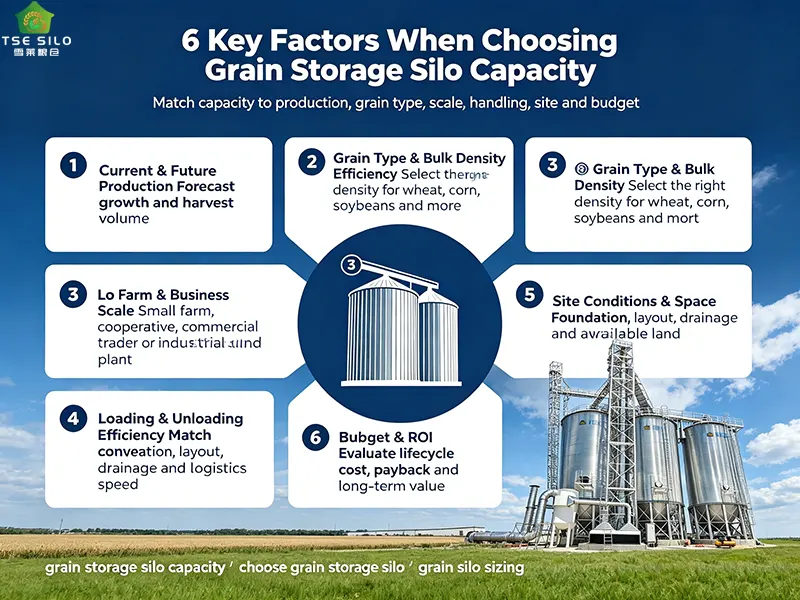
The capacity of your grain storage silo directly affects your operational efficiency, marketing flexibility, and bottom line. Here is why getting it right matters:
The goal is to find the capacity that meets your current needs while providing reasonable room for future growth—without overcommitting your capital.
The starting point for any grain storage silo capacity decision is understanding how much grain you produce or handle. Calculate your average annual production based on:
Then consider future growth. Are you planning to expand your acreage? Will yields increase with improved practices? A good rule of thumb is to size your grain storage silo for 120–150% of your current average production. This provides a buffer for good harvest years without excessive overcapacity.
Different grains have different bulk densities, which directly affect how much weight a grain storage silo of a given volume can hold. For example:
| Grain Type | Bulk Density (kg/m³) | Bulk Density (lb/bushel) |
| Wheat | 770–800 | 60–62 |
| Corn (Maize) | 720–760 | 56–59 |
| Rice (paddy) | 580–620 | 45–48 |
| Soybeans | 720–750 | 56–58 |
| Barley | 600–650 | 47–51 |
When sizing a grain storage silo, always specify the grain type and expected bulk density. A silo designed for wheat may be structurally overloaded if filled with a denser grain like soybeans.
Your operational scale determines whether you need a single small grain storage silo or a multi-silo complex. General guidelines:
The capacity of your grain storage silo must align with your handling equipment. If your combine can harvest 200 tons per day but your silo filling system can only handle 50 tons per day, you will face bottlenecks. Similarly, discharge rates must match your transport and processing schedules.
Consider:
The physical footprint of a grain storage silo depends on both capacity and height-to-diameter ratio. A taller, narrower silo occupies less ground space but requires deeper foundations. A shorter, wider silo needs more land but simpler foundations.
Key site considerations:
Your budget will inevitably shape your grain storage silo capacity decision. However, it is important to evaluate cost on a per-ton basis rather than just total price. Larger silos generally offer lower cost per ton of capacity, but they require higher upfront investment.
Consider the full lifecycle cost:
A grain storage silo that is slightly larger than your current needs may offer better long-term value if it accommodates growth and improves marketing flexibility.
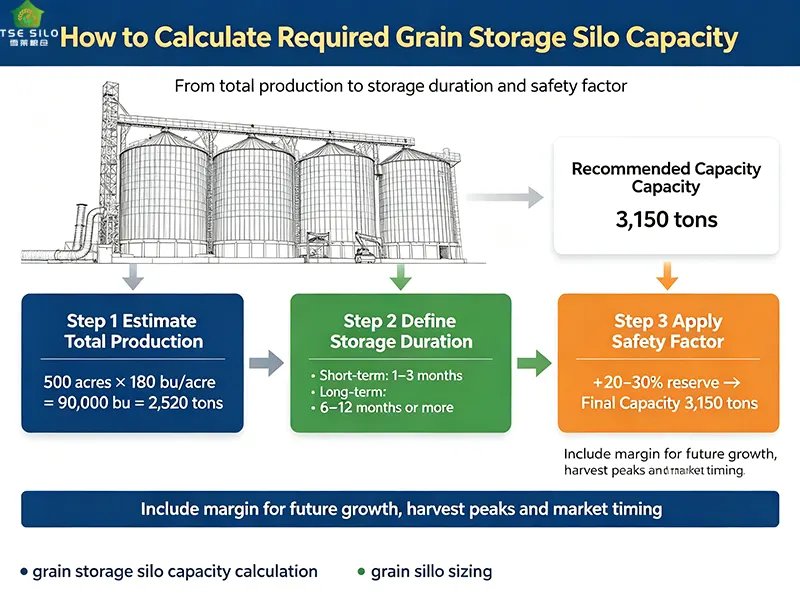
Calculating your required grain storage silo capacity involves three straightforward steps:
Multiply your harvested acreage by the average yield per acre for each grain type.
Example: 500 acres of corn × 180 bushels/acre = 90,000 bushels. Convert to tons: 90,000 bushels × 56 lb/bushel ÷ 2,000 lb/ton = 2,520 tons.
Decide how long you need to store grain. If you plan to sell immediately after harvest, you need less capacity. If you intend to hold grain for several months to capture better prices, you need more.
Add 20–30% to your calculated production to account for good harvest years, emergency reserves, and future growth.
Example: 2,520 tons × 1.25 = 3,150 tons of required grain storage silo capacity.
Once you have your target capacity, you can select a single large silo or a combination of smaller silos. Multiple smaller silos offer flexibility for storing different grain types or lots separately. A single large silo reduces per-ton costs and simplifies management.
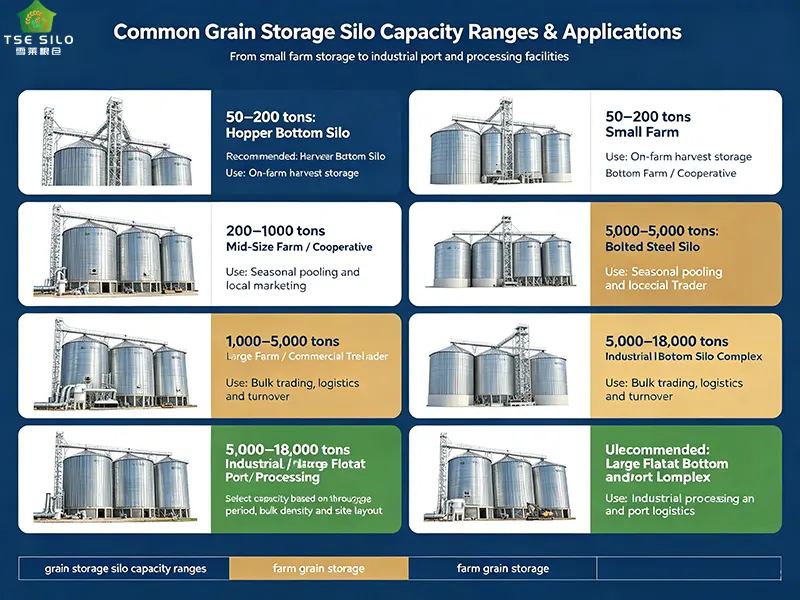
| Capacity Range | Typical Application | Recommended Silo Type |
| 50–200 tons | Small farms, on-farm storage | Small bolted silo or spiral silo |
| 200–1,000 tons | Mid-sized farms, cooperatives | Bolted or spiral steel silo |
| 1,000–5,000 tons | Large farms, commercial grain handlers | Bolted steel silo, flat bottom |
| 5,000–18,000 tons | Industrial processors, port terminals | Large bolted steel silo, flat bottom |
When selecting a grain storage silo, consider not only capacity but also the type. Spiral silos offer superior sealing and are ideal for fumigation and long-term storage. Bolted silos offer greater flexibility for expansion and relocation, with capacities up to 18,000 tons. For most commercial operations, a flat-bottom bolted grain storage silo provides the best combination of capacity, cost efficiency, and discharge performance.
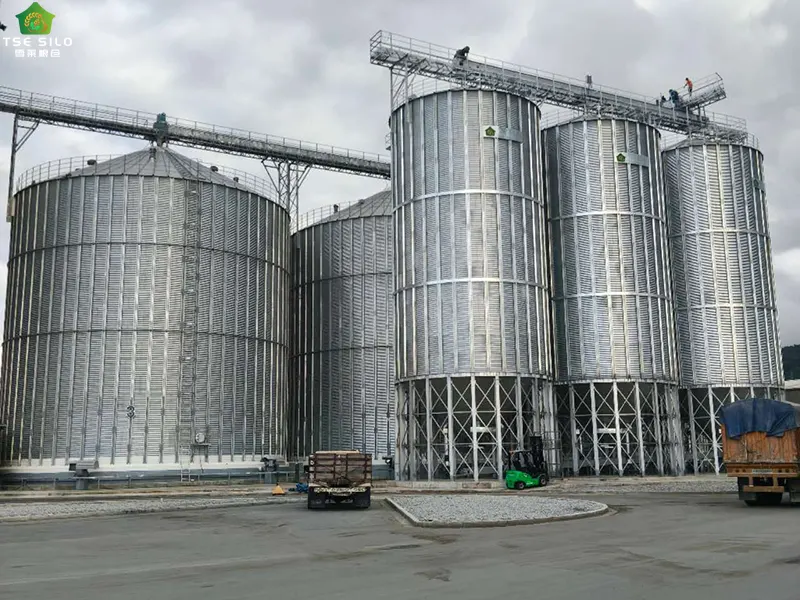
Choosing the right grain storage silo capacity is a balancing act between current needs, future growth, site conditions, and budget. By carefully assessing your production volume, grain types, operational scale, handling equipment, and long-term plans, you can select a grain storage silo that serves your farm or business effectively for decades.
Remember to calculate your required capacity with a safety margin, consider both upfront and lifecycle costs, and avoid the common mistakes outlined above. Whether you need a small on-farm grain storage silo or a large industrial facility, the right capacity will protect your harvest, improve your market position, and maximize your return on investment.
For personalized guidance on selecting the ideal grain storage silo capacity for your operation, consult with an experienced manufacturer who can evaluate your specific requirements and recommend the optimal solution.
Written by
Shandong Shelley Grain Steel Silo Co., Ltd
Editor Jin
WhatsApp : +86-18653877118
Email : shelley@cnshelley.com