< a href=" " rel="nofollow">Chat with us, powered by < a href="https://www.livechat.com/?welcome" rel="noopener nofollow" target="_blank">LiveChat
Current Location: Home » TSE Blog

Steel Grain Silo Buying Guide: 5 Key Factors to Consider

October 06, 2026

Steel grain silos have become the preferred storage solution for farms, feed mills, flour mills, grain traders, and food processing plants worldwide. Compared with traditional concrete silos, steel silos offer faster installation, lower foundation requirements, better sealing performance, and easier expansion. However, choosing the right steel grain silo is not simply a matter of comparing prices. A poorly specified silo can lead to grain spoilage, structural problems, high maintenance costs, and even safety risks.

This buying guide covers the five most important factors to consider before purchasing a steel grain silo: storage capacity and site conditions, steel quality and corrosion protection, aeration and temperature control, discharge and automation, and supplier experience and after-sales support.
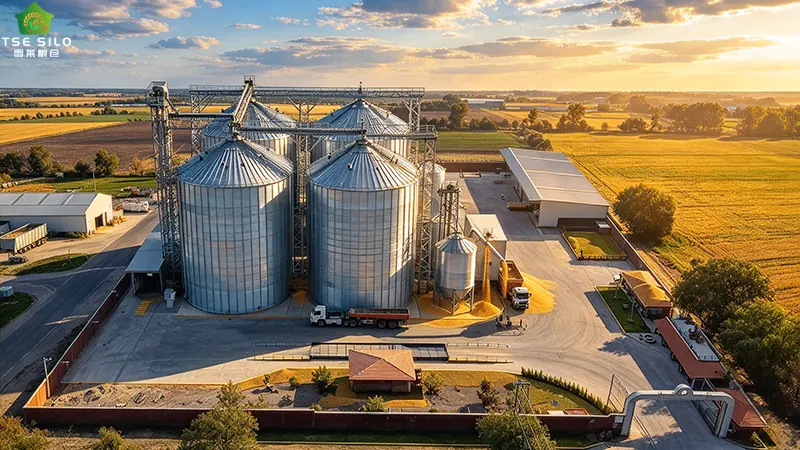
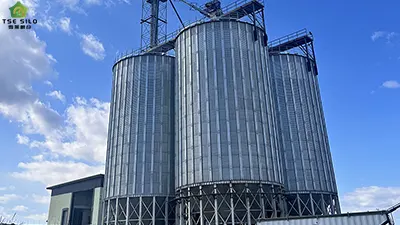
Large steel grain silos on a modern farm with trucks and conveyors

Factor 1: Storage Capacity and Site Conditions

The first step in buying a steel grain silo is determining the required storage capacity. Capacity should be calculated based on:

  • Annual grain output or throughput
  • Bulk density of the stored material
  • Number of storage cycles per year
  • Future expansion plans

Steel grain silos are available in a wide range of sizes, from small farm silos of 10 m³ to large industrial silos exceeding 18,000 m³. The diameter and height of the silo must match the available site area and the capacity of loading and unloading equipment.

Site conditions are equally important. Before selecting a silo, evaluate:

  • Foundation soil bearing capacity
  • Wind and snow loads
  • Seismic requirements
  • Drainage and flood risk
  • Access for trucks, conveyors, and maintenance equipment

A professional supplier should provide foundation design recommendations and verify that the silo structure meets local building codes. Choosing the wrong diameter-to-height ratio or ignoring site conditions can cause uneven settlement, wall deformation, or structural failure.
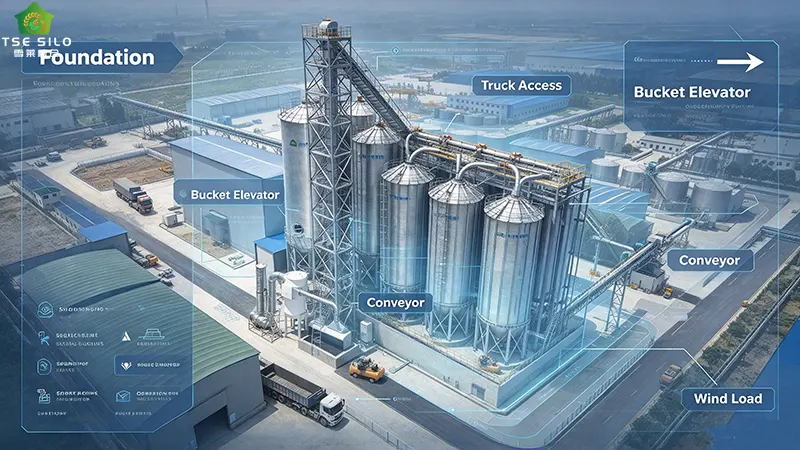
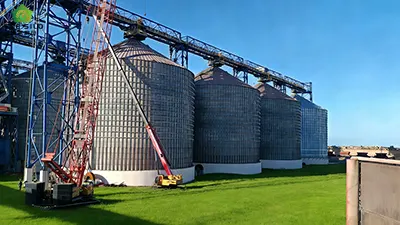
Steel grain silo capacity and site layout with conveyors and foundation

Factor 2: Steel Quality, Thickness, and Corrosion Protection

The service life of a steel grain silo depends heavily on the quality of the steel and its corrosion protection system. Grain storage environments are often humid, and condensation can accelerate rust formation. Therefore, buyers should pay close attention to:

  • Steel plate thickness: The silo wall and stiffeners should be designed with variable thickness—thicker at the bottom where pressure is highest, and thinner at the top. This "equal-strength" design improves safety while reducing material waste.
  • Galvanization: High-quality silos use hot-dip galvanized steel with a zinc coating of at least 275 g/m² (double-sided). This provides excellent protection against rust and extends service life.
  • Fasteners: High-strength bolts, such as 10.9-grade zinc-plated bolts, should be used for connections. Rubber washers and sealing compounds are essential for airtight performance.
  • Coating systems: For harsh environments, additional coatings such as Dacromet or geometric coatings can further improve corrosion resistance. A well-protected steel silo can achieve a design life of 25 years or more.

Cutting costs on steel quality or coating thickness may save money initially, but it usually leads to higher maintenance costs and a shorter lifespan.

Factor 3: Aeration, Temperature Control, and Insulation

Grain is a living material. Temperature and moisture fluctuations can cause insect infestation, mold growth, and quality deterioration. Because steel has high thermal conductivity, a steel silo can heat up quickly in summer and cool down rapidly in winter. Without proper aeration and temperature control, condensation may form on the inner walls, leading to caking and spoilage.

Key considerations include:

  • Aeration system: Fans, air ducts, and perforated floors should be designed to move air evenly through the grain mass. This helps control temperature and moisture.
  • Temperature monitoring: A modern silo should be equipped with temperature sensors and a digital monitoring system. Real-time data allows operators to detect hot spots early.
  • Insulation: For long-term storage or in regions with large temperature differences, polyurethane insulation can be applied to the silo walls and roof. With a thermal conductivity of only 0.018–0.022 W/(m·K), polyurethane significantly reduces heat transfer and helps maintain stable grain temperature.
  • Low-temperature storage: In hot climates, adding a grain chiller or air conditioner to an insulated silo can enable low-temperature storage, preserving grain quality for longer periods.

A well-designed aeration and insulation system is not an optional extra—it is essential for safe grain storage.
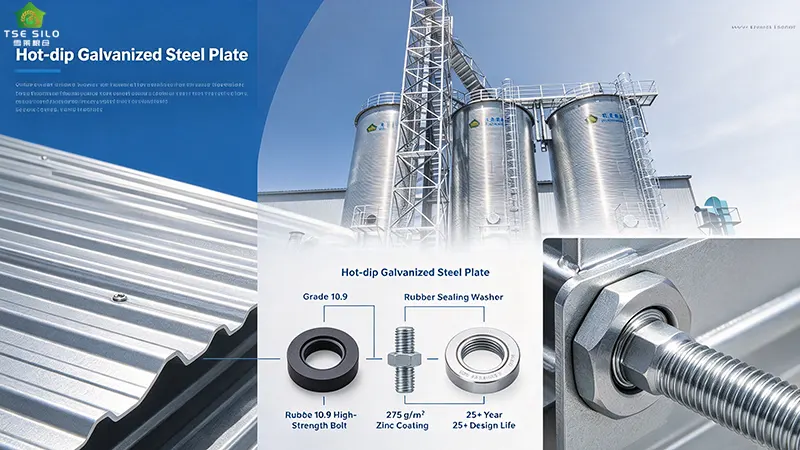
Hot-dip galvanized steel plate, high-strength bolts and sealing washers for steel grain silo

Factor 4: Discharge System and Automation

The discharge system determines how efficiently grain can be removed from the silo. Poor discharge design can cause bridging, arching, dead zones, and uneven flow, leading to downtime and grain loss.

Buyers should consider:

  • Bottom type: Flat-bottom silos offer maximum storage capacity and are suitable for large-scale storage. Cone-bottom silos rely on gravity flow and are ideal for frequent loading and unloading. The choice depends on the material's flow characteristics and the required discharge rate.
  • Discharge efficiency: Optimized cone angles, smooth inner walls, and anti-bridging devices such as air cannons or vibrators can improve flow. Some manufacturers offer patented cone-bottom designs that increase discharge efficiency by more than 30%.
  • Conveying equipment: Bucket elevators, belt conveyors, scraper conveyors, and screw conveyors should be matched to the silo's capacity. The entire conveying line should be designed to minimize grain breakage and dust generation.
  • Automation: PLC-based control systems can automate loading, unloading, aeration, and temperature monitoring. IoT-enabled remote monitoring allows managers to check silo conditions from a computer or mobile phone, improving operational efficiency and reducing labor costs.

A well-integrated discharge and automation system turns a steel silo from a simple storage tank into a smart, efficient storage hub.

Factor 5: Supplier Experience, Certifications, and After-Sales Support

The supplier you choose is just as important as the product itself. A reliable steel grain silo manufacturer should offer:

  • Proven experience: Look for a supplier with a strong track record in designing, manufacturing, and installing steel silos for various industries, including grain, feed, flour, oil, and food processing.
  • Certifications: CE certification, ISO 9001 quality management certification, and compliance with industry standards such as GB 50322 are good indicators of quality and reliability.
  • Engineering support: The supplier should provide structural calculations, foundation design, layout drawings, and customization options.
  • Installation and training: Professional on-site installation and operator training ensure the silo is assembled correctly and used safely.
  • After-sales service: Fast response to spare parts requests, maintenance guidance, and technical support are essential for long-term operation.

Choosing a supplier with strong engineering capabilities and after-sales service can significantly reduce total cost of ownership and avoid costly downtime.
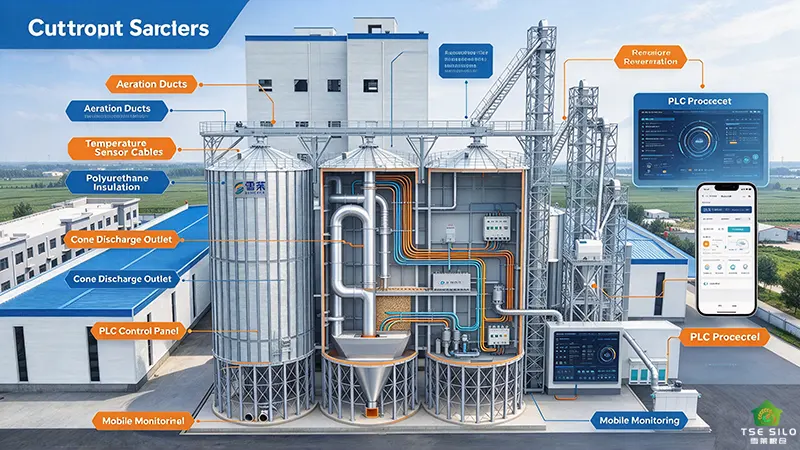
Steel grain silo cross-section with aeration, temperature sensors, insulation and automated discharge system

Final Thoughts

Buying a steel grain silo is a long-term investment. The five key factors covered in this guide—capacity and site conditions, steel quality and corrosion protection, aeration and temperature control, discharge and automation, and supplier experience and after-sales support—should all be carefully evaluated before making a decision.

As a high-tech enterprise specializing in steel grain silos and grain handling equipment, Xuelai Grain Silo has provided customized storage solutions to more than 100 well-known companies and exported products to over 70 countries. With advanced manufacturing, strict quality control, and comprehensive after-sales service, Xuelai helps customers build safe, efficient, and intelligent grain storage systems.

If you are planning to purchase a steel grain silo, contact Xuelai for a tailored solution based on your capacity, site, and grain storage requirements.

Written by

Shandong Shelley Grain Steel Silo Co., Ltd

Editor Jin

WhatsApp : +86-18653877118

Email : shelley@cnshelley.com

Contact US
Address:789, Haina Street, High-tech Zone, Tai'an City,Shandong Province, China
Phone:+0086-18653877126
Mobile:+0086-18653877118
Online Service
Online Message
+86-18653877118
shelley@cnshelley.com
Service Hotline
+86-18653877118