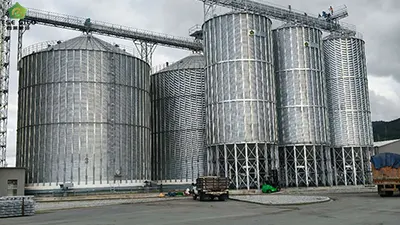
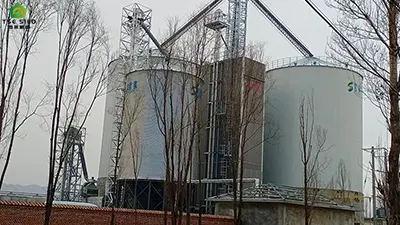
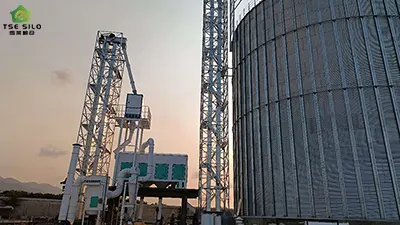
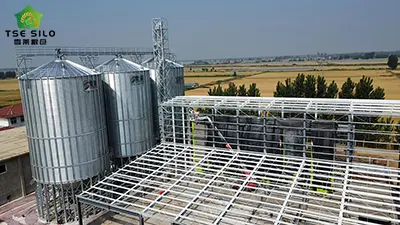
The intelligent inventory system for grain silos is a core intelligent solution that addresses the low efficiency, large errors, and high safety risks of traditional manual inventory. Its equipment is designed around the entire process of "data collection-transmission-processing-application". Its core function is to achieve automated, accurate, and real-time control of inventory data, and to link with other intelligent systems in the silos (such as ventilation, temperature measurement, and inbound/outbound) to support the full life cycle management of grain storage. The following is a detailed analysis of the equipment components and their important roles:
1. Data Acquisition Layer: Core of Inventory and Environmental Information Sensing
1.1. Level/Volume Detection Equipment (The Core of the Core)
| Equipment Type | Applicable Scenarios | Technical Parameters (Key Selection Factors) | Installation Method |
| LiDAR Scanner | Large vertical silos, shallow circular silos (diameter ≥ 8m) | Measurement range 0.5-100m, accuracy ±10mm, sampling frequency ≥ 10Hz, dustproof and waterproof IP67 | Distributed installation at the silo top center or multiple points (≥ 3 units networked, covering the entire silo) |
| 3D Laser Level Gauge | Medium-sized vertical silos (diameter 3-8m) | Measurement accuracy ±5mm, scanning angle 360°, supports adaptive calibration in dusty environments | Single-point installation at the silo top center |
| Radar Level Sensor | Small vertical silos, flat-roofed silos | Measurement range 0.3-30m, accuracy ±0.2%FS, resistant to dust, temperature, and humidity interference | Single or multiple evenly distributed points on the silo top |
| Ultrasonic level gauge | Auxiliary detection (e.g., remaining material level at the silo bottom) | Measurement range 0.1-10m, accuracy ±1%FS, suitable for short-distance, low-dust scenarios | Above the discharge port at the silo bottom |
- Core function: Real-time acquisition of the three-dimensional coordinates and height distribution of the grain surface, calculating the storage volume (combined with silo dimensions).
- Selection considerations: Due to the high dust levels and large temperature differences inside grain silos, priority should be given to equipment that is "dustproof and waterproof + temperature resistant (-20℃~80℃) + dust adaptive algorithm" to avoid data distortion caused by signal obstruction.
1.2. Quality and Environmental Auxiliary Monitoring Equipment
- Temperature and Humidity Sensors: Distributed arrangement (top of the silo, lower middle part of the silo walls, inside the grain pile), measurement range -40℃~85℃, 0~100%RH, accuracy ±0.5℃/±3%RH, supports RS485 communication, used for correlation analysis of the impact of temperature and humidity on grain quality (e.g., mold early warning).
- Moisture Sensors: Insertion installation (inside the grain pile, one point every 3-5m), measurement range 8%~30% (grain moisture), accuracy ±0.5%, real-time monitoring of grain moisture content to prevent excessive moisture from causing condensation and heat generation.
- Density Sensors: Installed in conjunction with the material leveling equipment to measure the bulk density of grain (e.g., wheat 750-800kg/m³, corn 700-750kg/m³), used for accurate calculation of inventory weight (weight = volume × density).
1.3. Safety Auxiliary Detection Equipment
- Dust Concentration Sensor: Installed on the silo roof and in the working area inside the silo. Measurement range: 0~1000mg/m³, accuracy: ±10%. Triggers activation of dust removal equipment when concentration exceeds the limit to avoid dust explosion risk (ensuring the safety of inventory equipment and personnel).
- Explosion-proof Camera: Installed inside and on the silo roof. Explosion-proof rating: Ex d IIB T6. Supports real-time high-definition video monitoring to assist manual verification of inventory results (e.g., whether there is arching or clumping on the material surface).
2. Data Transmission Layer: The "Bridge" for Information Communication
2.1. Wired Transmission Equipment
- Industrial Ethernet Switch: Supports Gigabit Ethernet, redundant backup design, connects the silo roof detection equipment and the silo control box, ensuring stable transmission of large amounts of data (such as 3D point cloud data), with a latency ≤10ms.
- RS485 Bus Module: Used for data transmission from temperature, humidity, and moisture sensors. Transmission distance ≤1000m, strong anti-interference capability (adaptable to the complex electromagnetic environment of silos).
2.2 Wireless Transmission Equipment (Suitable for old warehouse renovations or scenarios where cabling is inconvenient)
- LoRa Gateway: Transmission distance 1-3km, supports multi-node access (≤128 sensors), low power consumption design, suitable for small data transmission such as temperature, humidity, and moisture, power consumption ≤5W.
- 4G/5G Industrial Router: Supports full network compatibility, transmission rate ≥100Mbps, used for data upload in remote warehouse areas or mobile inventory devices (such as handheld terminals), supports VPN encryption (ensuring data security).
- WiFi 6 Module: Provides localized coverage within the warehouse, supports high-speed data transmission from devices such as LiDAR, latency ≤5ms, suitable for short-range wireless networking in newly built silos.
3. Data Processing and Control Layer: The System's "Brain"
3.1 Edge Computing Gateway
- Core Functions: Local preprocessing of 3D point cloud data, filtering invalid data (such as dust interference points), calculating preliminary volume and weight results, reducing cloud server load, response time ≤1s.
- Hardware Configuration: CPU ≥ 4 cores, Memory ≥ 8GB, Storage ≥ 64GB, supports multi-protocol parsing (e.g., Modbus, TCP/IP, OPC UA), compatible with different brands of testing equipment.
3.2. Server and Software System
- Hardware Server: Industrial-grade server, CPU ≥ 8 cores, Memory ≥ 16GB, Storage ≥ 1TB (supports RAID 5 redundancy backup), deployed database (e.g., MySQL, PostgreSQL) to store historical inventory data and equipment operation logs.
- Intelligent Inventory Software Platform (Core Functional Modules):
- 3D Modeling Module: Converts point cloud data collected by LiDAR into a 3D model of the grain pile, intuitively displaying the surface morphology and height distribution.
- Inventory Calculation Module: Supports volume calculation algorithms (e.g., polyhedral fitting, slicing method) for various silo types (vertical silos, shallow circular silos, flat silos), automatically correlates density data to calculate weight, with an error rate ≤ ±1%.
- Data Visualization Module: Displays inventory data (such as real-time inventory, historical trends, and inventory surplus/deficit comparisons) in chart (line graph, bar chart) and report formats, supporting Excel/CSV export.
- Linkage Control Module: Interacts with the inbound/outbound system and ventilation system, automatically issuing alerts when inventory data is abnormal (such as a sudden decrease in inventory), or triggering ventilation equipment based on temperature and humidity data (ensuring food safety).
- Access Control Module: Supports multi-role access control (such as administrator, operator, auditor), records inventory operation logs, and meets compliance requirements (such as the regulatory needs of grain reserves).
3.3. Control Box and PLC
- Core Functions: Receives software system commands, controls the start/stop of detection equipment (such as timed inventory checks), and links dust removal equipment (when dust levels exceed standards). The PLC uses a Siemens S7-1200 or Mitsubishi FX series, supporting logic programming.
4. Terminal Display Layer: The "Window" for Human-Machine Interaction
- Industrial Panel PC: Installed in the control room below the warehouse, 15-19 inch touchscreen, supports real-time viewing of inventory results, 3D models, and equipment operating status, and supports local operation (such as manually starting the inventory).
- Mobile Handheld Terminal: Supports Android/iOS systems, screen ≥ 5.5 inches, built-in RFID reader/writer function (can scan grain variety tags), used for on-site manual verification and data entry, supports offline operation (automatically synchronized after network recovery).
- Web/APP Terminal: Supports remote login, managers can view inventory data, inventory reports, and equipment alarm information via computer or mobile phone, achieving remote monitoring and management.
5. Core Functions of the Intelligent Inventory System (Based on Practical Application Scenarios)
5.1 Replacing Manual Inventory Checks, Improving Efficiency and Accuracy
- Efficiency Improvement: Traditional manual inventory checks (such as using depth gauges and flexible rulers) require 2-3 people per warehouse and take several hours (even 1-2 days for large shallow circular warehouses). The intelligent system enables "one-keyboard inventory checks," with a single warehouse inventory check time ≤ 30 minutes (including data processing), improving efficiency by over 80%.
- Accuracy Guarantee: The error rate of manual inventory checks is typically ±5%~±10% (affected by uneven material surfaces and human operation). The intelligent system uses 3D laser scanning technology, with an error rate ≤ ±1%, meeting the precise accounting needs of grain reserves and large grain enterprises (such as financial reconciliation and inventory counting).
- Safety Protection: Prevents manual entry into warehouses (especially deep warehouses and unstable grain surfaces), eliminating safety risks such as oxygen deficiency, burial, and dust explosions, reducing the incidence of safety accidents.
5.2 Real-time Inventory Monitoring for Refined Management
- Dynamic Tracking: Supports scheduled inventory checks (e.g., automatic daily inventory checks at dawn) or on-demand inventory checks (e.g., immediate inventory checks after inbound/outbound transactions), updating inventory data in real time. Managers can monitor grain inventory and trends at any time, avoiding discrepancies between records and actual stock.
- Grain Quality Correlation Management: Combines temperature, humidity, and moisture data to analyze changes in the quality of stored grain (e.g., issuing warnings of mold risk when moisture levels exceed standards), providing data support for ventilation, drying, and other maintenance measures, reducing grain loss (loss rate can be reduced by 0.5%~1%).
- Inventory Surplus/Shortage Analysis: Automatically compares historical inventory data, generating inventory surplus/shortage reports, analyzing the reasons for discrepancies (e.g., inbound/outbound measurement errors, grain loss), providing a basis for management decisions (e.g., optimizing inbound/outbound processes, adjusting maintenance plans).
5.3 Integration with Other Systems for Intelligent Collaboration
- Integration with Inbound/Outbound Systems: Inventory data is automatically synchronized to the inbound/outbound management system. When the deviation between actual and planned inventory exceeds a threshold (e.g., ±2%), inbound/outbound operations are automatically suspended to avoid overstocking or understocking risks.
- Integration with Ventilation/Temperature Monitoring Systems: Based on inventory data (e.g., grain pile height distribution), ventilation equipment operating parameters (e.g., ventilation duration in different areas) are adjusted. Combined with temperature and humidity data, precise ventilation is achieved, reducing energy consumption (ventilation energy consumption can be reduced by 15%~20%).
- Integration with ERP Systems: Inventory data is automatically uploaded to the enterprise ERP system, supporting financial accounting and procurement planning (e.g., automatically triggering purchase orders based on inventory balance), achieving intelligent management of the entire "inventory-finance-procurement" process.
5.4 Reduced Operating Costs and Compliance Requirements
- Reduced Labor Costs: Reduced dedicated inventory personnel (e.g., 2-3 people can be reduced in a 100,000-ton capacity warehouse), saving 100,000~200,000 RMB in labor costs annually.
- Maintenance Cost Optimization: By monitoring equipment operation status (e.g., sensor fault early warning), equipment problems can be identified in advance, reducing downtime and lowering maintenance costs (maintenance costs can be reduced by 20%~30%).
- Compliance and Regulatory Support: Automatic recording of inventory logs and inventory change trajectories generates reports compliant with the requirements of the State Grain Administration and the State-owned Assets Supervision and Administration Commission (e.g., monthly/quarterly inventory reports), meeting regulatory audit requirements and avoiding compliance risks.
6. Key Selection and Application Considerations
- 6.1. Equipment Selection and Silo Compatibility: For large, shallow circular silos, multiple LiDAR units networked together are preferred; for small vertical silos, single-point 3D laser level gauges can be used; for retrofitting older silos, wireless transmission equipment should be prioritized (reducing construction work).
- 6.2. Data Security Assurance: Encryption protocols (e.g., AES-256) are used during transmission; firewalls and intrusion detection systems are deployed on servers; and data is backed up regularly (local + cloud dual backup).
- 6.3. Calibration and Maintenance: Calibrate the level sensors weekly (using standard blocks to calibrate accuracy), clean the equipment dust covers monthly (to prevent dust obstruction), and calibrate the density sensors quarterly (adjusting according to the actual grain variety).
- 6.4. System Integration: Select equipment supporting open protocols such as OPC UA and Modbus to ensure seamless integration with existing intelligent systems in the silos (such as ventilation, temperature measurement, and inbound/outbound systems), avoiding data silos.
Conclusion
The core value of the intelligent grain silo inventory system lies in "replacing manual labor with technology and driving management with data." Its equipment composition revolves around "precise sensing - stable transmission - intelligent processing - efficient application," not only solving the pain points of efficiency, accuracy, and safety in traditional inventory systems, but also, through linkage with other systems, realizing the transformation of grain storage from "passive management" to "proactive early warning and precise control." It is an indispensable core intelligent equipment for modern grain depots.
Written by
Shandong Shelley Grain Steel Silo Co., Ltd
Editor Jin
WhatsApp : +86-18653877118
Email : shelley@cnshelley.com