Bucket elevators are the core conveying equipment for grain loading and unloading in steel grain silos. Their smooth operation directly affects grain storage and turnover efficiency, as well as equipment safety. In actual operation, blockages are prone to occur due to factors such as feed rate, material characteristics, and equipment condition. If not handled promptly or operated correctly, they may lead to equipment damage, grain loss, or even personnel safety accidents. To standardize the emergency handling process for blockages, quickly resolve the problem, and reduce losses, based on the characteristics of Shelley grain steel silos and practical experience, the following six emergency measures have been developed, covering the entire process of safe handling, rapid blockage clearing, and equipment reset. These measures are simple to understand and can be directly implemented.
1. Advantages of Shelley Grain Steel Silos
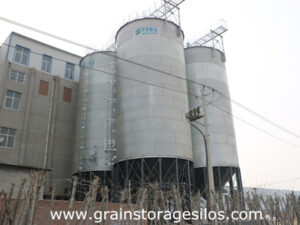
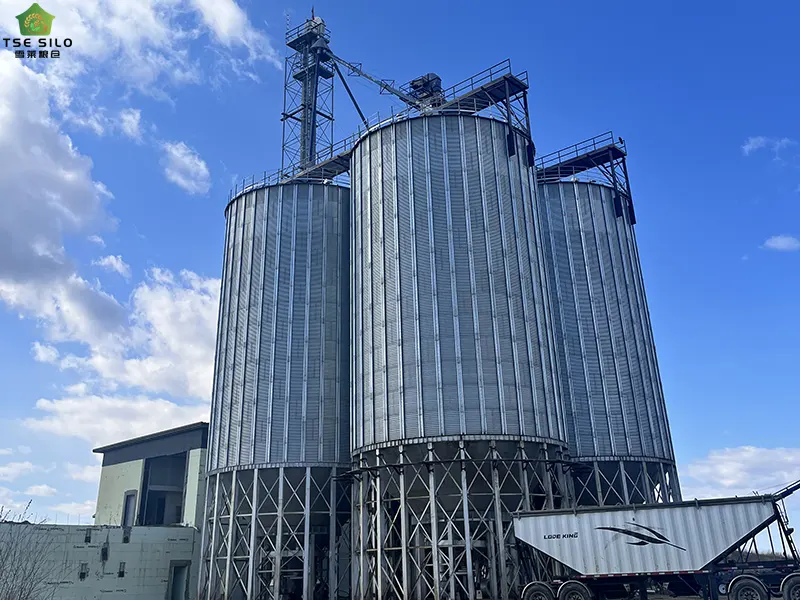
The core advantages of Shelley grain steel silos can be summarized in six aspects: stable structure, safe grain storage, efficient assembly, intelligent management, cost-effectiveness, and green durability, making them suitable for long-term safe grain storage and efficient turnover.
1.1. Advanced Structural Design, Sturdy and Durable
- High-Strength Galvanized Material: Utilizes hot-dip galvanized steel sheets of 275g/m2 or higher, combined with Dacromet/Jumite coating, providing rust resistance for >=20 years, exceeding the industry standard of 15 years.
- Modular Assembly: Bolted connections eliminate on-site welding; finite element analysis optimizes the silo structure; a unique patented conical silo bottom improves unloading efficiency by 30%.
- Flexible Silo Types: Flat bottom/conical bottom (45o/60o) options available; single silo volume 10–18750m³, suitable for different grain varieties and scales.
1.2. Excellent Sealing and Insulation, Safe Grain Storage
- Fully Sealed, Moisture-proof and Insect-proof: The smooth, stepless inner wall of the corrugated steel sheet effectively seals against moisture, pests, and contaminants, preventing mold, condensation, and insect infestation.
- High-Efficiency Temperature Control and Insulation: The temperature gradient of the insulated silo is reduced by 50%+, inhibiting grain respiration and quality deterioration, extending the safe storage period.
- High-rise ventilation and moisture protection: The conical-bottom frame design provides ventilation and moisture protection at the bottom, preventing ground dampness from affecting grain quality.
1.3. Short assembly cycle and efficient installation
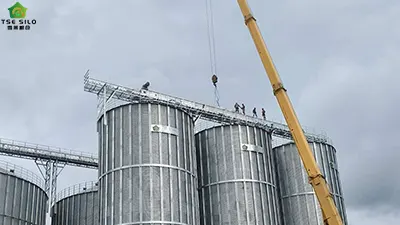
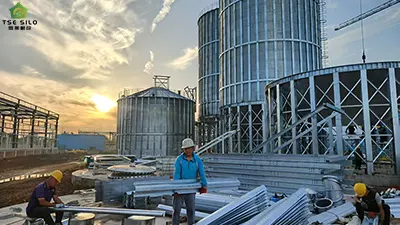
- Rapid on-site assembly: Modular components are prefabricated in the factory and bolted together on-site, shortening the construction period by 50%+ compared to concrete silos; a 500-ton silo can be completed in a few days.
- Unaffected by weather: Dry construction allows for normal progress even in rain or snow, shortening the project delivery cycle.
- Low foundation requirements: Lightweight structure reduces the bearing capacity requirements of the foundation, lowering foundation construction costs.
1.4. Intelligent system integration and worry-free management
- Real-time grain condition monitoring: IoT + visual temperature measurement system monitors temperature, humidity, and grain condition changes 24 hours a day, providing early warnings of anomalies.
- Intelligent ventilation and temperature control: Linked with the ventilation/drying system, it automatically adjusts the internal environment of the silo, reducing manual intervention and losses.
- Data interconnection: Can be integrated with supply chain systems for remote management, data analysis, and precise decision-making.
1.5. Low Overall Cost and High Cost-Effectiveness
- Low Investment Cost: Simple materials and construction processes result in lower costs than traditional concrete silos, offering high cost-effectiveness.
- Low Operation and Maintenance Costs: Galvanized coating provides corrosion protection and eliminates maintenance requirements; component replacement costs are reduced by 30%, resulting in low long-term operation and maintenance expenses.
- High Space Utilization: Vertical cylindrical design maximizes land use with a small footprint and large capacity.
1.6. Green, Environmentally Friendly, and Recyclable
- Recyclable Materials: The steel plate main body is recyclable and reusable, aligning with sustainable development principles.
- Low Energy Consumption and Low Emissions: Low energy consumption during production and use, with no construction waste, making it green and environmentally friendly.
- Export Quality Assurance: Products are exported to over 70 countries, meeting international standards and ensuring reliable quality.
2. Causes of Material Blockage in Bucket Elevators
2.1. Feeding-Related Causes
- Excessive Feed Rate: Upstream feeding is too fast, exceeding the elevator's rated conveying capacity, causing the buckets to accumulate material and block the machine.
- Uneven feeding: Sudden, inconsistent feeding can cause material buildup and jamming at the machine base.
- Excessive impurities in the material: Large foreign objects such as corn cobs, straw, stones, hemp rope, and burlap sack pieces can enter the machine base and obstruct the hopper.
- High material moisture content: Damp grains become sticky, easily adhering to the walls, forming brittle clumps, and causing incomplete unloading and material accumulation.
2.2. Equipment Structure and Installation Issues
- Insufficiently selected hopper/inappropriate spacing: Insufficient loading and excessive spillage lead to increasing material accumulation at the machine base.
- Hopper deformation, loosening, or detachment: Scraping, carrying material, and debris can cause sluggish operation and blockages.
- Insufficiently small discharge port at the machine head or obstructed chute: High unloading resistance results in incomplete unloading, with a large amount of material falling back into the machine base and causing blockages.
- Dead corners at the bottom of the machine base: Inadequate design and insufficient bottom space prevent residual grain from draining.
- Loose belt/chain tension: Slippage, reduced hopper belt speed, insufficient material conveying, and bottom blockage due to material accumulation.
2.3. Operational and Process-Related Reasons
- Incorrect start-up sequence: Feeding before starting the machine results in a sudden, uncontrolled start-up, causing immediate blockage.
- Incorrect shutdown sequence: Stopping the machine before stopping material feeding allows residual material to continue falling and accumulating inside.
- Disorganized material handling and distribution processes: Abrupt switching of incoming material flow causes instantaneous overload.
- Long-term cleaning of the bottom: Accumulation of old grain, broken grain, and dust at the bottom of the machine base, gradually reducing the material conveying space.
2.4. Transmission and Mechanical Failure Reasons
- Insufficient motor speed, reducer malfunction: Slower belt speed reduces conveying capacity.
- Damaged bearings, scraping noise: Increased running resistance and soaring load cause blockage.
- Belt misalignment, chain tooth wear and jamming: Uneven hopper wear and jamming directly seize the equipment.
2.5. Environmental and Material Characteristics
- Frost and Ice Formation in Winter: Grain clumps and frozen blocks enter the machine, becoming stuck between the hopper and the casing.
- Excessive Dust: Fine powder settles at the bottom of the machine base, caking and obstructing the passageway, reducing the material flow cross-section.
3. Emergency Measures for Handling Blockages in Bucket Elevators
The following are six emergency measures for handling blockages in Shelley grain steel silos bucket elevators. These measures, combined with safe shutdown, rapid unblocking, load control, equipment reset, electrical protection, and preventative linkage, can be directly implemented:
3.1. Immediate Shutdown and Power Disconnection, Safety Lockout (Priority)
- Upon discovering blockage (current spikes, machine base bulging, abnormal noise), immediately stop feeding and shut down the machine. Disconnect the power supply, tag and lock the machine to prevent accidental restart.
- It is strictly forbidden to reach in, lean out, or use tools to remove blockages during operation to avoid mechanical injury.
3.2. Machine Base Clearing + Reverse Jogging for Unblocking
- Open the cleaning door/plate at the bottom of the machine base. Use specialized tools (hook shovel, long-handled rake) to clear accumulated grain and remove large impurities (corn cobs, stones).
- For minor jamming, briefly reverse jogging (jogging <= 2 seconds, interval >= 10 seconds) can be used to reverse the hopper and remove the accumulated material; if the jamming persists, stop jogging and manually clear the blockage completely.
3.3. Cut Off Feed + Strictly Control Feed Rate
- Close the upstream gate/feeder to stop feeding and prevent further accumulation of material that could worsen the blockage.
- After clearing the blockage and resuming operation, start the machine empty first, then gradually feed at a small flow rate (controlled at 70%–80% of rated capacity). Sudden full-load feeding is strictly prohibited.
3.4. Check the Discharge End + Unblock the Outlet
- Check the discharge port, chute, and guide chute for clumps, wall adhesions, or foreign object blockages. Clean any remaining wet/clumped grain.
- Adjust the discharge baffle gap (10–15mm) to ensure smooth discharge from the hopper and reduce material buildup.
3.5. Check traction and tension, reset the equipment.
- After clearing the blockage, check the tension of the bucket belt/chain. If too loose, adjust the tensioning device to prevent slippage and re-blockage.
- Check the hopper for deformation or detachment, and the machine base/casing for deformation. Reset or replace damaged parts to avoid scraping resistance.
3.6. Electrical protection reset + linkage prevention.
- After cleaning, check the temperature of the motor, reducer, and bearings. Reset the overload/stall/blockage alarms. Run the machine under no-load for 3–5 minutes to confirm there are no abnormal noises and the current is normal before feeding.
- Activate the anti-blockage linkage: Activate the feed frequency converter, air cannon flow aid, or vibrator to control the material moisture content (<=14%) to prevent re-arching and blockage.
4. Specific Application Cases of Shelley Grain Steel Silos
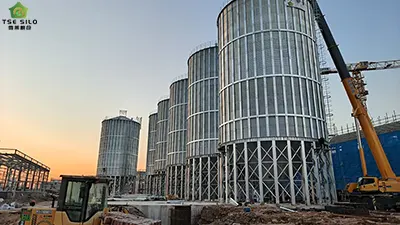
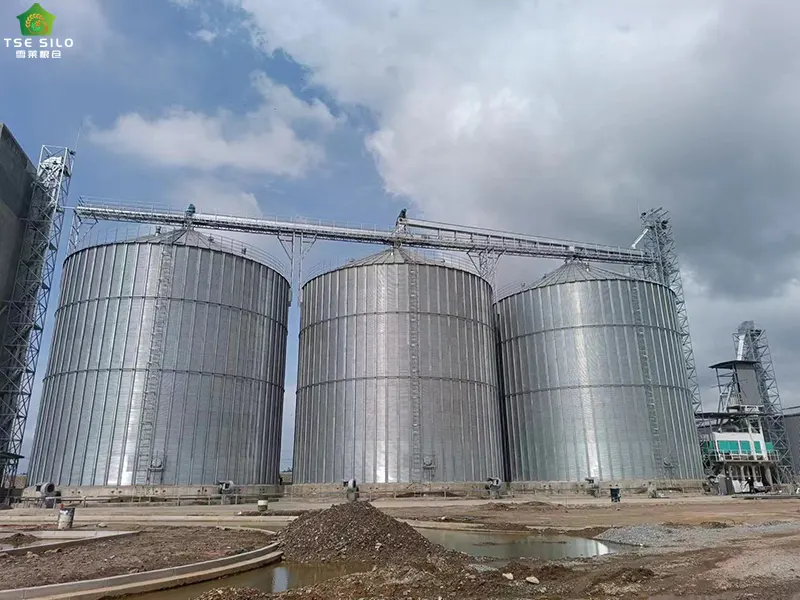
Shelley grain steel silos have been implemented in domestic grain depots, feed processing plants, grain and oil industrial parks, and overseas markets. Core cases cover large-scale reserves, feed transshipment, intelligent upgrades, and overseas delivery, highlighting three key values: rapid construction, intelligent grain storage, and low consumption and durability.
4.1. Venezuela Grain Reserve Project
- Scale: 3 x 5000-ton finished product silos, total capacity 16,000 tons, annual storage capacity of 100,000 tons of corn.
- Configuration: 275g/m2 double-sided galvanized steel sheets, 10.9 grade Dacromet high-strength bolts, PLC intelligent electrical control, hydraulic unloading (100 tons/hour), drying tower, and a complete ventilation/temperature measurement/dust removal system.
- Benefits: 25+ year service life; 25% increase in standby efficiency; full mechanization, reducing manual labor by 60%; integrated wet grain → drying → silo storage, with a loss of < 0.5%.
4.2. Malaysian Feed Mill: 600-ton x 2 Conical Bottom Silos
- Scale: Two 600-ton corn silos (φ8.2m, volume 888m³), 45o conical bottom, all-steel support frame.
- Configuration: 270g/m2 galvanized steel sheet, elevator + vibrating screen + magnetic separation for impurity removal, silo bottom ventilation, real-time grain temperature monitoring, and silo-turnover linkage.
- Results: Completed in 2 months; clean discharge with no residue; automatic alarm for exceeding temperature and humidity limits; reduced on-site manpower by 2-4 people, and maintenance costs decreased by 30%.
4.3. Canadian Grain Depot: 1500-ton x 2 Turnover Silos
- Scale: Two 1500-ton corn turnover silos, equipped with lifting, conveying, temperature measurement, and ventilation systems.
- Configuration: High-strength galvanized corrugated steel sheet, conical bottom + off-ground ventilation design, IoT grain condition monitoring, and remote electrical control.
- Benefits: Strong sealing, moisture-proof, mildew-proof, and insect-proof; real-time grain temperature warning, extending the safe storage period; space utilization rate increased by 50% compared to flat warehouses.
4.4. Hunan 4×1500-ton Grain Reserve Warehouse
- Scale: 4×1500-ton rice/corn reserve silos, total capacity 6000 tons.
- Configuration: Hot-dip galvanized steel plate, fully sealed moisture-proof design, grain condition monitoring and intelligent ventilation linkage.
- Benefits: Installation and delivery completed in just 2 months; adaptable to the rainy and humid climate of southern China, with a dry interior and no condensation; mechanized grain loading and unloading, increasing turnover efficiency by 40%.
4.5. Philippines 3000-ton Steel Grain Silo
- Scale: 1×3000-ton general-purpose grain silo, suitable for the hot and humid climate of Southeast Asia.
- Configuration: High corrosion-resistant galvanized layer, enhanced sealing, simple intelligent electronic control, rapid assembly system.
- Results: Completed in 28 days (compared to 6 months for a similarly sized concrete silo); corrosion-resistant and typhoon-resistant; 30% lower cost, worry-free operation and maintenance.
The above emergency measures must strictly adhere to the principles of "safety first, rapid response, and standardized operation." Operators must be proficient in each step of the process, take personal protective measures before operation, and strictly follow operating procedures during operation to prevent any violations. In daily operations, the preventive linkage requirements in the emergency measures can be combined to strengthen equipment inspection and material control, reducing the occurrence of material blockage failures from the source. If a complex material blockage situation is encountered that cannot be handled independently, the relevant person in charge should be notified immediately, and professional maintenance personnel should be contacted for handling to ensure the safe and efficient operation of the equipment and the orderly operation of grain storage and turnover in the Shelley Grain Steel Silo.
Written by
Shandong Shelley Grain Steel Silo Co., Ltd
Editor Jin
WhatsApp : +86-18653877118
Email : shelley@cnshelley.com