
LANGUAGE
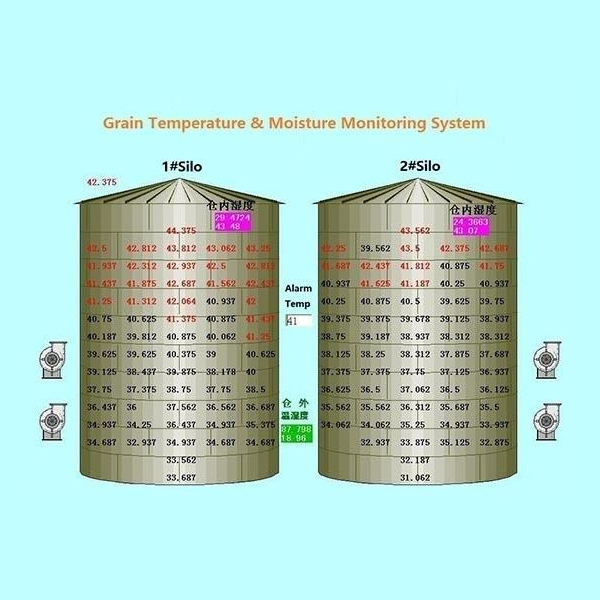
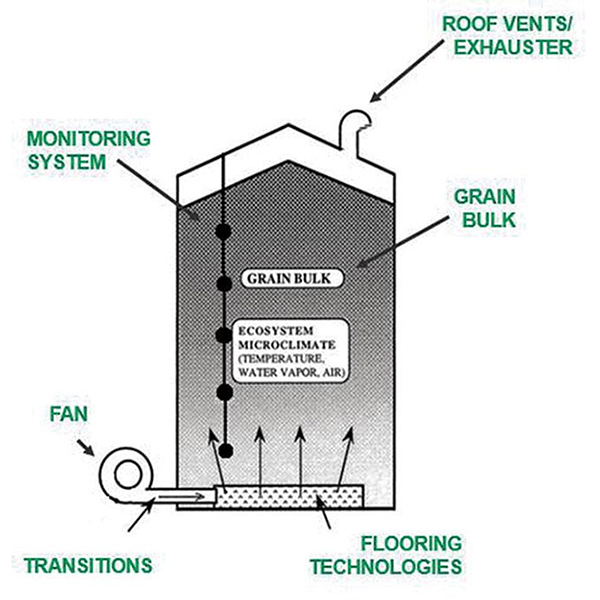
The working process of the grain temperature and humidity monitoring system is clear, achieving a closed-loop operation of "collection-transmission-analysis-warning-control." The specific principles are as follows:
1. Data Collection: Temperature and humidity sensors are inserted into the grain pile or placed at designated locations in the grain storage facility, continuously monitoring changes in grain temperature and moisture levels. They transmit analog signals (such as voltage and current signals) to the data acquisition device. If equipped with additional sensors, data on CO? concentration in the grain pile, grain liquid level, and ambient temperature and humidity are also collected simultaneously.
2. Data Processing and Transmission: The data collector filters, calibrates, and converts the received analog signals into recognizable digital signals while storing local data. Subsequently, the data is transmitted to the software platform (local client or cloud platform) via wired (RS485, Ethernet) or wireless (WiFi, 4G, LoRa) methods. Encryption technology is employed during transmission to ensure data integrity and prevent loss or leakage.
3. Data Analysis and Judgment: After receiving the data, the software platform automatically analyzes it, compares it with the user-defined temperature and humidity warning thresholds, and determines whether the grain is in a safe storage state. It also generates temperature and humidity change curves, data reports, analyzes trends in grain temperature and moisture, and predicts potential risks (such as grain heating and mold growth due to continuous temperature rise). Some systems employ multi-sensor data fusion algorithms to enhance monitoring accuracy.
4. Early Warning and Control: If the monitoring data exceeds the warning threshold, the system immediately initiates multi-channel alarms to alert staff for timely intervention. If equipped with interlocking control devices, the system will automatically activate corresponding equipment (e.g., ventilators, dehumidifiers) to regulate the temperature and humidity of the grain pile until the data returns to a safe range. Staff can also manually control the devices via the software platform or remotely monitor on-site conditions to handle emergencies.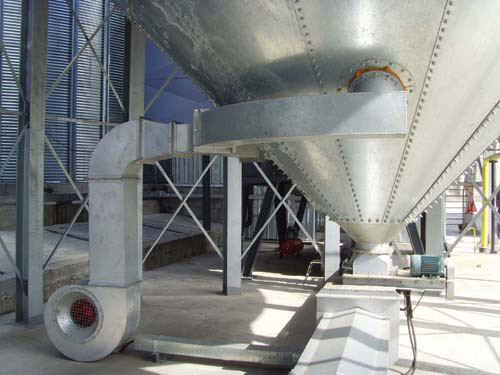
5. Data Retention and Traceability: The software platform continuously stores all monitoring data and equipment operation logs, allowing staff to access historical data at any time. This enables tracking of temperature and humidity changes during grain storage, providing data support for grain quality assessment and management optimization while meeting the traceability requirements of grain safety supervision.
Highlights of System Core Functions
1. Accurate monitoring with minimal error: Using high-precision temperature and humidity sensors, combined with professional calibration technology, the temperature measurement accuracy is ± 0.5 ℃, and the moisture measurement accuracy is ± 0.3%. It can accurately capture subtle changes in temperature and humidity inside the grain pile, avoiding risk omissions caused by monitoring errors; Multi sensor layout and data fusion algorithm can further enhance the comprehensiveness and accuracy of monitoring, effectively identify "hotspots" in grain piles, and prevent heating problems in advance.
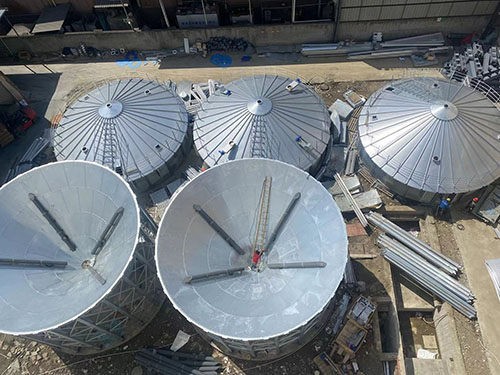
2. 24-hour uninterrupted monitoring, no need for manual duty: The system realizes all-weather automatic monitoring, replacing traditional manual pole insertion temperature measurement and sampling humidity measurement, avoiding the omissions and low efficiency of manual monitoring, especially suitable for large grain depots and multi warehouse linkage scenarios, which can significantly reduce labor costs, while avoiding risks and hidden dangers during unmanned periods such as night and holidays, and realizing the normalization and refinement of grain management.
3. Multi terminal remote control, convenient and efficient: supports multi terminal login software platforms such as computers, mobile apps, tablets, etc., allowing staff to view real-time data, historical reports, device status, receive alarm information anytime and anywhere,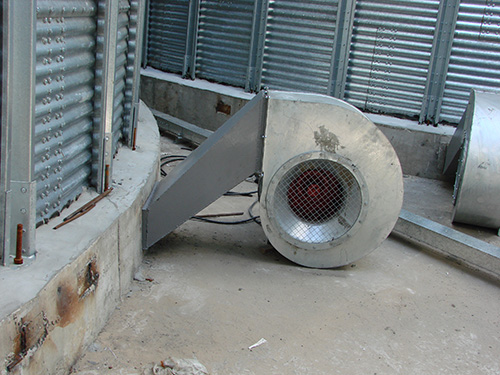 without the need for on-site monitoring; The remote control function can achieve remote control of equipment, improve management efficiency, and is suitable for cross regional and decentralized warehouse management. For example, management personnel can check the real-time situation of grain warehouses at home or in the office and promptly handle abnormal problems.
4. Intelligent warning and proactive prevention: supports custom warning thresholds, multi-channel alarms (sound, light, SMS, APP push), ensuring that abnormal situations are detected in the first time; By combining data trend analysis, it is possible to predict the changes in grain temperature and moisture in advance, actively prevent problems such as grain heating, mold growth, and insect infestation, and minimize losses. Through practical application verification, it can effectively reduce post harvest grain losses by 25% -30%.
5. Linkage control and automatic regulation: It can be linked with ventilation, dehumidification, refrigeration, fumigation and other equipment to achieve automatic temperature and humidity regulation without manual intervention, which not only improves control efficiency but also optimizes energy consumption, avoiding food loss and energy waste caused by excessive ventilation and dehumidification, while reducing the labor intensity of staff and making food storage more scientific and efficient.
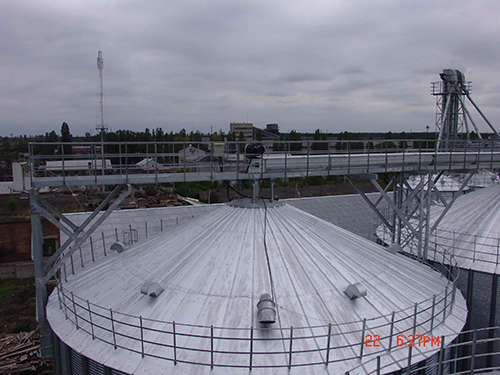 6. Data traceability for easy management and auditing: Long term storage of monitoring data and operation logs, supporting multi condition queries and report exports, can achieve full process data traceability of grain storage, meeting the needs of grain safety supervision, enterprise management auditing, quality assessment, etc; The digital data management method also facilitates staff to analyze storage patterns, optimize storage strategies, and improve the level of grain management.
7. Strong adaptability and flexible deployment: The number of sensors, transmission methods, and software functions can be flexibly configured according to different scenarios (large grain depots, small warehouses, grain transportation vehicles) and different grain varieties, supporting 100% customization; The hardware equipment has the characteristics of anti-interference, corrosion resistance, waterproof and dustproof, and can adapt to different environments such as grain warehouses and open-air storage. It can also meet the monitoring needs of various grains such as wheat, corn, rice, soybeans, etc., and support later expansion and upgrading to meet the development needs of enterprises.
The application of the grain temperature and humidity monitoring system covers the entire process of grain storage, processing, and transportation, and is suitable for different scales and types of grain related enterprises and scenarios. The core application scenarios include:
(1) National Grain Reserves and Large Grain and Oil Storage Enterprises
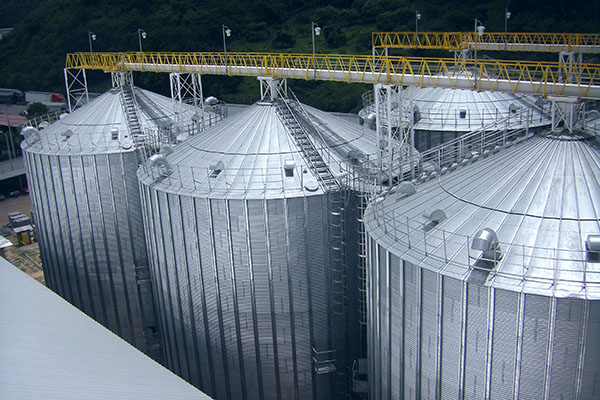
This type of scenario has a large amount of grain storage, a long storage cycle (usually 1-3 years), a large number of grain warehouses, and extremely high requirements for grain quality and safety. GTMMS can achieve full coverage of multiple grain silos and monitoring points, real-time monitoring of temperature and humidity changes inside the grain pile, linkage with ventilation and refrigeration equipment to achieve automatic control, and prevent large-scale grain mold and heat generation; At the same time, centralized control is achieved through cloud platforms, and staff can remotely view the real-time status of all grain warehouses, generate data reports, meet the needs of food safety supervision and management, and provide guarantees for the long-term safe storage of strategic reserve grain. For example, Highland Grain has installed the system in 15 malt barley storage silos, achieving precise monitoring of grain temperature during drying and long-term storage periods, greatly improving grain management efficiency and reducing on-site inspection workload.
(2) Grain processing enterprises
The storage of raw materials (such as wheat and corn) and finished products (such as flour and rice) in grain processing enterprises requires strict control of temperature and humidity to avoid mold growth and clumping of finished products. GTMMS can monitor the temperature and humidity of raw material and finished product warehouses in real time. When the data exceeds the threshold, an alarm is triggered in a timely manner, and dehumidification and ventilation equipment are linked to regulate the environment, ensuring stable quality of raw materials and finished products; At the same time, monitoring data can provide support for optimizing processing techniques (such as adjusting drying time and processing parameters based on raw material moisture), improving processing efficiency and product quality, and reducing economic losses caused by raw material deterioration.


